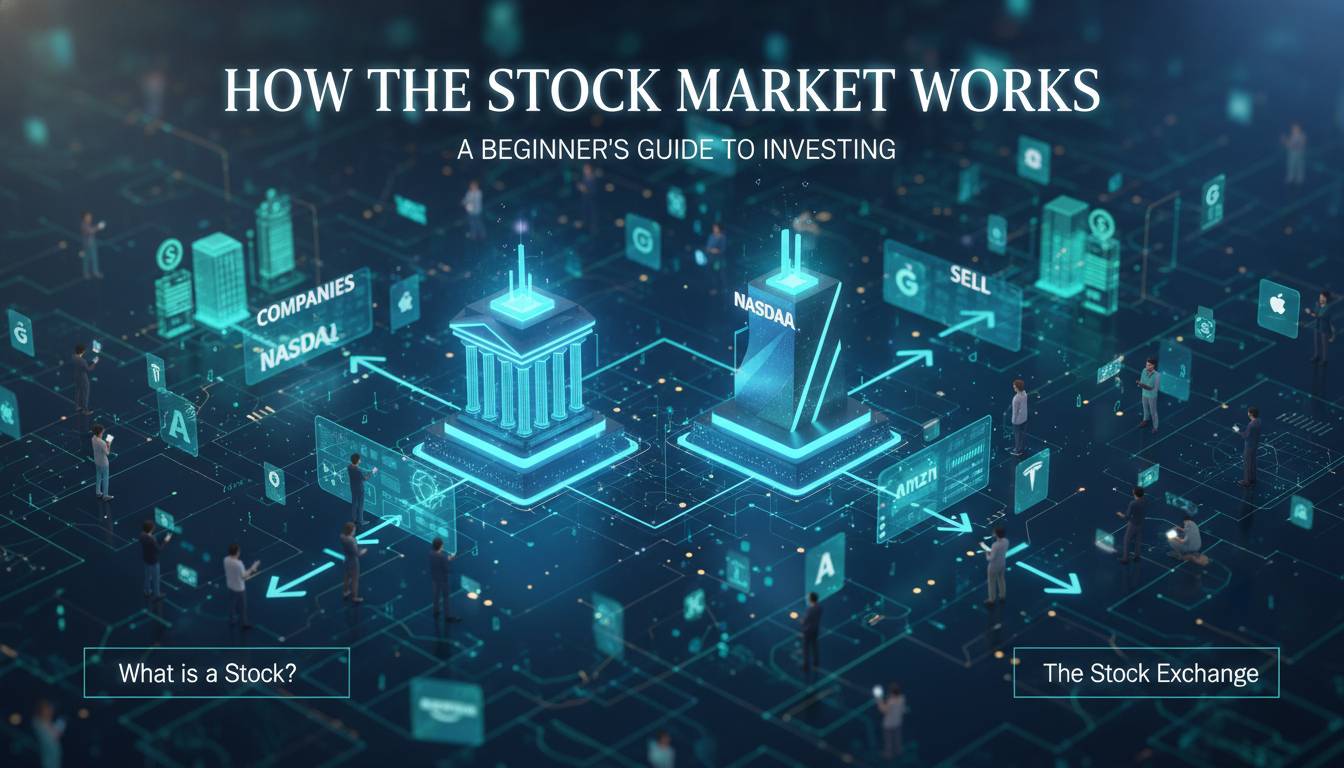


Stocks represent one of the most popular ways to build wealth over time, yet many beginners find the concept confusing. A stock is essentially a small piece of ownership in a company—when you buy shares, you become a partial owner of that business and can benefit from its growth and success. Understanding how stocks work is the first step toward making informed investment decisions that align with your financial goals.
In India, the stock market has grown exponentially, with over 4 crore (40 million) active investors trading through the National Stock Exchange (NSE) and Bombay Stock Exchange (BSE) . Whether you’re planning for retirement, building an emergency fund, or growing your wealth, stocks offer a pathway to achieve these objectives through capital appreciation and dividends.
📊 STATS
• 4+ crore active investors in India
• 15-18% average annual return from Indian equity markets over long term (Nifty 50 historical data)
• 7,500+ companies listed on Indian stock exchanges
• ₹4.3 lakh crore daily turnover on NSE
Key Takeaways
• Ownership: Buying stocks makes you a partial company owner with voting rights
• Two ways to profit: Capital appreciation (stock price increase) and dividends (company profits distributed to shareholders)
• Risk and reward: Higher potential returns come with higher risks compared to traditional savings
• Market exchanges: In India, stocks are primarily traded on NSE and BSE through registered brokers
• Regulation: SEBI protects investor interests and regulates all market activities
What Is a Stock? Definition and Basics
A stock (also called equity or share) represents fractional ownership in a company. When a company issues stocks, it divides its ownership into small units called “shares” that investors can purchase. Each share entitles the holder to a proportional claim on the company’s assets and earnings.
How Stocks Work
When a company needs capital for growth, expansion, or operations, it can raise money by issuing stocks to the public through an Initial Public Offering (IPO). Once the IPO concludes, these shares begin trading on stock exchanges where buyers and sellers determine prices through supply and demand.
The ownership structure works like this:
• A company with 10 lakh (1 million) outstanding shares
• You purchase 1,000 shares
• You own 0.01% of the company
• You’re entitled to 0.01% of distributed dividends and voting rights
💡 STAT: India’s market capitalization crossed ₹4.5 lakh crore in 2024, making it one of the world’s largest equity markets
Types of Stocks
Equity Shares: The most common type, representing basic ownership in a company. These come with voting rights and profit-sharing potential.
Preference Shares: These carry preferential rights regarding dividend payment and asset distribution during liquidation, but typically no voting rights.
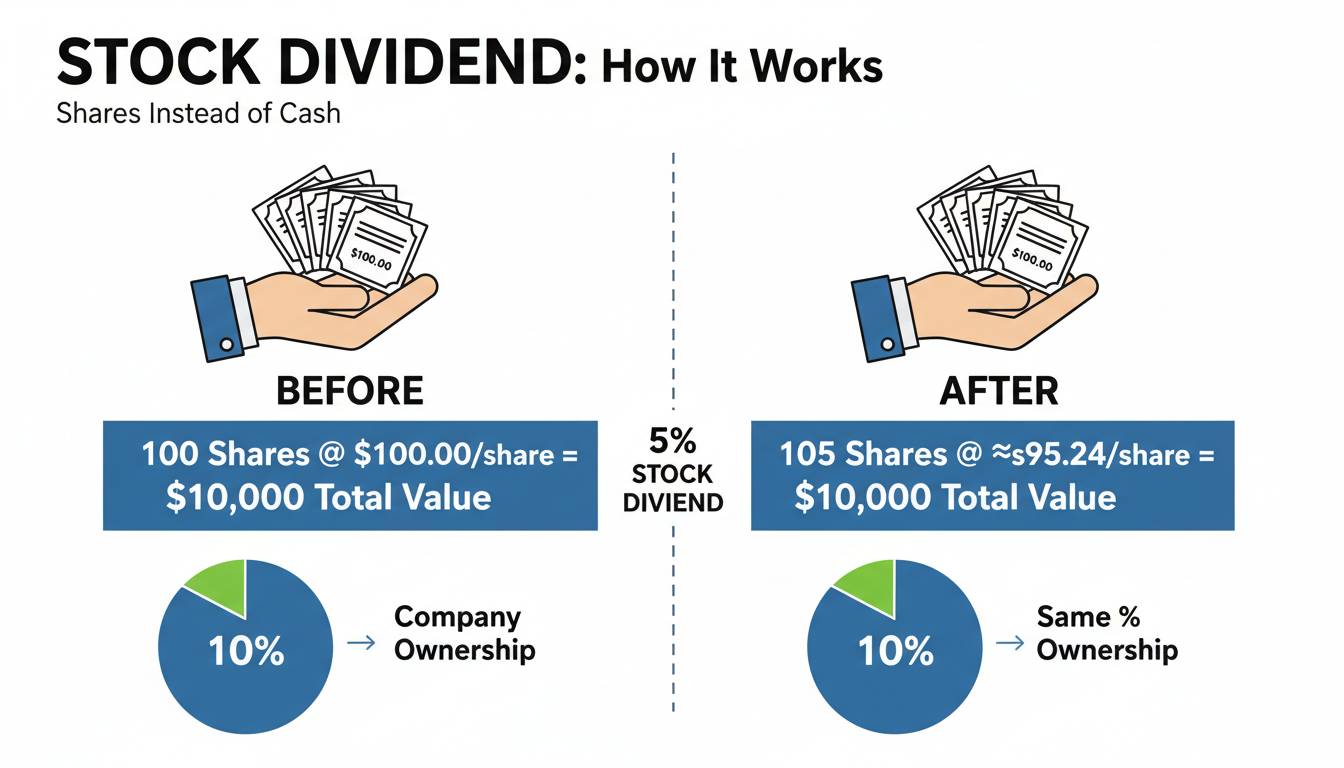
Bonus Shares: Additional shares given to existing shareholders from the company’s retained earnings, without any cost.
Rights Issue: When companies offer new shares to existing shareholders at a discounted price, giving them the right (but not obligation) to purchase.
How Stock Markets Work in India
The Indian stock market operates through two major exchanges: the National Stock Exchange (NSE), which was India’s first dematerialized electronic exchange, and the Bombay Stock Exchange (BSE), the oldest in Asia. Both function under the regulatory oversight of the Securities and Exchange Board of India (SEBI), established in 1992 to protect investors and promote fair market practices.
The Trading Process
1. Opening a Demat and Trading Account: To invest in stocks, you need three accounts—a Demat account (holds your shares electronically), a trading account (enables buying and selling), and a bank account (for fund transfers). Leading brokers like Zerodha, Upstox, Angel One, and ICICI Direct facilitate this process.
2. Placing an Order: Investors place orders through their broker’s trading platform. Market orders execute immediately at current market prices, while limit orders execute only when the stock reaches your specified price.
3. Order Matching: The exchange’s electronic system matches buy and sell orders. The National Securities Clearing Corporation (NSCCL) guarantees all trades, ensuring settlement even if one party defaults.
4. Settlement: In India, T+1 settlement means trades settled on the next business day. You receive shares in your Demat account, and funds transfer from your trading account.
📈 CASE: An investor who bought ₹10,000 worth of HDFC Bank shares in 2010 would have seen their investment grow to approximately ₹1.2 lakh by 2024, representing a 12x return over 14 years (Historical Data Analysis)
Benefits of Investing in Stocks
| Benefit | Impact | Source |
|---|---|---|
| Wealth Creation | 12-15% average annual returns over long term | Nifty 50 Historical Returns |
| Dividend Income | Regular passive income from profitable companies | Annual Reports |
| Inflation Hedge | Beats inflation better than fixed deposits | RBI Data |
| Ownership Stake | Voting rights in company decisions | SEBI Guidelines |
| Liquidity | Easy to buy and sell during market hours | Exchange Data |
Key Advantages
High Growth Potential: Unlike fixed deposits or bonds, stocks offer significant upside. Quality companies compound wealth at rates far exceeding traditional savings instruments.
Dividend Income: Many Indian companies like TCS, Hindustan Unilever, and ONGC regularly distribute dividends, providing investors with steady income streams.
Ownership and Voting Rights: Shareholders of listed companies can vote on important matters like board appointments, mergers, and corporate policies.
Easy Liquidity: The NSE and BSE offer high liquidity for most listed stocks, allowing investors to convert holdings to cash within minutes during trading hours.
Tax Benefits: Long-term capital gains (holding period over 1 year) are taxed at lower rates, and dividends receive favorable tax treatment under Indian income tax provisions.
How to Start Investing in Stocks
Prerequisites
- [ ] Age: Must be 18 years or above
- [ ] Documents: Aadhaar card, PAN card, bank account details
- [ ] Demat Account: With a registered Depository Participant (DP)
- [ ] Trading Account: With a SEBI-registered broker
Time: 1-2 weeks for account opening | Cost: Free to ₹1,000 for account opening
Steps
1. Complete KYC Registration
Submit your PAN, Aadhaar, and bank details through your broker’s app or website. In-person verification may be required for some brokers.
⏱ 1-2 days | 💡 Tip: Use Aadhaar-based e-KYC for instant verification
2. Link Bank Account
Add your primary bank account for seamless fund transfers. You can add multiple bank accounts later.
⚠️ Avoid: Linking multiple accounts initially may cause verification delays
3. Fund Your Account
Transfer money from your bank account to your trading account using UPI, net banking, or bank transfer. Most brokers offer instant fund transfer options.
4. Research Stocks
Analyze companies using financial metrics like P/E ratio, earnings growth, debt levels, and promoter holding. Use screener tools like Trendlyne or Moneycontrol.
5. Place Your First Order
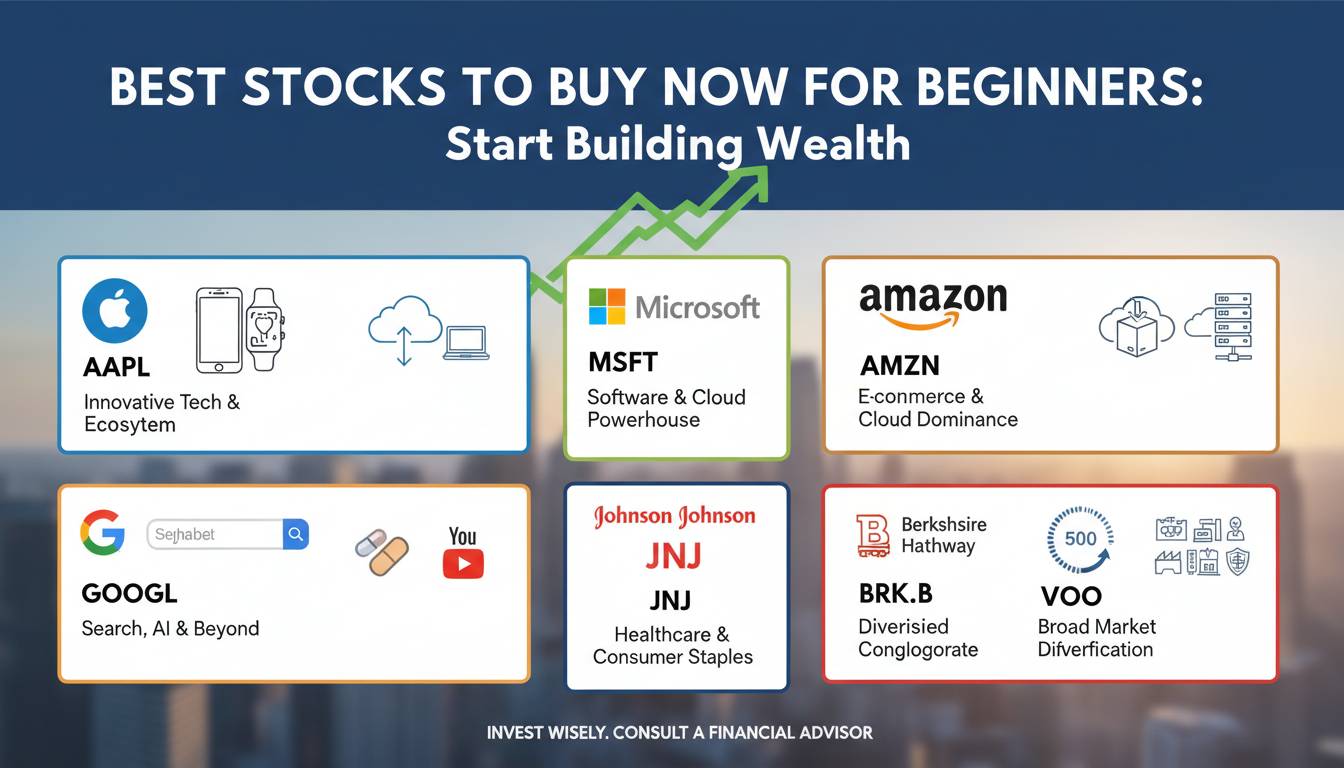
Start with a small amount (₹5,000-₹10,000) to understand the process. Begin with large-cap stocks of established companies like TCS, Infosys, or HDFC Bank.
6. Monitor and Review
Track your investments regularly. Avoid checking daily prices as market volatility can trigger emotional decisions.
Troubleshooting:
| Problem | Fix |
|---|---|
| Order not executed | Check if sufficient funds in trading account |
| Shares not credited | Verify Demat account details with broker |
| Unable to login | Clear cache or reinstall app; contact support |
| Wrong order placed | Use “Cancel” option before market closes |
Types of Stock Orders
Market Order: Executes immediately at the best available price. Best for liquid stocks when speed matters.
Limit Order: Executes only when stock reaches your specified price. Ideal for buying at lower prices or selling at targets.
Stop-Loss Order: Triggers a market order when price reaches a threshold, limiting potential losses.
AMO (After Market Order): Place orders outside market hours (4:00 PM – 9:15 AM next day) for next-day execution.
Understanding Stock Prices
Stock prices fluctuate based on multiple factors:
Company Performance: Quarterly results, revenue growth, and profit margins directly impact stock valuations.
Economic Conditions: GDP growth, interest rates, and inflation influence market sentiment.
Industry Trends: Sector-specific developments affect companies within that industry.
Market Sentiment: Investor confidence, news, and global market trends cause daily price movements.
Supply and Demand: When more buyers than sellers exist, prices rise; when more sellers than buyers exist, prices fall.
Common Mistakes to Avoid
| Mistake | Impact | Solution |
|---|---|---|
| Investing without research | 📉 Potential 50%+ losses | Study financial statements and company fundamentals |
| Following tips blindly | 📉 Risk of buying overvalued stocks | Verify recommendations with independent research |
| Panic selling during downturn | 📉 Locking in losses | Maintain long-term perspective |
| Overtrading | 📉 High brokerage costs | Limit transactions and focus on quality |
| Not diversifying | 📉 Concentration risk | Spread investments across sectors |
⚠️ CRITICAL: Never invest money you cannot afford to lose. Stock market investments carry inherent risks, and past performance does not guarantee future results. Always maintain an emergency fund before investing in equities.
Prevent: Start with index funds, diversify across 15-20 stocks minimum, and never allocate more than 10-15% of your portfolio to a single stock.
Expert Insights
👤 Vijay Kuppa, Founder at Orowealth
“Beginners should focus on understanding business models rather than chasing stocks. Invest in companies whose products you use and understand. Patience is the biggest edge in stock markets.”
👤 Pranav Bhasin, Financial Wellness Coach
“The best time to invest was yesterday; the second best time is today. Starting with small monthly SIPs in quality stocks or index funds builds wealth consistently through rupee-cost averaging.”
📊 BENCHMARKS
| Metric | Average Investor | Successful Investor |
|---|---|---|
| Holding Period | 6-12 months | 3-5+ years |
| Portfolio Turnover | 80-100% annually | 15-20% annually |
| Returns | 8-10% annually | 15-18% annually |
| Diversification | 5-10 stocks | 15-25 stocks |
Best Apps and Platforms for Indian Investors
| Platform | Cost | Features | Rating |
|---|---|---|---|
| Zerodha | Free equity delivery | Best tech platform, Angel One support | ⭐⭐⭐⭐⭐ |
| Upstox | Free equity delivery | Low brokerage, good mobile app | ⭐⭐⭐⭐ |
| Angel One | Free equity delivery | Research support, branch network | ⭐⭐⭐⭐ |
| ICICI Direct | ₹20/trade | Full-service broker, integrated banking | ⭐⭐⭐⭐ |
Top Picks:
• Zerodha: Best for tech-savvy investors seeking low costs
• Angel One: Ideal for beginners needing research guidance
• Groww: Simplest interface for absolute beginners
Conclusion
Understanding stocks is the foundation of building long-term wealth. Stocks represent ownership in companies, offering two primary benefits: capital appreciation through price growth and dividend income from company profits. The Indian stock market, regulated by SEBI and operating through NSE and BSE, provides a secure environment for investors to participate in corporate growth.
Start your investment journey by opening a Demat account with a reliable broker, conducting thorough research before buying stocks, and maintaining a long-term perspective. Remember that successful investing requires patience, discipline, and continuous learning. Begin with established companies, diversify your portfolio, and avoid emotional decision-making during market volatility.
The stock market has historically rewarded patient investors. With proper knowledge and strategy, you can work toward achieving your financial goals through smart equity investments.
Frequently Asked Questions
Q1: What is the minimum amount needed to start investing in stocks?
You can start investing in Indian stocks with as little as ₹100-500 for some fractional shares, though most brokers allow starting with ₹500-1,000. There’s no regulatory minimum, making stocks accessible to all investors.
Q2: How do I choose which stocks to buy?
Focus on companies with strong fundamentals: consistent revenue and profit growth, manageable debt, competent management, and reasonable valuations (P/E ratio compared to industry peers). Start with companies in sectors you understand.
Q3: Are stocks safe to invest in?
All investments carry risk, including stocks. However, investing in well-established companies with strong fundamentals and maintaining a diversified portfolio reduces risk significantly. SEBI regulations also protect investor interests.
Q4: What is the difference between NSE and BSE?
Both are Indian stock exchanges with similar functionality. NSE was established in 1992 and was the first electronic exchange, while BSE is the oldest (1875). NSE generally has higher liquidity, while BSE lists more companies.
Q5: How long should I hold stocks?
For optimal returns and tax benefits in India, hold stocks for at least 1 year to qualify as long-term capital gains (taxed at 10%). Historically, quality stocks deliver better returns over 3-5+ years.
Q6: Can I lose all my money in stocks?
While rare for established companies, you can lose your entire investment if a company goes bankrupt and its shares become worthless. This is why diversification and investing in fundamentally strong companies is crucial.