
India has emerged as one of the world’s fastest-growing Web3 markets, with over 115 million cryptocurrency users as of 2024, making it one of the largest crypto adopter nations globally. The intersection of young demographics, high smartphone penetration, and growing retail investor interest has created a fertile landscape for Web3 investments. Understanding how to navigate this evolving ecosystem could prove transformative for investors willing to understand its unique dynamics.
This comprehensive guide explores seven high-growth Web3 investment strategies specifically relevant for the Indian market, examining mechanisms, risk factors, and practical implementation approaches.
Understanding Web3 and the Indian Investment Landscape
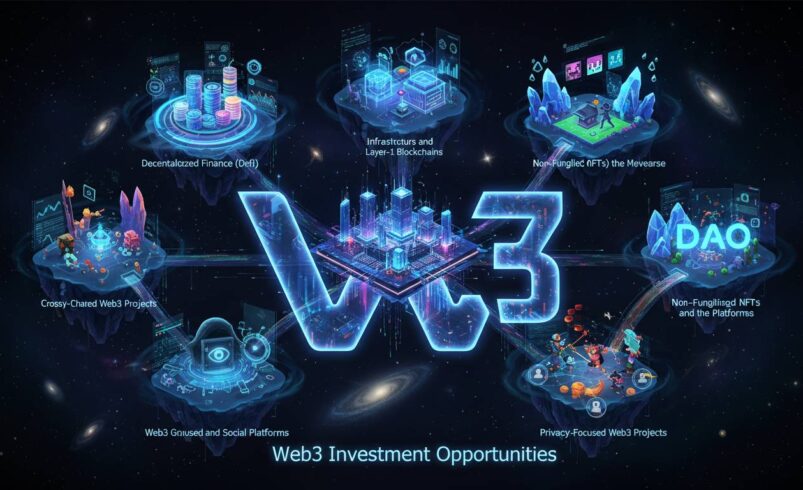
Web3 represents the next evolution of the internet, built on blockchain technology and decentralized protocols that eliminate intermediaries and give users ownership of their data and digital assets. Unlike Web2 platforms where companies like Google and Meta control user data, Web3 enables peer-to-peer transactions, transparent governance, and true digital ownership.
The Indian Web3 ecosystem has witnessed remarkable growth despite regulatory uncertainty. The Supreme Court’s 2020 ruling that struck down the Reserve Bank of India’s cryptocurrency banking ban catalyzed market expansion. Since then, Indian exchanges like CoinDCX, WazirX, and ZebPay have accumulated millions of users, while Indian developers have contributed significantly to global blockchain projects.
Key Market Indicators
| Metric | Data | Source |
|---|---|---|
| Crypto Users in India | 115+ million | Triple A, 2024 |
| Monthly Crypto Trading Volume | $3-5 billion | Chainalysis, 2024 |
| Year-over-Year Growth | 300%+ | INC, 2024 |
| Retail Investor Share | 85%+ | ZebPay Report, 2024 |
The Indian government has maintained a cautious but increasingly clear stance, imposing a 30% tax on cryptocurrency gains in 2022 and a 1% TDS (Tax Deducted at Source) on crypto transactions. While these regulations have challenged some trading strategies, they have also provided legal clarity that encourages institutional participation.
Strategy 1: Cryptocurrency Diversification Beyond Bitcoin and Ethereum
Traditional cryptocurrency portfolios often overweight Bitcoin and Ethereum. While these remain essential portfolio components, emerging Layer-1 and Layer-2 blockchains offer substantial growth potential for investors seeking alpha.
Top Blockchain Ecosystems to Watch
| Blockchain | Native Token | Use Case | Gas Fee (Approx) |
|---|---|---|---|
| Solana | SOL | High-speed dApps | $0.001-0.01 |
| Polygon | MATIC | Ethereum scaling | $0.01-0.05 |
| Avalanche | AVAX | DeFi & Gaming | $0.02-0.10 |
| Arbitrum | ARB | L2 Scaling | $0.10-0.30 |
| Polkadot | DOT | Cross-chain | $0.10-0.50 |
Indian investors can access these through major exchanges operating in India. The key principle involves allocating a small portion (5-15%) of a crypto portfolio to emerging tokens with strong development teams and clear utility propositions. Arbitrum and Optimism have gained particular attention for scaling Ethereum transactions while maintaining security.
When evaluating emerging tokens, focus on tokenomics (supply distribution, inflation rates), real-world utility, developer activity on GitHub, and community engagement metrics. Projects with significant token allocations to community rewards and ecosystem development typically align better with long-term investor interests.
Strategy 2: DeFi Yield Farming and Liquidity Provision
Decentralized Finance (DeFi) has revolutionized banking by enabling lending, borrowing, and earning interest without traditional financial institutions. For Indian investors, DeFi offers yield opportunities significantly higher than traditional fixed deposits, though with corresponding risk considerations.
DeFi Yield Mechanisms
- Lending: Platforms like Aave and Compound allow users to lend assets and earn variable interest rates, currently ranging from 3-15% annually on stablecoins and 1-5% on volatile assets.
- Liquidity Mining: Providing liquidity to decentralized exchanges like Uniswap or Raydium earns trading fees plus additional token rewards, with annual percentage yields (APYs) ranging from 10-100%+ depending on the pair.
- Staking: Locking tokens in proof-of-stake protocols provides network security rewards, typically 5-20% annually.
Risk Considerations
Impermanent loss remains the primary risk when providing liquidity to AMM (Automated Market Maker) protocols. This occurs when the price ratio between deposited tokens changes, potentially resulting in lower value than simply holding the tokens. Strategies to mitigate impermanent loss include:
- Providing liquidity to stablecoin pairs (USDC/USDT)
- Using concentrated liquidity positions on newer DEXs
- Selecting liquidity pools with tokens that have correlated price movements
For Indian investors accessing DeFi protocols, using hardware wallets like Ledger or software wallets with robust security features like MetaMask is essential. Always verify contract addresses before interacting, as phishing attacks targeting DeFi users are prevalent.
Strategy 3: NFT Investment and Digital Collectibles
Non-Fungible Tokens (NFTs) represent ownership of unique digital assets, from art and music to gaming items and virtual real estate. The Indian NFT market has shown significant activity, with Indian artists gaining global recognition in the digital art space.
NFT Investment Approaches
- Blue Chip Collections: Established projects like Bored Ape Yacht Club, Azuki, and CryptoPunks maintain value due to brand recognition and celebrity endorsement, though entry costs are high (floor prices often exceeding $10,000).
- Indian Artist Support: Platforms like Async Art and Foundation have featured Indian creators whose works appreciate significantly as they gain recognition.
- Gaming NFTs: In-game assets from play-to-earn games like Axie Infinity, Gods Unchained, and emerging Web3 games represent utility-driven NFT investments.
Practical Steps for Indian Investors
- Create wallets compatible with target NFT marketplaces (OpenSea, Blur, Magic Eden)
- Acquire ETH or SOL for transactions
- Research artist backgrounds and community engagement before purchasing
- Consider gas fees—when Ethereum network congestion peaks, transaction costs can exceed $50
The gaming NFT sector presents particular opportunity as Web3 gaming transitions from play-to-earn models to sustainable free-to-own paradigms. Games like Illuvium, Star Atlas, and Guild of Guardians are building AAA-quality experiences with NFT integration, potentially creating the first mass-adoption gaming NFT narratives.
Strategy 4: Web3 Gaming and Metaverse Token Investments
The intersection of gaming and blockchain represents one of Web3’s most accessible use cases for mainstream adoption. Indian gaming enthusiasts have shown strong adoption of play-to-earn models, making this segment particularly relevant.
Key Gaming and Metaverse Tokens
| Token | Ecosystem | Category | Market Cap (Approx) |
|---|---|---|---|
| AXS | Axie Infinity | P2E Gaming | $800M+ |
| MANA | Decentraland | Virtual Land | $500M+ |
| SAND | The Sandbox | Virtual Land | $400M+ |
| GALA | Gala Games | P2E Gaming | $300M+ |
| IMX | Immutable X | Gaming L2 | $200M+ |
The gaming sector has experienced significant correction from 2021-2022 peaks, presenting entry points for investors who believe in long-term gaming blockchain adoption. The critical evaluation metric is actual user engagement: games with sustainable daily active users (DAU) rather than inflated token prices represent better investment foundations.
Metaverse investments require patience—virtual land and digital experiences remain in early development stages. The market is transitioning from speculation toward utility, with platforms building actual experiences rather than merely selling virtual property. Focus on projects with clear development roadmaps and established partnerships with major brands.
Strategy 5: Staking and Proof-of-Stake Token Accumulation
Staking has emerged as a mainstream investment strategy, offering predictable yields while supporting blockchain network security. For Indian investors seeking relatively stable returns within the volatile crypto market, staking presents compelling opportunities.
Staking Rewards Overview
| Protocol | Token | Annual Yield | Lock Period | Minimum |
|---|---|---|---|---|
| Ethereum | ETH | 4-8% | Variable | 32 ETH |
| Cardano | ADA | 4-6% | Epoch-based | Flexible |
| Polkadot | DOT | 8-14% | 28 days | Flexible |
| Cosmos | ATOM | 10-18% | 21 days | Flexible |
| Solana | SOL | 6-8% | Variable | Flexible |
Indian investors can stake through exchanges (CoinDCX, WazirX) or directly through native wallets. Exchange staking offers convenience but typically provides slightly lower yields. Direct staking provides better returns but requires technical understanding of the process.
Liquid Staking Innovation
Liquid staking derivatives (LSDs) like Lido’s stETH, Rocket Pool’s rETH, and Ankr’s ankrETH allow users to stake while receiving tradable tokens representing their staked position. This enables continued trading activity while earning staking rewards—a significant advantage for active investors.
The emergence of liquid staking in India follows global trends, with Indian DeFi users increasingly adopting these strategies to maximize capital efficiency while maintaining exposure to potential token appreciation.
Strategy 6: Web3 Infrastructure and Protocol Investment
The foundation of Web3 adoption rests on infrastructure projects that enable decentralized applications. These include blockchain networks, indexing protocols, oracle services, and data availability layers.
Infrastructure Categories with Growth Potential
- Data Indexing: The Graph (GRT) enables efficient blockchain data queries, essential for dApp development
- Oracles: Chainlink (LINK) provides external data to smart contracts, critical for DeFi price feeds
- Storage: Filecoin (FIL) and Arweave (AR) offer decentralized storage solutions
- Cross-chain: LayerZero and Axelar enable communication between different blockchains
These infrastructure tokens typically demonstrate lower volatility than application-layer tokens during market cycles, while benefiting from overall Web3 ecosystem growth. When any blockchain protocol succeeds, infrastructure providers typically capture value regardless of which specific chain dominates.
Indian developers have contributed significantly to Web3 infrastructure projects. Understanding this contribution helps evaluate project legitimacy—projects with Indian developer involvement often have community support and adoption advantages in the Indian market.
Strategy 7: Governance Token Participation and Early Protocol Investment
Governance tokens represent ownership stakes in decentralized protocols, enabling holders to vote on protocol development decisions. Early adoption of promising governance tokens can yield substantial returns as protocols gain user adoption.
Evaluating Governance Token Investments
Successful governance token investment requires evaluating:
- Token Utility: Does the token power core protocol functions (fee discount, collateral, staking)?
- Distribution: Are tokens fairly distributed or heavily concentrated among insiders?
- Treasury: Does the protocol maintain a treasury for development and marketing?
- Voting Participation: Active governance indicates engaged community
Early Access Strategies
- Participating in testnets for upcoming protocols
- joining community incentive programs
- Contributing to protocol development or documentation
- Engaging in protocol Discord communities for early announcements
Many successful DeFi protocols launched with small initial token distributions that appreciated dramatically as adoption grew. While this strategy requires significant research and engagement, early participants in projects like Uniswap, Aave, and MakerDAO achieved life-changing returns.
Risk Management for Indian Web3 Investors
Successful Web3 investing requires robust risk management frameworks, particularly given the market’s volatility and regulatory uncertainty.
Essential Risk Management Practices
| Strategy | Implementation |
|---|---|
| Position Sizing | Never allocate more than 5-10% of total investable assets to any single Web3 investment |
| Diversification | Maintain portfolios across 10-15 different projects/sectors |
| Dollar-Cost Averaging | Invest fixed amounts monthly rather than lump sums |
| Hardware Security | Use hardware wallets for holdings exceeding $1,000 |
| Tax Compliance | Maintain detailed records of all transactions for 30% capital gains tax |
The 30% tax on cryptocurrency gains plus 1% TDS has significant implications for trading strategies. High-frequency trading often becomes economically unviable after accounting for tax obligations. Long-term holding strategies typically benefit from the tax treatment, as assets held beyond three years qualify for indexation benefits on inflation.
Regulatory Monitoring
Indian Web3 investors should stay informed about regulatory developments. The Reserve Bank of India continues to advocate for cryptocurrency restrictions, while the government has shown willingness to regulate rather than ban. Following official RBI announcements, Finance Ministry statements, and parliamentary discussions helps anticipate policy shifts that could impact investment strategies.
Frequently Asked Questions
Is cryptocurrency investment legal in India?
Yes, cryptocurrency investment is legal in India following the Supreme Court’s 2020 ruling that struck down the RBI’s banking ban. The government has since imposed a 30% capital gains tax and 1% TDS on cryptocurrency transactions, effectively legalizing and regulating the market. However, investors should stay updated on regulatory developments as the framework continues to evolve.
What is the minimum amount needed to start Web3 investing?
Indian investors can start with as little as ₹500-₹1,000 through major exchanges. Most exchanges allow fractional purchases, enabling investment in tokens trading at higher prices. Beginners should start with established cryptocurrencies like Bitcoin and Ethereum before exploring DeFi or NFT investments.
How do I secure my Web3 investments from hacking?
Use hardware wallets (Ledger, Trezor) for holdings exceeding ₹50,000. Enable two-factor authentication on all exchange accounts using authenticator apps rather than SMS. Never share private keys or seed phrases. Verify all website URLs before connecting wallets, and use hardware wallet confirmation for large transactions.
Which Web3 strategy is best for beginners?
Cryptocurrency index investing or blue-chip holding (Bitcoin/Ethereum) provides the best risk-adjusted returns for beginners. Staking established proof-of-stake tokens offers relatively stable yields while learning more complex DeFi mechanisms. Avoid yield farming and NFT speculation until understanding fundamental blockchain mechanics and associated risks.
How is cryptocurrency taxed in India?
Cryptocurrency gains are taxed at 30% as “virtual digital assets.” Additionally, a 1% TDS applies to every transaction. Losses cannot be offset against gains, and the holding period does not affect the tax rate. Detailed transaction records must be maintained for filing tax returns accurately.
Should I invest in Web3 gaming tokens?
Web3 gaming tokens offer high growth potential but come with significant risk. The sector experienced substantial correction from 2021-2022 peaks. If investing, prioritize games with actual user engagement and sustainable economic models rather than purely speculative projects. Allocate only capital you can afford to lose entirely.
Conclusion
The Web3 investment landscape in India presents unprecedented opportunities for investors willing to understand its complexities. From cryptocurrency diversification and DeFi yield generation to gaming tokens and infrastructure plays, multiple pathways exist for different risk appetites and investment horizons.
Success in Web3 investing requires balancing enthusiasm for transformative technology with disciplined risk management. The strategies outlined—diversification, yield optimization, NFT engagement, gaming participation, staking, infrastructure investment, and governance participation—represent distinct approaches that can be combined based on individual risk tolerance and investment goals.
The Indian market’s growth trajectory, combined with increasing regulatory clarity, suggests Web3 will become an increasingly significant component of Indian investment portfolios. Starting with fundamental understanding, practicing with small amounts, and gradually expanding exposure as knowledge grows represents the most prudent approach for most investors.
Remember that cryptocurrency investments remain highly volatile. Never invest more than you can afford to lose, maintain long-term perspectives rather than chasing short-term gains, and continuously educate yourself as this rapidly evolving sector develops.