
The stock market offers one of the most accessible pathways to build long-term wealth, yet millions of Indians hesitate to invest simply because they find the concept confusing. Understanding how the stock market works doesn’t require a finance degree or years of experience. With the right knowledge, anyone can start investing with as little as ₹500 through a Systematic Investment Plan (SIP). This guide breaks down everything you need to know about the stock market in simple, practical terms specifically designed for Indian investors.
📊 STATS
• 58% of Indians cite “lack of knowledge” as the main barrier to stock market investing
• 7.5 crore Indians have Demat accounts as of 2024 (CDSL & NSDL data)
• 14.2% average annual returns from the Nifty 50 index over the past 20 years (NSE data)
• ₹12.2 lakh crore total assets under management in Indian mutual funds
Key Takeaways
• Stock markets enable ownership in companies, offering growth potential beyond traditional savings
• SEBI regulates Indian markets, providing investor protection and market integrity
• You can start with ₹500 through SIPs or direct stock purchases
• Long-term investing outperforms short-term trading in 90% of cases
• Diversification reduces risk by spreading investments across sectors
The Indian stock market presents a remarkable opportunity for wealth creation. With economic growth projected at 6.5-7% annually and a young, increasingly financially aware population, understanding stock market basics has become essential for achieving financial goals like buying a home, funding education, or building retirement corpus.
What Is the Stock Market?
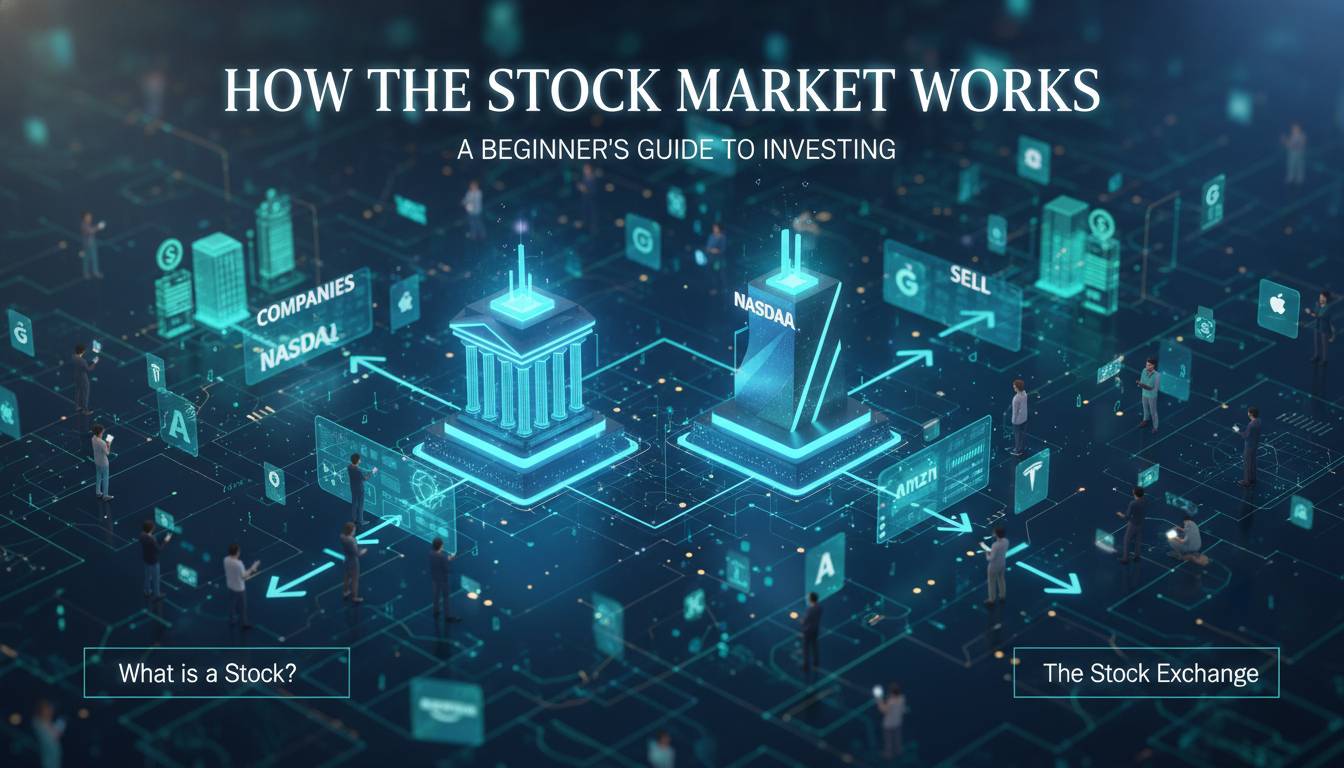
The stock market is a marketplace where buyers and sellers trade ownership shares in companies. When you buy a stock, you purchase a small piece of ownership in that company, making you a shareholder. These shares represent a claim on the company’s assets and earnings.
Think of it like this: instead of keeping your money in a savings account earning 3-4% interest, you become a partial owner of businesses that grow and generate profits. When these companies succeed, the value of your ownership increases, and you can sell your shares for more than you paid.
How Stock Markets Work
The Basic Process:
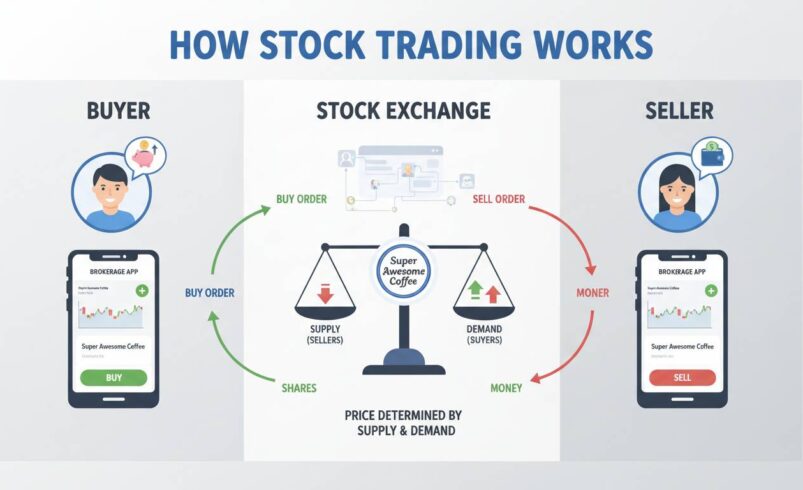
When a company wants to raise money from the public, it lists its shares on a stock exchange through an Initial Public Offering (IPO). Investors bid for these shares, and once trading begins, prices fluctuate based on supply and demand. If more people want to buy a stock than sell it, the price rises. If more want to sell than buy, the price falls.
Key Players in the Indian Market:
| Player | Role |
|---|---|
| SEBI | Regulator protecting investor interests |
| NSE (National Stock Exchange) | India’s largest exchange by volume |
| BSE (Bombay Stock Exchange) | Asia’s oldest stock exchange |
| Depositories (CDSL/NSDL) | Hold your shares electronically |
| Brokers | Facilitate buy/sell transactions |
Important Terms:
• Demat Account: An electronic account that holds your shares (mandatory since 2019)
• Trading Account: Used to buy and sell shares
• Nifty 50: Top 50 companies on NSE, acts as market indicator
• Sensex: Top 30 companies on BSE, India’s oldest index
• Bull Market: When prices are rising
• Bear Market: When prices are falling
💡 STAT: The BSE Sensex has grown from 100 points in 1979 to over 80,000 in 2024—a return of nearly 800x over 45 years (BSE Historical Data).
Benefits of Investing in the Stock Market
Investing in stocks offers several advantages that make it attractive for long-term wealth creation.
Why Indians Should Consider Stock Market Investing
1. Higher Returns Than Traditional Options
Fixed deposits currently offer 6-7% returns, while gold averages 8-10% over long periods. Quality stocks have historically delivered 12-15% annual returns, significantly outpacing inflation (currently around 5-5.5%).
2. Beat Inflation
Money kept in savings accounts loses purchasing power over time. Stock investments historically maintain and grow real purchasing power.
3. Ownership in Growing Companies
India’s economy is projected to become the world’s third-largest by 2030. Early investors benefit from this growth trajectory.
4. Liquidity
Stock market investments can be converted to cash within 2-3 working days (T+2 settlement in India).
5. Dividends
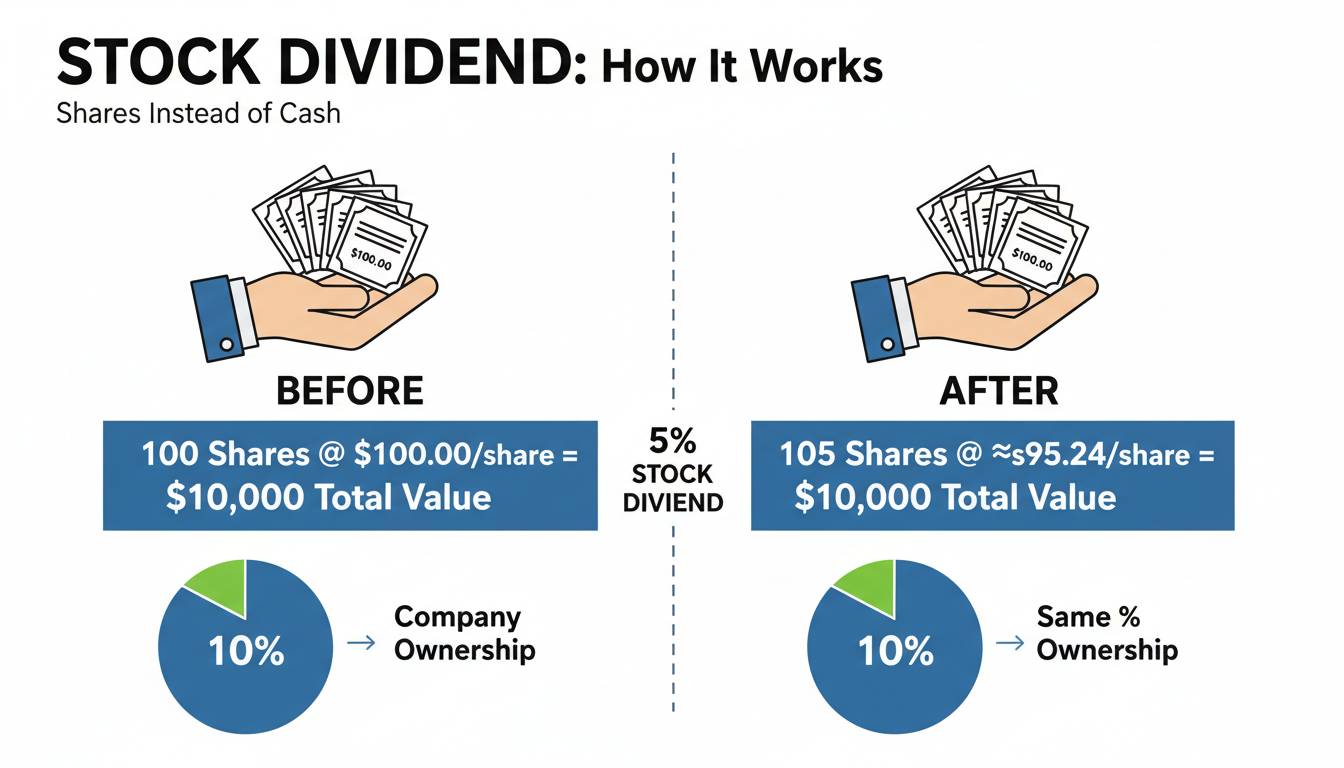
Many profitable companies share profits with shareholders through dividends, providing regular income.
| Investment Type | Average Annual Return | Risk Level |
|---|---|---|
| Savings Account | 3-4% | Very Low |
| Fixed Deposits | 6-7% | Low |
| Gold | 8-10% | Medium |
| Mutual Funds | 10-12% | Medium |
| Direct Stocks | 12-15% | High |
Key Advantages
Top Benefits:
• Wealth creation: Historically outperforms most other asset classes
• Ownership stake: Become part of India’s economic growth story
• Dividend income: Regular payouts from profitable companies
• Portfolio control: Choose specific companies you believe in
• Tax benefits: Long-term capital gains taxed at lower rates (10% above ₹1 lakh)
📈 CASE: An investor who put ₹1 lakh in Nifty 50 in 2009 would have over ₹6.5 lakh by 2024—a 550% return with dividends reinvested (NSE Data).
How to Start Investing in the Indian Stock Market
Starting your investment journey requires understanding the process and having the right documents ready.
Prerequisites
- [ ] Aadhaar Card (for identity verification)
- [ ] PAN Card (mandatory for trading)
- [ ] Bank Account (for money transfers)
- [ ] Demat Account (with Zerodha, Upstox, Angel One, etc.)
- [ ] Trading Account (usually linked to Demat)
Time: 1-2 days for account opening | Cost: Free to ₹300 for account opening
Steps to Start
1. Open a Demat and Trading Account
Choose a SEBI-registered broker. Popular options include Zerodha (largest by clients), Upstox, Angel One, ICICI Direct, and HDFC Securities. Complete online KYC using Aadhaar e-verification.
⏱ Time: Same day | 💡 Tip: Start with Zerodha or Upstox for lowest brokerage charges
2. Complete KYC Verification
Submit PAN, Aadhaar, bank details, and income proof. Most brokers offer instant verification through Digilocker.
3. Transfer Funds
Add money from your bank account to your trading account via UPI, net banking, or NEFT/RTGS.
4. Start with Index Funds or ETFs
Begin with Nifty 50 ETFs (like Nifty BeES) or index mutual funds to understand market movements before picking individual stocks.
⚠️ Avoid: Investing in penny stocks or “tips” from unknown sources → Fix: Stick to quality companies with strong fundamentals
5. Learn Before You Earn
Spend 3-6 months learning through free resources like Zerodha Varsity, Moneycontrol, and Groww before making significant investments.
6. Start Small
Begin with ₹500-1,000 monthly through SIPs in mutual funds or buy one share of quality companies like HDFC Bank, TCS, or Reliance.
7. Build a Portfolio Gradually
Add more stocks over time as you understand different sectors and company fundamentals.
Troubleshooting:
| Problem | Fix |
|---|---|
| Account not opening | Check Aadhaar details match with PAN |
| Money deducted but not credited | Contact broker support with transaction ID |
| Unable to sell shares | Check if shares are in T+1 holding period |
| Wrong stock purchased | Use “Cancel” option if order not executed |
Types of Investments in India
Indian investors have multiple ways to participate in the stock market.
Direct Stocks vs. Mutual Funds vs. ETFs
| Factor | Direct Stocks | Mutual Funds | ETFs |
|---|---|---|---|
| Minimum Investment | ₹1 (some) | ₹500/month (SIP) | ₹500 (approx) |
| Management | You | Fund Manager | Market-traded |
| Fees | Brokerage only | 1-2% annually | 0.1-0.5% |
| Risk | High | Medium | Medium |
| Time Required | High | Low | Low |
Direct Stocks: You buy specific company shares directly. Requires research but offers highest control.
Mutual Funds: Professional fund managers handle your money. Best for beginners wanting diversification.
ETFs (Exchange Traded Funds): Trade like stocks but track indices. Low cost, tax-efficient.
Common Mistakes to Avoid
Mistakes That Cost Indian Investors
| Mistake | Impact | Solution |
|---|---|---|
| Investing without research | 📉 30-50% loss potential | Study company fundamentals before buying |
| Trying to time the market | 📉 Missed best days | Stay invested, use SIPs |
| Putting all money in one stock | 📉 Total loss risk | Diversify across sectors |
| Following tips blindly | 📉 Scam/fraud risk | Verify all advice independently |
| Checking portfolio daily | 📉 Emotional decisions | Review quarterly, not daily |
| Ignoring expense ratios | 📉 Lower returns | Choose funds with <1% expense ratio |
⚠️ CRITICAL: The biggest mistake is not starting at all. Delaying investment by 10 years can cost you crores in potential returns due to compounding.
Prevent: Start with SIPs of even ₹500/month, increase gradually, never invest money you need within 3-5 years.
Best Platforms for Indian Investors
| Platform | Best For | Fees | Rating |
|---|---|---|---|
| Zerodha | Direct stocks & F&O | ₹0 equity delivery | ⭐⭐⭐⭐⭐ |
| Upstox | Low-cost trading | ₹20/trade | ⭐⭐⭐⭐ |
| Angel One | Research & tips | Free delivery | ⭐⭐⭐⭐ |
| Groww | Mutual fund SIPs | Free | ⭐⭐⭐⭐⭐ |
| Coin by Zerodha | Direct mutual funds | Free | ⭐⭐⭐⭐⭐ |
Top Picks for Beginners:
• Groww: Simplest app for mutual fund SIPs
• Zerodha: Best for direct stock investing
• Coin: Zero-commission direct mutual funds
Frequently Asked Questions
Q1: Can I invest in the stock market with little money?
Yes, you can start with as little as ₹500 through Systematic Investment Plans (SIPs) in mutual funds or by purchasing one share of companies that trade at lower prices. Many brokers now allow fractional shares and zero-commission mutual fund investments.
Q2: Is stock market investing safe?
All investments carry risk, but stock market investing is regulated by SEBI, which protects investor interests. Risks can be minimized through diversification, long-term investing, and avoiding speculative trading. Historically, the Indian stock market has delivered positive returns over periods exceeding 5 years.
Q3: How do I choose which stocks to buy?
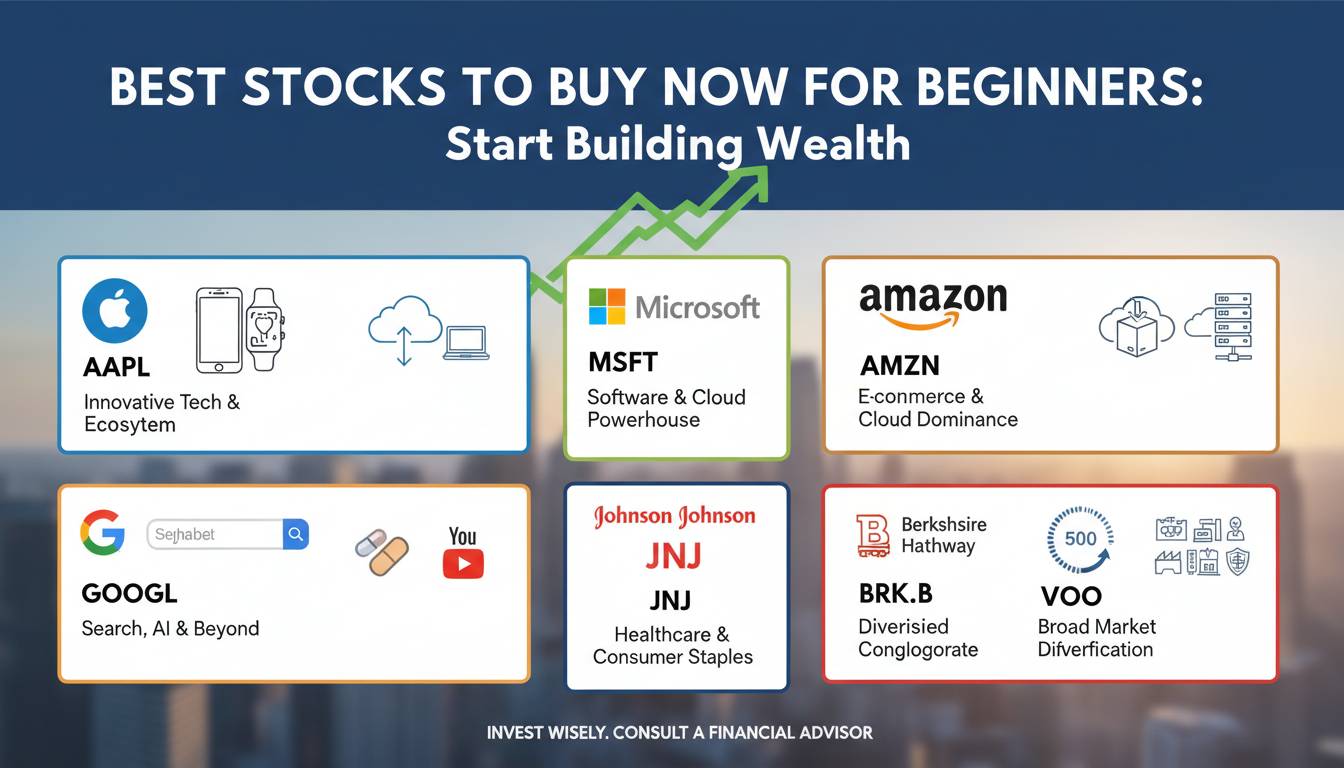
Start with understanding companies you use daily—your phone provider, bank, e-commerce platforms. Look for consistent revenue growth, healthy profit margins, low debt, and strong management. Use ratios like P/E, EPS, and debt-to-equity for comparison. Beginners should consider starting with Nifty 50 index funds before picking individual stocks.
Q4: What is the best time to start investing?
The best time to start was yesterday; the second best time is today. Market timing is nearly impossible to predict consistently. Starting early, even with small amounts, allows compound interest to work over decades. Use SIPs to average out market volatility.
Q5: How much can I earn from the stock market?
Returns vary based on market conditions, investment choices, and time horizon. The Nifty 50 has delivered ~14% annual returns over the past 20 years. Some stocks have delivered 10x returns, while others have lost significant value. There are no guaranteed returns in direct stock investing.
Q6: Do I need to pay taxes on stock market profits?
Yes. Short-term capital gains (holding period under 1 year) are taxed at 15%. Long-term capital gains above ₹1 lakh are taxed at 10%. Dividends are added to your income and taxed according to your tax slab. However, you can save taxes through tax-saving mutual funds (ELSS) and holding investments long-term.
Conclusion
The stock market represents one of the most powerful tools for building long-term wealth in India. While the concept may seem intimidating initially, understanding the fundamentals—stocks represent ownership, markets fluctuate but trend upward over time, and starting early matters more than timing the market—can transform your financial future.
The key is to begin with education, start small through SIPs or index funds, and gradually build knowledge before taking on higher-risk individual stock picking. Remember that SEBI regulations protect Indian investors, and platforms like Zerodha, Upstox, and Groww have made investing accessible to anyone with a smartphone and basic documents.
Your journey to financial independence doesn’t require expertise—it requires the courage to start and the discipline to stay invested. The Indian economy’s growth trajectory combined with the power of compounding makes this an opportune time to become a part-owner in India’s success story.
Next Steps:
1. Open a Demat account this week
2. Set up a ₹1,000 monthly SIP in an index fund
3. Read one financial article weekly
4. Review your portfolio quarterly
5. Increase contributions as income grows