
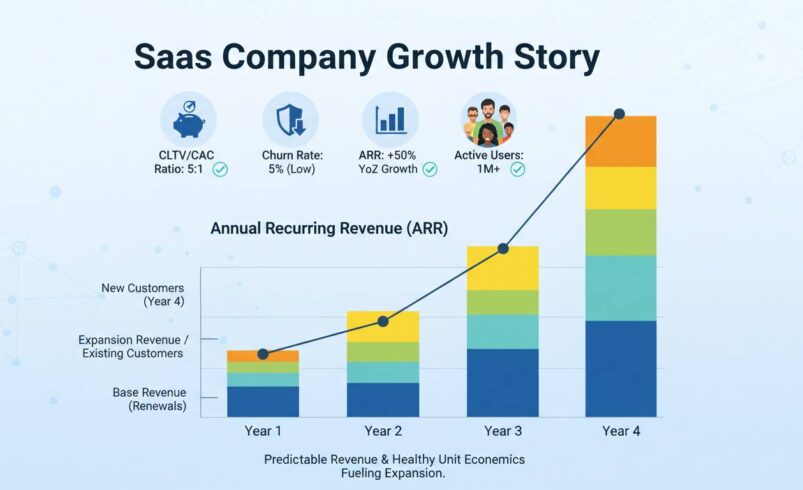

If you’re serious about growth investing, you’ll eventually face a company with explosive revenue, zero earnings, and a stock price that seems to defy logic. Most investors freeze at this moment. They default to “too expensive” and walk away, missing some of the market’s biggest opportunities. The truth is that valuing unprofitable growth stocks isn’t about ignoring financial reality—it’s about using the right framework to assess what actually matters: future cash flows, not current ones.
Traditional metrics like the price-to-earnings ratio become meaningless when a company hasn’t generated net income. P/E assumes earnings exist. When they don’t, you need a completely different toolkit. After more than a decade analyzing pre-revenue and pre-profitability companies across SaaS, biotech, and emerging tech sectors, I’ve learned that the best growth investors don’t avoid these stocks—they’ve simply learned how to value them properly. This guide gives you that framework.
Why Traditional Valuation Metrics Break Down
The price-to-earnings ratio has been the backbone of value investing for nearly a century. It works beautifully for established companies with predictable earnings. Apply it to a high-growth company still scaling, and you’ll get a number that looks absurd—typically either negative or so high it communicates nothing useful.
Consider a company generating $100 million in annual revenue, growing at 60% year-over-year, but spending heavily on expansion. Its net income might be negative $20 million. The P/E is undefined (you can’t divide by a negative number), or if you use negative earnings, you’d get a figure like -15x that suggests the stock is cheap when it’s actually expensive. The metric fails because it measures past performance in a context where the past is irrelevant.
This is the fundamental problem with growth stock valuation: we’re trying to price future potential using backward-looking metrics. A company losing money today might be rationally valued if those losses fund growth that will translate to massive profits five years from now. The P/E ratio captures none of that future value.
Beyond P/E, other traditional metrics face similar issues. Price-to-book works for asset-heavy businesses but becomes misleading for software companies whose value lives in intellectual property and user relationships, not physical assets. Dividend yield is inapplicable. Even EV/EBITDA, while more flexible, often shows these companies as “cheap” because EBITDA ignores the capital expenditure required to sustain that earnings figure.
What you need are forward-looking metrics designed specifically for growth companies. These exist, and when used correctly, they tell a far more accurate story than any P/E ratio ever could.
Price-to-Sales Ratio: The Foundation of Growth Valuation
When earnings don’t exist, revenue becomes your primary reference point. The price-to-sales ratio divides market capitalization by total revenue, giving you a sense of how much investors are paying for each dollar of current sales. It’s not perfect, but it’s a start.
For growth stocks, P/S ratios typically range from 3x to 20x or higher, depending on growth expectations. A company growing revenue at 50% annually might justify a 15x P/S, while one growing at 15% probably shouldn’t exceed 8x. The key is comparing your target against similar companies in the same sector and growth stage.
Let’s use a concrete example. Imagine a SaaS company with $200 million in annual recurring revenue and a market cap of $4 billion. Its P/S ratio is 20x. Is that expensive? It depends entirely on growth. If that company is growing revenue at 40% annually, 20x P/S might be reasonable—perhaps even undervalued. If it’s growing at 15%, you’d want something closer to 8x-10x.
The limitation of P/S is that it tells you nothing about profitability trajectory. Two companies with identical P/S ratios could have wildly different paths to becoming cash-flow positive. This is why P/S works as a starting point but never as your sole valuation metric.
As of early 2025, growth investors increasingly look at P/S in conjunction with revenue growth rate. A common framework: a “good” P/S ratio for a growth company is roughly equal to its revenue growth rate. A 40% grower trading at 40x P/S is roughly fairly valued. Above that premium, below that discount.
Revenue Growth Rate: The Single Most Important Metric
If P/S is your foundation, revenue growth rate is the factor that determines whether your foundation sits on rock or sand. A company growing revenue at 60% annually can justify valuations that would seem absurd for a 10% grower. Growth is the primary driver of value in pre-profitability companies.
But not all growth is created equal. You need to understand the quality of that growth, not just the quantity. Three questions matter enormously:
Is the growth organic or acquired? A company buying revenue through acquisitions is different from one generating organic growth through product traction. Acquired revenue often comes with integration costs and churn risk that organic revenue doesn’t carry. Look at revenue broken down by source in the company’s financial disclosures.
Is growth accelerating or decelerating? A company growing at 30% this year after growing at 25% last year is different from one decelerating from 35% to 25%. Acceleration signals product-market fit strengthening; deceleration suggests the growth engine is stalling.
What are the unit economics? Can the company acquire customers profitably? Look at customer acquisition cost (CAC) and customer lifetime value (LTV). An LTV:CAC ratio above 3:1 indicates sustainable growth. Below 2:1, you’re looking at growth funded by endless capital raises rather than genuine business momentum.
A real-world illustration: Snowflake (ticker: SNOW) went public in 2020 with no profits and a P/S ratio that looked astronomical by traditional standards. But its revenue was growing 120%+ annually. The market was pricing in continued hypergrowth, and investors who focused on that growth rate rather than the absence of earnings were rewarded when the stock doubled in its first year. The key was distinguishing between growth that reflected genuine product demand versus growth that would require constant capital infusion to maintain.
Gross Margin: The Profitability Proxy
When a company has no net income, gross margin becomes your best available indicator of potential profitability. Gross margin shows what percentage of revenue remains after direct costs of producing the product or service. For software companies, gross margins above 70% are excellent; above 80% indicates a truly scalable business model.
Here’s why gross margin matters so much for unprofitable companies: it demonstrates whether the business model has the structural characteristics that could eventually produce profits. A company with 90% gross margins can afford to spend heavily on sales and R&D today because those costs don’t significantly erode the gap between revenue and true profitability. When growth slows, that company can cut expenses and become profitable almost overnight.
A 50% gross margin company faces a fundamentally different math. Even if it stops all growth spending, it keeps only half its revenue. Margins that low typically require the company to maintain high growth forever—if it slows down, the absolute dollar losses become difficult to sustain.
As an investor, you should view gross margin as a window into the business model. High gross margins in a growth company signal optionality—the ability to become profitable when the time is right. Low gross margins signal a business that may require perpetual capital to survive, regardless of growth rate.
The Rule of 40: Balancing Growth and Profitability
The Rule of 40, popularized by venture capital firm Bessemer Venture Partners, states that a software company’s revenue growth rate plus its profit margin should exceed 40% for the business to be considered healthy. If the combined figure is below 40%, the company must be growing extremely fast to compensate.
For pre-profitability companies, you apply the Rule of 40 using the profit margin you’d expect at maturity—or simply track the combination of growth rate and gross margin improvement. The framework works because it prevents the common mistake of celebrating high growth while ignoring deteriorating unit economics.
Consider two hypothetical companies:
Company A: 30% revenue growth, 5% profit margin = Rule of 40 score of 35 (acceptable but not exceptional)
Company B: 55% revenue growth, -15% profit margin = Rule of 40 score of 40 (exactly at the line)
Both score similarly, but they carry different risk profiles. Company A is closer to profitability and likely has more predictable unit economics. Company B is betting that growth will continue long enough to offset the deep unprofitability. Your investment thesis should reflect which risk profile you find more compelling.
The Rule of 40 gained significant traction after the 2022 market correction when investors stopped rewarding pure growth stories and started demanding paths to profitability. As of 2024-2025, it’s become a standard framework for evaluating growth companies, appearing in analyst reports from Goldman Sachs, Morgan Stanley, and most major brokerages covering technology sectors.
TAM, SAM, and SOM: Understanding Market Opportunity
No discussion of growth stock valuation is complete without addressing market size. A company growing 50% annually is either dramatically undervalued or appropriately priced depending entirely on how large its addressable market is. The TAM/SAM/SOM framework gives you that context.
- TAM (Total Addressable Market): The total revenue opportunity if the company achieved 100% market share. This is usually the largest number and is often criticized as unrealistic—but it’s the right starting point for understanding the ceiling.
- SAM (Serviceable Addressable Market): The portion of TAM the company can realistically target given its geography, product type, or customer segment.
- SOM (Serviceable Obtainable Market): The realistic revenue the company can capture in the near term, typically over the next 3-5 years.
The most common mistake investors make is accepting TAM figures at face value. Companies routinely present TAM estimates that assume their product becomes the default solution across every possible use case. Your job is to challenge those numbers and develop your own bottom-up estimate.
Let’s say a cybersecurity company claims a $100 billion TAM. Your analysis might determine that only 30% of that market actually uses solutions like the company’s product, cutting SAM to $30 billion. Then, given competitive dynamics and sales capacity, you might estimate SOM at $2-3 billion over five years. If the company currently generates $200 million in revenue, you’re looking at a potential 10-15x revenue expansion—good, but not the 100x implied by the original TAM claim.
Market size analysis is more art than science. The point isn’t precision—it’s developing a realistic framework for what success looks like and whether the current valuation prices in that success or assumes something more aggressive.
Qualitative Factors: The Intangibles That Move Stocks
Quantitative metrics get all the attention, but I’ve seen equally compelling cases where qualitative factors determined investment outcomes. A company with mediocre metrics but exceptional leadership often outperforms one with great numbers and average management.
Management quality matters enormously in growth companies. When there’s no earnings history to validate the business model, you’re betting on the people executing it. Look for executives with relevant domain expertise, track records of building successful businesses, and—critically—alignment with shareholders. Compensation structures heavily weighted toward equity ownership signal management that thinks like owners, not employees.
Competitive moat determines whether the company can sustain its growth trajectory or whether competitors will erode margins. A moat can come from network effects (like a marketplace platform), switching costs (enterprise software that would cost millions to replace), data advantages (proprietary datasets that improve with scale), or brand strength. Without a moat, rapid growth typically attracts competitors who share the opportunity until no one captures excess returns.
Product differentiation matters more than feature lists. Ask yourself: would a customer choose this product if a competitor was 20% cheaper? If the answer is yes, you have differentiation. If not, you’re looking at a commodity business that will eventually compete on price—a difficult position for any company, but especially devastating for unprofitable ones that need pricing power to eventually generate margins.
Capital efficiency deserves close attention. How much capital has the company burned to generate its current revenue? A company that required $500 million in cumulative losses to reach $100 million in revenue has a fundamentally different risk profile than one that reached $100 million in revenue with $50 million in cumulative losses. The lower-burn company can survive longer if markets turn hostile and capital becomes expensive or unavailable.
Common Mistakes Investors Make
After years of analyzing growth stocks, certain errors recur with alarming frequency. Avoiding them won’t make you right about every investment, but it will prevent the most obvious value-destroying mistakes.
Mistake one: confusing revenue growth with unit economics health. A company can grow revenue 80% annually while its customer acquisition costs spiral upward, making each new customer a net negative. Growth masks the underlying problem until the music stops. Always investigate the LTV:CAC dynamics, not just the top-line number.
Mistake two: applying SaaS metrics to non-SaaS businesses. The Rule of 40, net revenue retention, and gross margin benchmarks work beautifully for software companies. They mean almost nothing for hardware businesses, biotechs, or retail concepts. Know which framework applies to your target.
Mistake three: ignoring the path to profitability. “We’ll figure out profitability later” is a statement that has bankrupted countless companies. Even if you believe growth justifies current losses, you need a plausible story for how and when the company transitions to profitability. If management can’t articulate that path—or worse, dismisses the question—you should treat the uncertainty as risk, not opportunity.
Mistake four: comparing across sectors. A 15x P/S might be absurd for a retail company but modest for a SaaS company. Compare your target against companies with similar business models, growth characteristics, and margin profiles. Amazon traded at 3x P/S in 2015 when it was still growing rapidly—you’d have been disappointed waiting for “normal” valuation multiples.
Case Study: Valuing a Mid-Stage SaaS Company
Let me walk through how these frameworks combine in practice. Imagine you’re evaluating a fictional company, TechFlow (ticker: TFLW), a B2B SaaS company providing workflow automation tools.
TechFlow generates $150 million in annual recurring revenue, up 45% year-over-year. Gross margin is 82%. The company is unprofitable, burning $30 million annually in free cash flow. Market cap is $4.5 billion, giving a P/S ratio of 30x. The TAM for workflow automation software is approximately $50 billion globally.
Let’s apply the frameworks:
P/S analysis: 30x revenue is on the high side for 45% growth. Using the growth-rate-equals-valuation rule, you’d expect roughly 45x P/S for a company growing at 45%—TechFlow appears slightly discounted relative to that framework, but not dramatically.
Revenue growth: 45% is strong but decelerating from 60% last year. This warrants investigation—is the deceleration due to market saturation, competitive pressure, or deliberate product strategy shifts? Acceleration versus deceleration matters enormously.
Gross margin: 82% is excellent, indicating a scalable software model with minimal direct costs. This gives TechFlow significant operating leverage when growth normalizes.
Rule of 40: Using -20% profit margin (the burn rate), TechFlow scores 25 on the Rule of 40 (45 – 20 = 25). That’s below the 40 threshold, meaning the company needs either faster growth or faster progress toward profitability to meet the standard.
TAM analysis: $50 billion TAM sounds enormous, but bottom-up analysis suggests realistic SAM of $15 billion given TechFlow’s focus on mid-market companies. SOM over five years is likely $2-3 billion—roughly 15-20x current revenue, supporting the premium valuation if execution holds.
The qualitative check: management has prior founder experience with one successful exit, equity compensation is reasonable, and the product has meaningful differentiation with 120% net revenue retention (customers are expanding their usage over time).
The honest assessment: TechFlow is fairly priced for a high-quality growth company, not obviously cheap or expensive. The investment case depends entirely on whether you believe 45% growth can continue for three more years—the valuation leaves no room for disappointment.
The Bottom Line
Valuing growth stocks without profits requires abandoning familiar metrics and embracing new frameworks. Revenue growth, gross margins, Rule of 40 scores, and market opportunity analysis replace P/E ratios as your primary tools. The process is less precise than valuing mature companies, but that’s the honest truth about growth investing—you’re paying for optionality, not certainty.
What matters most is internal consistency: the valuation should make sense given the growth rate, the growth rate should be supported by unit economics, and the unit economics should be backed by a business model that could eventually produce profits. If any layer doesn’t connect, the investment carries hidden risk regardless of how attractive the surface numbers appear.
No framework eliminates the need for judgment. Two investors looking at identical data will reach different conclusions about what a company is worth. That’s not a flaw in the valuation methods—that’s the nature of investing in businesses where the future diverges from the past. The frameworks here give you the structure to make that judgment systematically rather than arbitrarily.
If you’re evaluating a growth stock with no profits, start with revenue growth and gross margin. Apply the Rule of 40. Challenge the TAM. Examine management quality and competitive positioning. Only then does P/S ratio become useful—and even then, only as a relative comparison tool, not an absolute measure of value.