
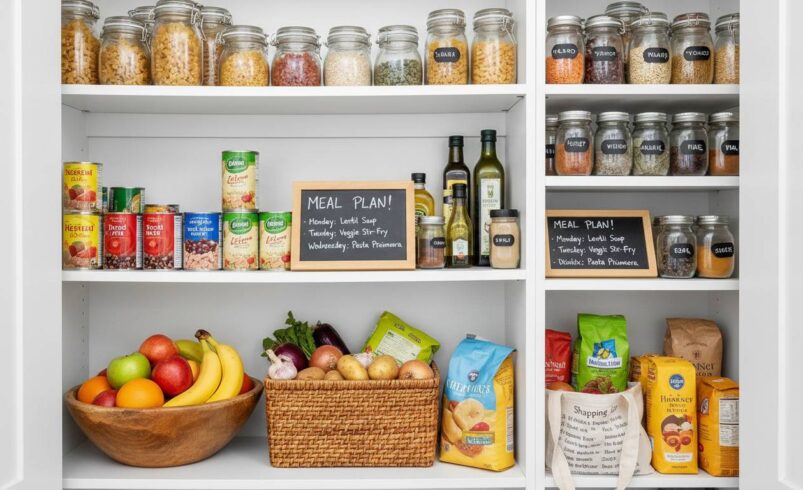

The coupon aisle at your local grocery store is designed to make you feel like you’re missing out if you don’t have a stack of paper in hand. Here’s the thing: most of the people saving serious money on groceries never clip a single coupon. They’ve figured out that the real savings come from systematic changes to how and what you buy, not from hunting down deals that might save you $0.50 on toothpaste.
I’ve spent years tracking my grocery spending, experimenting with different strategies, and watching my bank account respond. The methods that actually move the needle aren’t sexy. They don’t require apps or loyalty cards or Sunday morning newspaper runs. But they work, and they work consistently. If you’re ready to cut your grocery bill by 20, 30, or even 40 percent without becoming that person who spends three hours a week organizing coupons, these are the strategies that will get you there.
Shop at Discount Grocery Stores
The single most impactful change you can make costs nothing more than a slightly longer drive. Aldi, Lidl, and to a lesser extent Trader Joe’s operate on fundamentally different business models than traditional supermarkets, and that difference shows up in your receipt. Aldi stocks roughly 1,400 items compared to the 30,000 or more you’ll find at a Kroger or Safeway. That dramatic curation means lower overhead, fewer choices to confuse you, and prices that are typically 20 to 40 percent below name-brand competitors. I switched my primary grocery shopping to Aldi three years ago, and my weekly bill dropped from an average of $127 to $84 for essentially the same basket of goods.
Lidl is expanding aggressively in the US and offers a similar model with even more name-brand equivalents in some categories. Their produce is consistently cheaper than what I find at conventional stores, though the selection rotates seasonally in ways that require some flexibility in meal planning. Trader Joe’s occupies an interesting middle ground. Prices are lower than traditional supermarkets on most items, but they’re not as cheap as Aldi on staples. Where Trader Joe’s wins is in prepared foods and frozen meals, which are often cheaper and higher quality than equivalent options at Whole Foods or conventional grocers.
The catch with discount stores is that they require adjustment. Cash-only policies at Aldi used to be universal. They’ve since added card acceptance but still prefer cash. You bag your own groceries. The stock is limited and changes seasonally. But if you’re willing to adapt, the savings are immediate and permanent. This is a structural change that saves you money every single shopping trip without any ongoing effort.
Buy Store Brand Products
Store brands, often labeled as “Great Value” at Walmart, “Kroger” at Kroger stores, “365” at Whole Foods, or simply “Aldi,” are almost always manufactured by the same companies that make name brands, just with different packaging. The peanut butter labeled “Store Brand” in a generic jar and the Skippy peanut butter sitting next to it on the shelf may literally come from the same factory. What you pay extra for with name brands is marketing, not quality.
The savings are substantial. Generic cereals can cost 30 to 50 percent less than their boxed counterparts. Store-brand medications contain the exact same active ingredients as name-brand versions but cost a fraction of the price. Generic aluminum foil, plastic wrap, and storage bags perform identically to brand names at significantly lower cost. In my own shopping, switching to store brands across staples like pasta, rice, canned tomatoes, cheese, and dairy products alone saves me roughly $30 to $40 per week.
One important note: not all store brands are created equal. Aldi’s store brand is genuinely excellent across most categories. I’ve yet to find a significantly inferior product in their line. Some conventional grocery store generics, particularly in categories like chips or cookies, can be noticeably different from name brands. The strategy here is to switch to store brands broadly, but don’t be afraid to buy the name brand if you try a generic and genuinely don’t like it. The goal is savings you’ll actually stick with, not suffering through inferior products that end up in the trash.
Plan Your Meals Before Shopping
Impulse buying is the grocery store’s best friend and your bank account’s worst enemy. Every time you walk into a grocery store without a plan, you’re essentially handing over a blank check. The average supermarket places the most profitable items, prepared foods, snacks, seasonal displays, in high-traffic areas precisely to trigger unplanned purchases. Meal planning is your defense against this.
You don’t need elaborate spreadsheets or professional-grade organization. Simply deciding what you’ll eat for dinners over the next five to seven days before you walk into the store changes your entire shopping behavior. When I started meal planning consistently, my impulse purchases dropped by roughly 70 percent. I still browse, but I’m browsing with a purpose. I know exactly what I’m looking for and I’m less likely to grab something extra because I’ve already mentally allocated my spending.
The most effective approach is to plan meals around what’s already in your pantry and what’s on sale that week. Many grocery stores publish their weekly circulars online, often starting Sunday or Monday. Build your meal plan around the proteins and produce that are discounted, then fill in around those anchors. This does require some flexibility. If the sale on chicken thighs is exceptional, maybe that’s the week you make stir-fry twice instead of the pork chops you originally had in mind. The savings compound when you consistently shop this way, week after week.
One genuine limitation of meal planning: it works best when you actually cook. If you’re someone who ends up ordering takeout three nights a week regardless of what’s in your fridge, meal planning won’t save you money until that habit changes. The strategy assumes you want to eat the food you buy. If that’s not currently true for you, that’s the real problem to solve first.
Make a Grocery List (And Stick to It)
Meal planning gives you the what. The grocery list gives you the how. These are separate but equally important disciplines. A good grocery list doesn’t just list items. It organizes them by store section, which reduces the time you spend in the store and, critically, reduces the opportunities for impulse purchases.
I organize my list the same way every time: produce first, then proteins, then dairy, then dry goods and pantry items, then frozen. This isn’t arbitrary. Produce and proteins are the most perishable, so I want to get them and get out. More importantly, this path through the store minimizes exposure to the high-margin prepared foods and snacks positioned in the middle aisles. The less time you spend in aisle seven staring at tortilla chips, the less likely you are to toss something in your cart.
The discipline of making a list and actually using it sounds obvious, but most people don’t do it. Studies consistently show that shopping with a list reduces unplanned purchases by 20 to 30 percent. That’s real money. On a $150 weekly grocery bill, that’s $30 to $45 back in your pocket every week, or roughly $1,500 to $2,300 per year. The list is your ticket to those savings.
To make this work, you need two things. First, take inventory of what you actually have before you write your list. How many cans of beans are in your pantry? What’s still in the fridge that needs to be used? Starting with a clear picture of your existing stock prevents buying duplicates and ensures you actually use what you buy. Second, commit to the list once you’re in the store. The list only works if you treat it as a boundary, not a suggestion. If it’s not on the list, it doesn’t go in the cart, with rare exceptions for genuine needs you discover in the moment.
Shop Seasonal Produce
Produce prices fluctuate wildly through the year, and most shoppers have no idea they’re paying three times as much for strawberries in December as they would in June. Seasonality is one of the most underutilized tools in grocery savings, probably because it requires a small amount of awareness that most people never develop.
When produce is in season locally, meaning it’s being harvested nearby and doesn’t require long-distance shipping, prices drop significantly. Tomatoes are cheapest in late summer. Berries are at their lowest in late spring and early summer. Citrus hits its price bottom in winter, which is exactly when you need vitamin C anyway. Apples are inexpensive from late summer through fall. Learning roughly what’s cheapest when in your region takes a season or two, but the savings are ongoing once you’ve internalized the pattern.
The broader principle here is flexibility. If you walk into the store with a rigid menu that requires tomatoes, bell peppers, and blueberries in January, you’re signing up for premium prices. If you’re willing to build your meals around what’s abundant and cheap that week, your produce bill shrinks without any sacrifice in quality or nutrition. In winter, root vegetables, winter squash, citrus, and cruciferous vegetables like Brussels sprouts and broccoli offer excellent nutrition at low prices. Summer gives you an embarrassment of cheap produce options.
One counterintuitive point worth noting: frozen produce is often cheaper than fresh, and it’s nutritionally equivalent in most cases. Frozen berries, vegetables, and even some frozen fruits are processed at peak ripeness and maintain their nutritional value. If you find fresh produce prices are just too high, the freezer section is your friend. This isn’t a compromise. It’s a smart strategy that works especially well for items you won’t use before they spoil.
Buy in Bulk Wisely
Bulk buying is one of those strategies that sounds like an obvious money-saver but requires more nuance than most advice columns suggest. Buying 25 pounds of rice for $18 instead of paying $1.29 per pound makes obvious sense. But buying a gallon of olive oil you’re not sure you’ll use before it goes rancid, or a family pack of chicken thighs you’ll throw half of away because you can’t eat them all in time, doesn’t save money. It just moves waste from the store to your garbage.
The key to bulk buying is identifying items your household actually consumes at a rate that justifies the upfront cost and storage requirements. Rice, dried beans, pasta, oats, nuts, seeds, flour, and sugar are excellent bulk staples. These keep for months or years, get used regularly, and offer meaningful per-unit savings. I buy my rice in 20-pound bags, which costs roughly 60 percent of what I’d pay buying five-pound bags at the regular price.
Where bulk buying fails is in three scenarios. First, perishable items you can’t consume before they spoil. This is how “savings” becomes waste. Second, items you don’t actually like that much, bought because they were a good deal. This is aspiration buying, and it never works. Third, bulk items where the per-unit price isn’t actually better. Always check the unit price, which is printed on the shelf tag below the product price. Sometimes bulk is more expensive per ounce. That’s common with seasonal promotional displays designed to move excess inventory.
For items where bulk doesn’t make sense, there’s an alternative: simply buying less. Smaller, more frequent shopping trips focused on what you need for the next few days prevents waste and often costs less than loading up on things you don’t need. Bulk is a tool, not a rule.
Use Cashback Apps
Cashback apps like Ibotta, Fetch Rewards, and Checkout 51 offer a different kind of savings mechanism than couponing. They’re passive, require no advance planning, and add up over time without dictating what you buy. These apps work by giving you a rebate after you purchase specific products, tracked through your receipt. The savings are typically modest per transaction, but they require almost no effort.
Ibotta is the largest and offers rebates on groceries, alcohol, beauty products, and more. The interface requires you to select offers before you shop, which does require a few minutes of attention, but you can save your favorites for quick activation. Fetch Rewards is even simpler. You just scan any receipt from any participating store and get points toward gift cards, with no offer selection required. The points add up more slowly than Ibotta’s targeted offers, but the friction is essentially zero.
My actual experience with these apps: I use both, and they generate roughly $15 to $25 per month in gift card credits. That’s $180 to $300 per year, for maybe ten minutes of total effort per week. It’s not life-changing money, but it’s genuinely free money for doing almost nothing. The key is not to let the apps change your buying behavior. If you find yourself buying products you wouldn’t normally buy just because there’s a rebate offer, you’ve already lost. The savings only work if they apply to purchases you’d make anyway.
One honest limitation: these apps work best for name-brand products, which means they’re somewhat in tension with the store-brand strategy I mentioned earlier. The overlap is imperfect. My approach is to prioritize store brands for staples where quality is equivalent, and use cashback apps for branded items where the rebate makes the price competitive or better than the generic option.
Avoid Shopping When Hungry
This recommendation shows up in nearly every article about grocery savings, which suggests it’s either very important or very easy to write about. The reality is that it’s genuinely important, and the physiology behind it is well-documented. Hunger activates the same reward centers in your brain that respond to potential gains. You’re literally looking for food as if it’s a prize to be won, which makes you more likely to impulse buy and more likely to choose higher-calorie, higher-margin items.
I’ve personally tested this theory extensively. Shopping hungry versus shopping after a meal produces measurably different results in my cart. Hungry me buys chips, premade salads with dressing already included, and various convenience foods. Fed me buys vegetables, proteins at sale prices, and items that actually compose into meals. The total bill is often similar, but the composition is radically different, and hungry-me’s cart produces more waste because those convenience foods don’t always get eaten before they go bad.
The practical solution is simple: eat before you shop. This doesn’t require elaborate planning. If you know you’ll be stopping at the grocery store on your way home from work, keep a protein bar in your car. Stop at home and eat something first. The twenty minutes it takes to eat is far less expensive than the $40 of impulse purchases you’ll make when you’re walking through the store with low blood sugar.
A related strategy is to shop at times when the store is less crowded. Saturday afternoon is the worst. The store is packed, the checkout lines are long, and you’re more likely to grab whatever is convenient just to get out. Tuesday or Wednesday mornings tend to be quiet, which means you can take your time, make thoughtful choices, and avoid the chaos that triggers impulse purchasing.
Check Unit Prices
Unit pricing, the price per ounce, per pound, or per each displayed on the small tag below every product on the shelf, is the most powerful tool most shoppers never use. It’s designed to help you compare value, but most people ignore it entirely, making purchasing decisions based on package size, brand recognition, or which eye-level product caught their attention first.
Here’s what unit pricing reveals: often, the larger package isn’t actually the better value. Sometimes the smaller package is on sale while the larger one is not, making the per-unit cost identical or even reversed. Sometimes the store brand is already so cheap that the bulk option offers no additional savings. Occasionally, a premium product is actually cheaper per unit than its budget competitor, which should make you question whether the budget option is really a bargain.
The catch with unit pricing is that it requires math, even if simple math. You have to actually look at those small tags and compare them. This takes an extra three seconds per item, which adds up over a full cart. But those three seconds are an investment that pays dividends on every single purchase. When I started systematically comparing unit prices, I discovered that my assumptions about value were wrong roughly 30 percent of the time. That’s a significant error rate for spending decisions you’re making dozens of times per week.
One important caveat: unit prices aren’t always calculated on the same basis. Some are per pound, some per ounce, some per fluid ounce, some per each. Make sure you’re comparing like to like. A price-per-ounce comparison between a jar of salsa and a bag of chips tells you something about density, not value. Focus on comparing products in the same category and same basic form.
Reduce Food Waste
Food waste is a silent budget killer. The average American household throws away roughly $1,500 worth of food annually. That’s roughly $125 per month. If you’re not actively working to reduce waste, you might be throwing away more money than you’d save by clipping coupons for hours every week. This is the strategy most people overlook because it’s invisible. You buy the food, you bring it home, some of it goes bad, you throw it away, and you never think about it again.
The fix starts with storage. Most people don’t know how to properly store produce to maximize its lifespan. Leafy greens last significantly longer when stored with a paper towel to absorb moisture. Berries last longer when washed only before eating, not at purchase. Herbs like cilantro, parsley, and basil stay fresh for weeks when stored in a glass of water in the refrigerator, like cut flowers. Tomatoes stop ripening and become mealy when refrigerated. Potatoes and onions should be stored in cool, dark, dry places, not next to each other, as the gases they release accelerate each other’s decay.
Beyond storage, the primary driver of waste is buying more than you can eat. This connects back to meal planning and the list. If you only buy what you need for the next few days, waste drops dramatically. The goal isn’t to squeeze every last dollar out of your food budget. It’s to ensure that the money you spend actually gets eaten.
I should acknowledge that reducing food waste is harder than it sounds. Life happens. Schedules change, appetites vary, produce goes bad faster than expected. The goal isn’t perfection. It’s improvement. Even reducing your waste by half saves you $750 per year, which is more than most coupon strategies deliver.
Conclusion
The strategies I’ve outlined here aren’t complicated. They don’t require apps, loyalty programs, or specialized knowledge. What they require is consistency and a willingness to change your habits rather than hunt for deals. The person who saves $300 per month on groceries isn’t spending three hours a week searching for coupons. They’re shopping at the right stores, buying the right products, planning their meals, and avoiding waste.
Start with whichever two or three of these strategies feel most achievable to you. Maybe it’s switching to store brands and checking unit prices. Maybe it’s meal planning and making a list. Maybe it’s shopping at Aldi instead of your current store. Pick the changes that fit your life, implement them for a month, track your spending, and adjust from there.
What I’ve learned from years of optimizing my own grocery spending is that the ceiling is higher than most people think. The difference between an unmanaged $200 weekly grocery bill and an optimized $120 weekly bill isn’t luck or extreme deprivation. It’s systems. Build the systems, and the savings take care of themselves, month after month, year after year.