
Building a diversified stock portfolio is one of the most effective ways to reduce risk while maintaining growth potential in your investments. For Indian investors navigating the dynamic markets of NSE and BSE, understanding how to spread investments across different assets, sectors, and market caps can mean the difference between consistent returns and volatility-driven losses. This guide walks you through the essential strategies, tools, and principles to construct a portfolio that withstands market fluctuations while capturing growth opportunities across India’s economic landscape.
Understanding Portfolio Diversification
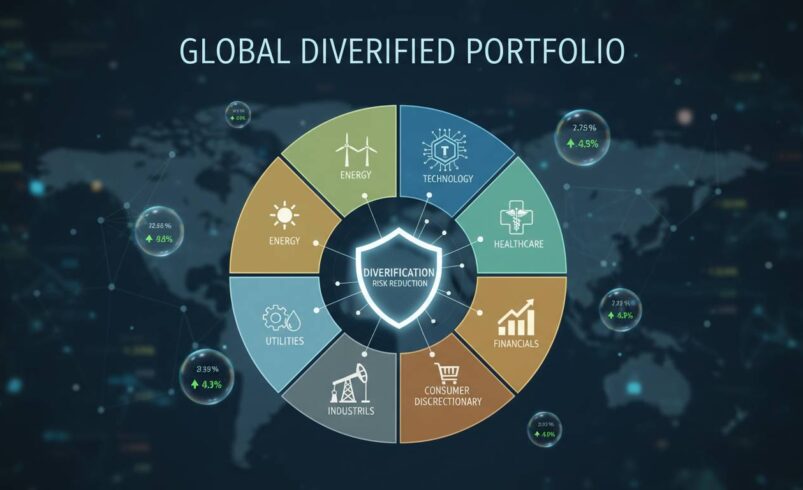
Portfolio diversification is an investment strategy that involves spreading your capital across various financial instruments, sectors, and asset classes to minimize risk. The fundamental principle is simple: not all investments move in the same direction at the same time. When one sector underperforms, another may thrive, balancing your overall returns.
The concept gained prominence in 1952 when Harry Markowitz published his modern portfolio theory, demonstrating mathematically how investors could optimize returns for a given level of risk through strategic asset allocation. Today, this principle forms the backbone of investment philosophy for both individual and institutional investors in India and globally.
For Indian investors, diversification becomes particularly crucial given the market’s inherent volatility. The BSE Sensex has experienced significant swings over the past decade, with single-day movements of 2-3% becoming increasingly common. A well-diversified portfolio doesn’t eliminate risk entirely—no strategy can—but it significantly smoothens the ride and protects your capital from catastrophic losses.
Key Insights
– Diversification reduces unsystematic risk specific to individual stocks or sectors
– The Indian market offers multiple avenues: equities, bonds, FDs, gold, real estate, and mutual funds
– Correlation between assets is crucial—low or negative correlation provides better protection
– Over-diversification can dilute returns without additional risk benefits
Core Principles of Asset Allocation
Asset allocation refers to how you divide your investment portfolio among different asset classes. The right allocation depends on your age, risk tolerance, financial goals, and investment timeline.
The 60-40 Rule and Its Modern Adaptations
Traditionally, a 60-40 portfolio (60% stocks, 40% bonds) was considered the standard balanced approach. However, with bond yields remaining low globally and inflation eroding fixed-income returns, Indian investors are increasingly exploring alternatives.
| Age Group | Aggressive Allocation | Moderate Allocation | Conservative Allocation |
|---|---|---|---|
| 20-30 years | 80% Equity, 20% Debt | 70% Equity, 30% Debt | 50% Equity, 50% Debt |
| 30-40 years | 70% Equity, 30% Debt | 60% Equity, 40% Debt | 40% Equity, 60% Debt |
| 40-50 years | 60% Equity, 40% Debt | 50% Equity, 50% Debt | 30% Equity, 70% Debt |
| 50-60 years | 50% Equity, 50% Debt | 40% Equity, 60% Debt | 20% Equity, 80% Debt |
| 60+ years | 40% Equity, 60% Debt | 30% Equity, 70% Debt | 10% Equity, 90% Debt |
For young Indian investors with a 20-30 year horizon, a higher equity allocation makes sense as they can ride out market downturns. Those approaching retirement should gradually shift toward debt instruments and fixed-income assets.
Incorporating Alternative Assets
Beyond stocks and bonds, Indian investors should consider integrating:
- Gold: Historically acts as an inflation hedge and safe haven. Sovereign Gold Bonds (SGBs) offer additional benefits like interest income and tax efficiency
- Real Estate: REITs (Real Estate Investment Trusts) listed on Indian exchanges provide exposure to commercial real estate without physical property ownership
- Fixed Deposits: Despite lower returns, FDs from reputable banks offer capital protection
- PPF (Public Provident Fund): Government-backed with tax benefits under Section 80C
Sector Diversification Strategies
Sector diversification involves spreading investments across different industries to reduce exposure to sector-specific risks. The Indian economy comprises multiple sectors, each responding differently to economic cycles.
Key Sectors in the Indian Market
Financial Services: Banks, NBFCs, and insurance companies form the backbone of the Indian economy. With credit growth consistently above 15% annually, this sector offers steady dividends and capital appreciation. Top performers include HDFC Bank, ICICI Bank, and Bajaj Finance.
Information Technology: India IT companies dominate global outsourcing, with majors like TCS, Infosys, and Wipro maintaining strong profit margins. However, this sector faces currency risks and client concentration challenges.
Pharmaceuticals: The “pharmacy of the world” tag reflects India’s generic drug manufacturing strength. Sun Pharma, Dr. Reddy’s, and Divi’s Labs have shown resilience even during global supply chain disruptions.
Consumer Goods: As India’s middle class expands, consumer discretionary and FMCG companies benefit. Hindustan Unilever, ITC, and Asian Paints represent this growing market.
Manufacturing and Infrastructure: The government’s Make in India initiative has boosted this sector. Companies like L&T and Bharat Heavy Electricals benefit from increased infrastructure spending.
Renewable Energy: With India’s commitment to 500 GW renewable energy capacity by 2030, this emerging sector presents significant growth opportunities.
When building a sector-diversified portfolio, avoid over-concentration in any single sector. A common guideline suggests limiting any one sector to 15-20% of your equity portfolio. Additionally, consider the cyclical nature of sectors—combining defensive sectors (FMCG, pharma) with cyclical ones (automobiles, real estate) creates balance.
Market Capitalization: Large-Cap, Mid-Cap, and Small-Cap
Understanding market capitalization categories helps Indian investors balance stability and growth potential.
Large-Cap Stocks (Top 100 by Market Cap)
Large-cap stocks represent established companies with proven track records, stable earnings, and lower volatility. Stocks like Reliance Industries, TCS, and HDFC Bank fall into this category. These companies typically offer:
- Lower risk compared to smaller counterparts
- Regular dividends
- Liquidity for easy buying and selling
- Resilience during market downturns
Mid-Cap Stocks (101-250 by Market Cap)
Mid-cap companies offer higher growth potential than large caps but come with increased volatility. Examples include Bandhan Bank, ABB India, and Coforge. These stocks can deliver significant returns during bull markets but may underperform during corrections.
Small-Cap Stocks (Below 250)
Small-cap stocks represent emerging companies with high growth potential but elevated risk. While they offer the possibility of multi-bagger returns, they carry substantial downside risk and lower liquidity.
A balanced Indian equity portfolio typically follows a 60-20-20 ratio: 60% large-cap, 20% mid-cap, and 20% small-cap. However, aggressive investors may increase mid and small-cap exposure, while conservative investors should prioritize large-caps.
Geographic and International Diversification
While Indian-focused investing has served well given the country’s economic growth, international diversification adds another layer of risk management.
Benefits of International Exposure
- Currency diversification: The Indian rupee has shown volatility against major currencies
- Access to global growth stories: Companies like Apple, Microsoft, and Amazon aren’t available on Indian exchanges
- Sector exposure: Indian markets lack representation in certain sectors like global pharmaceuticals and aerospace
- Hedging against domestic political and economic risks
Indian investors can access international markets through:
- Global Mutual Funds: Several Indian AMCs offer funds investing in US, European, and Asian markets
- Exchange Traded Funds (ETFs): US-domiciled ETFs available through Indian brokers via IIFL, Zerodha, and others
- Direct Stock Purchase: Some international brokers allow Indian residents to open accounts
A prudent allocation suggests 10-15% of your equity portfolio in international assets, though this depends on your risk appetite and investment goals.
Building Your Portfolio: Step-by-Step Approach
Step 1: Assess Your Financial Position
Before investing, evaluate your financial health:
- Do you have an emergency fund covering 6-12 months of expenses?
- Are high-interest debts (credit cards, personal loans) paid off?
- What are your short-term and long-term financial goals?
- What is your risk tolerance based on your age and dependents?
Step 2: Define Your Investment Strategy
Choose an investment approach aligned with your goals:
- Systematic Investment Plan (SIP): Regular monthly investments in mutual funds or stocks,rupee-cost averaging
- Lump Sum Investing: Deploying capital at once, suitable during market corrections
- Hybrid Approach: Combining both strategies
Step 3: Select Your Investment Instruments
For Indian investors, the primary vehicles include:
Direct Stocks: Purchasing individual company shares through a Demat account with brokers like Zerodha, Upstox, ICICI Direct, or HDFC Securities. This requires research and monitoring skills.
Mutual Funds: Professional fund management with schemes across categories (equity, debt, hybrid, sectoral). The total assets under management (AUM) of the Indian mutual fund industry crossed ₹50 lakh crore in 2024, reflecting growing investor participation.
Exchange Traded Funds (ETFs): Basket of securities trading like stocks. Popular ETFs include Nifty 50 ETFs, Gold ETFs, and sector-specific offerings.
Index Funds: Passively managed funds tracking indices like Nifty 50 or Sensex, offering low-cost diversification.
Step 4: Implement and Monitor
Once you’ve constructed your portfolio:
- Regular Review: Evaluate performance quarterly or semi-annually
- Rebalancing: Annual rebalancing maintains your target allocation as markets move
- Avoid Emotional Decisions: Market volatility triggers panic selling; stick to your plan
- Tax Efficiency: Understand capital gains tax implications—long-term holdings (over 1 year) get indexation benefits
Common Mistakes to Avoid
Concentration Risk
Many Indian investors overweight specific sectors, often due to recent performance or personal familiarity. The IT boom of the early 2000s and the financial inclusion wave of 2010s both attracted heavy sector concentration, leading to losses when trends reversed.
Chasing Performance
Buying recent top performers often leads to buying at peaks. The historic tendency to buy funds or stocks that have delivered exceptional returns over the past 1-3 years frequently results in underperformance, as markets mean-revert.
Ignoring Expense Ratios
In mutual funds and ETFs, expense ratios compound over time. A 2% expense ratio can reduce your 15-year returns by approximately 25% compared to a 0.5% ratio fund. Index funds and ETFs typically offer lower costs than actively managed funds.
Timing the Market
Attempting to enter and exit markets based on predictions rarely succeeds. Time in the market outperforms timing the market. Systematic investing through SIPs removes emotional decision-making and capitalizes on market volatility.
Neglecting Regular Rebalancing
Without periodic rebalancing, your portfolio drifts from your target allocation as asset classes perform differently. A portfolio initially split 70-30 between equity and debt might drift to 85-15 after a prolonged bull run, exposing you to greater risk than intended.
Tools and Platforms for Indian Investors
The Indian market offers robust infrastructure for portfolio management:
Broking Platforms: Zerodha, Upstox, Groww, and ICICI Direct provide user-friendly interfaces with low brokerage fees. Angel One and Kotak Securities offer comprehensive research and advisory services.
Mutual Fund Platforms: CAMS, KFintech, and direct plan options through fund houses enable systematic investments.
Portfolio Analysis Tools: Value Research, Morningstar India, and Moneycontrol provide portfolio tracking and analysis capabilities.
Financial Planning Apps: Scripbox, Basis, and FundsIndia offer goal-based investing with automated rebalancing.
Conclusion
Building a diversified stock portfolio in India requires balancing multiple factors: asset allocation across equity, debt, and alternatives; sector diversification to manage industry-specific risks; market cap distribution between large, mid, and small caps; and strategic international exposure. The journey demands patience, discipline, and continuous learning.
Start with clear financial goals, assess your risk tolerance honestly, and construct a portfolio matching your timeline. Whether you choose direct stocks, mutual funds, or ETFs, consistency matters more than perfection. Regular contributions through SIPs, periodic rebalancing, and avoiding emotional decisions form the foundation of long-term wealth creation.
Remember that diversification doesn’t guarantee profits or protect entirely from losses—it manages risk intelligently. As India’s economy continues its growth trajectory, investors who maintain disciplined, diversified portfolios position themselves to capture upside while weathering market downturns effectively.
Frequently Asked Questions
How much money do I need to start building a diversified portfolio in India?
You can begin investing with as little as ₹500 through Systematic Investment Plans (SIPs) in mutual funds or purchase fractional shares through certain brokers. For direct stock investing, most brokers allow account opening with no minimum deposit, though purchasing your first stock requires capital based on the share price. Starting early matters more than the initial amount due to compounding benefits.
Should I invest in mutual funds or direct stocks for diversification?
Mutual funds offer instant diversification through professional management and are ideal for beginners or investors lacking time for research. Direct stocks provide control and lower costs but require significant knowledge and monitoring. Many investors use a hybrid approach—core holdings in index funds or diversified mutual funds with satellite positions in individual stocks for potential outperformance.
How often should I rebalance my portfolio?
Annual rebalancing is generally sufficient for most investors. This allows your portfolio to realign with target allocations without incurring excessive trading costs or tax implications. However, significant life events (marriage, children, retirement) or major market movements (20%+ swing) may warrant earlier rebalancing. Avoid frequent rebalancing based on short-term market movements.
Is international diversification necessary for Indian investors?
While not mandatory, international diversification (10-15% of equity portfolio) provides protection against domestic concentration risk and currency diversification. It offers exposure to sectors and companies unavailable in India. However, factors like FEMA regulations, tax implications, and currency volatility require consideration. For most Indian investors, starting with domestic diversification before adding international exposure makes sense.
What is the ideal number of stocks for a diversified portfolio?
Research suggests 20-30 stocks provide substantial diversification benefits, with minimal additional risk reduction beyond this range. Holding too few stocks (under 10) concentrates risk excessively, while over-diversification (50+ stocks) dilutes returns without meaningful risk reduction. For practical purposes, 15-25 quality stocks across different sectors represent an optimal balance for most individual investors.
How does inflation affect my diversified portfolio?
Inflation erodes purchasing power and impacts different asset classes differently. Equities historically outpace inflation over long periods, making them essential for growth. Fixed-income investments may lose real value if returns fall below inflation rates. Including inflation-hedging assets like gold, real estate (through REITs), and index-linked bonds helps protect your portfolio’s purchasing power over time.