

The stock market remains one of the most powerful wealth-building tools available to Indian investors, yet many people find it intimidating or confusing. With the Securities and Exchange Board of India (SEBI) reporting that demat accounts in India crossed 10 crore (100 million) in 2024, more Indians than ever are participating in the equity markets. Understanding how the stock market works is essential for anyone looking to grow their wealth beyond traditional savings instruments. This comprehensive guide breaks down the mechanics of the stock market, explains key concepts, and provides practical insights for Indian investors considering their first equity investment.
What Is the Stock Market and How Does It Work
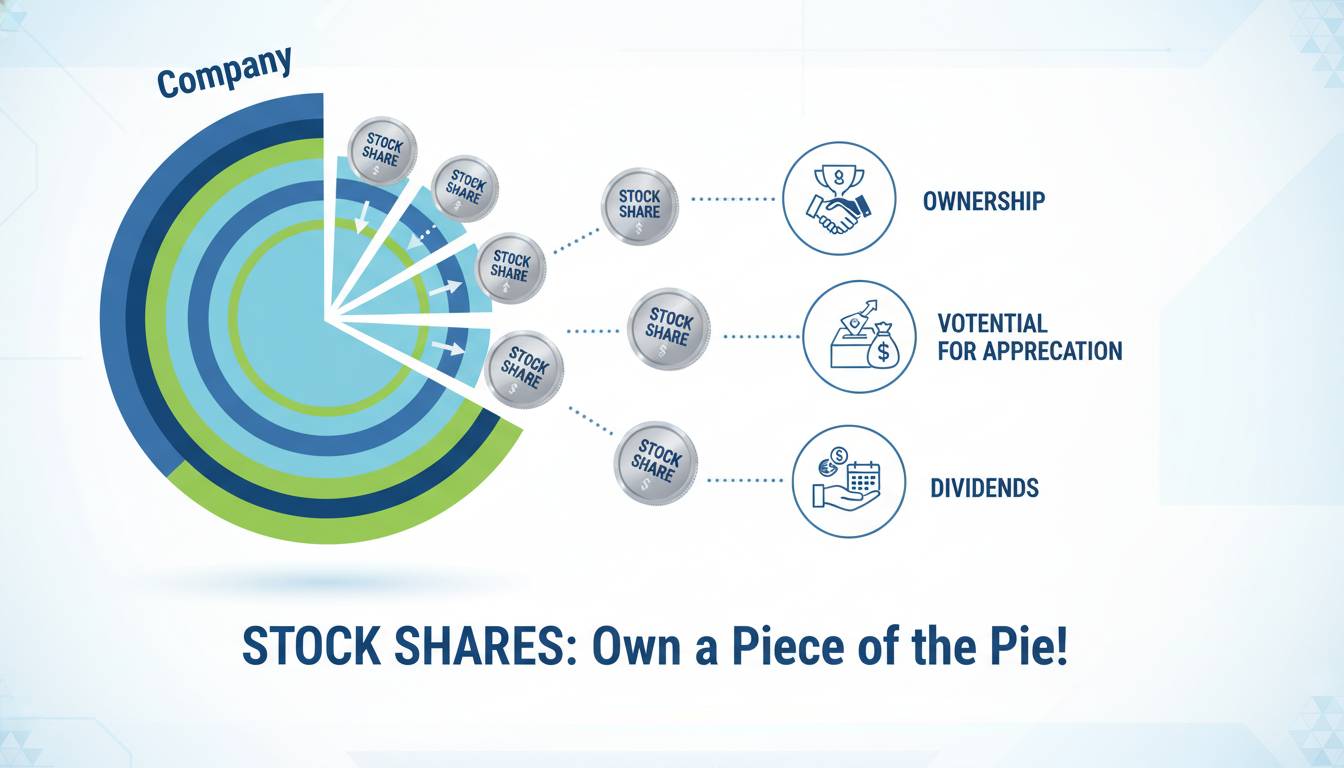
The stock market is a collection of markets where stocks (pieces of ownership in companies) are bought and sold. It serves as a platform connecting companies seeking capital with investors looking for growth opportunities. When a company decides to raise money from the public, it issues shares through an initial public offering (IPO), and these shares are subsequently traded on stock exchanges.
The fundamental principle behind the stock market is price discovery. Stock prices fluctuate based on supply and demand dynamics. When more investors want to buy a particular stock than sell it, the price rises. Conversely, when more investors want to sell than buy, the price falls. This continuous negotiation between buyers and sellers determines the market price of every stock at any given moment.
India operates two major stock exchanges: the National Stock Exchange (NSE), which was established in 1992 and began operations in 1994, and the Bombay Stock Exchange (BSE), which is Asia’s oldest stock exchange, founded in 1875. Both exchanges function under the regulatory oversight of SEBI, which was established in 1992 to protect investor interests and promote fair and orderly functioning of the securities market.
The combined market capitalization of Indian stock exchanges ranks among the top 10 globally, reflecting the significant role India plays in the global financial system. Understanding this foundation is crucial for any investor entering the market, as it provides context for how individual investment decisions fit into the broader economic landscape.
Understanding Stock Exchanges and Trading
Stock exchanges act as intermediaries between buyers and sellers, providing a regulated, transparent, and secure environment for trading securities. In India, the NSE and BSE offer electronic trading systems that match buy and sell orders instantaneously, ensuring price transparency and efficient market operations.
The trading process on Indian exchanges follows a standardized settlement cycle. Currently, the T+1 settlement cycle means that trades are settled one business day after the transaction date. This system has evolved from the earlier T+2 and T+3 cycles, reflecting improvements in market infrastructure and clearing mechanisms. Investors must maintain a demat account (dematerialized account) with a depository participant to hold their securities in electronic form, and a trading account with a registered broker to execute buy and sell orders.
Market participants include retail investors like individual citizens, institutional investors such as mutual funds and insurance companies, foreign portfolio investors, and proprietary traders. Each participant brings different objectives, investment horizons, and risk tolerances to the market, contributing to liquidity and price discovery.
The trading session on Indian exchanges operates from 9:15 AM to 3:30 PM IST, Monday through Friday, excluding market holidays. During this window, investors can place various types of orders, including market orders (executed immediately at the prevailing price), limit orders (executed only at a specified price or better), and stop-loss orders (triggered when a stock reaches a predetermined price). Understanding order types helps investors implement their investment strategies effectively.
How Stocks Are Bought and Sold
The process of buying and selling stocks in India involves several key steps and participants. First, an investor must open a trading account with a SEBI-registered broker and a demat account with a depository participant (typically a bank or brokerage firm). The broker acts as an intermediary, executing orders on behalf of the investor through the exchange’s trading system.
When placing an order, investors specify the stock they wish to trade, the quantity, and the order type. The broker routes this order to the exchange, where it is matched with a corresponding buy or sell order from another investor. Once matched, the trade is executed, and the clearing corporation ensures that securities are delivered to the buyer’s demat account and funds are transferred to the seller’s account.
The price at which a trade executes depends on the order matching mechanism. For market orders, the execution price is the best available price at that moment. For limit orders, the trade executes only if the stock reaches the specified price. Understanding this mechanism helps investors appreciate that the price they see on their screen may differ slightly from the execution price, particularly in fast-moving markets.
Transaction costs include brokerage fees charged by the broker, Securities Transaction Tax (STT) levied by the government, Goods and Services Tax (GST) on brokerage, and stamp duty on the transaction value. These costs vary among brokers and can impact overall investment returns, especially for frequent traders. Investors should carefully compare brokerage structures and consider their trading frequency when selecting a broker.
Factors That Influence Stock Prices
Stock prices in the Indian market respond to a complex interplay of factors spanning economic conditions, company-specific developments, and global events. Understanding these influences helps investors make informed decisions and avoid reactive decisions based on short-term market movements.
Company fundamentals represent the primary driver of long-term stock prices. Financial metrics such as revenue growth, profit margins, earnings per share, and return on equity provide insight into a company’s operational efficiency and growth potential. When a company reports strong quarterly results or announces strategic initiatives, its stock price typically reflects positive investor sentiment. Conversely, disappointing earnings or operational challenges can lead to price declines.
Macroeconomic factors significantly impact market-wide sentiment. India’s GDP growth rate, inflation figures, interest rate decisions by the Reserve Bank of India (RBI), government policies, and fiscal deficit levels all influence investor confidence. For instance, when RBI raises interest rates to control inflation, it can lead to capital outflows from equities as fixed-income investments become more attractive, potentially causing market declines.
Global factors also play an important role in determining Indian stock prices. Movements in global markets, particularly the Wall Street and other Asian markets, currency fluctuations (especially the USD-INR exchange rate), crude oil prices (since India imports most of its oil requirements), and geopolitical developments can trigger volatility in Indian markets. International investors’ sentiment toward emerging markets, measured through Foreign Portfolio Investor (FPI) flows, often impacts market direction.
Market sentiment and psychology create short-term price movements that may not align with fundamentals. During periods of greed, stock prices can surge beyond reasonable valuations, while fear can drive prices below intrinsic value. Experienced investors recognize these emotional cycles and attempt to maintain disciplined investment approaches rather than succumbing to market euphoria or panic.
Benefits and Risks of Stock Market Investing
Investing in the stock market offers substantial benefits for Indian investors willing to accept certain risks. Historically, equities have outperformed other asset classes over the long term, providing inflation-beating returns and wealth creation opportunities. The Indian equity market has delivered average annual returns of approximately 12-15% over extended periods, significantly higher than bank fixed deposits or traditional savings instruments.
One of the primary advantages of stock market investing is ownership in growing companies. As Indian businesses expand, they generate profits that can be distributed as dividends or reinvested for further growth. Investors participate in this economic value creation, building wealth as companies they own become more valuable. Additionally, stocks provide liquidity, meaning investors can convert their holdings to cash relatively quickly during market hours, unlike real estate or other illiquid investments.
The tax treatment of equity investments in India offers certain advantages. Long-term capital gains (profits from selling stocks held for more than one year) exceeding ₹1 lakh are taxed at 10%, while short-term gains are taxed at 15%. Dividend income is taxable according to the investor’s income tax slab, though dividend distribution tax has been abolished, preventing double taxation.
However, stock market investing carries significant risks that investors must understand and accept. Market volatility can result in substantial short-term losses, and investors who panic sell during downturns may realize losses. Individual stocks can underperform or even become worthless if a company faces irreversible challenges. The stock market requires research, patience, and emotional discipline, qualities that not all investors naturally possess.
Diversification across sectors and asset classes helps mitigate individual stock risk. Rather than investing in a single company, investors can spread their capital across multiple stocks, or more easily, through mutual funds and exchange-traded funds (ETFs) that provide instant diversification. Understanding personal risk tolerance and investing accordingly prevents unsuitable investment choices that could jeopardize financial goals.
Getting Started with Stock Market Investing in India
Indian investors can begin their stock market journey through systematic planning and careful execution of their investment strategy. The first step involves financial goal-setting and assessment of risk tolerance. Investors should clarify whether they are investing for retirement, wealth accumulation, or specific financial objectives, as this determines their investment horizon and risk capacity.
Opening the necessary accounts requires choosing a reliable broker and depository participant. Investors should compare brokerage fees, platform reliability, research offerings, and customer service quality before making a decision. Many brokers now offer zero-commission trading for delivery-based equity investments, making market participation more accessible. The account opening process typically requires identity verification, address proof, and bank account linking, all of which can be completed online through Aadhaar-based e-KYC.
Building a portfolio requires selecting individual stocks or opting for managed investment products. For beginners, starting with index funds or ETFs that track broad market indices like the Nifty 50 or Sensex provides exposure to the market with reduced company-specific risk. As investors gain experience and confidence, they can allocate a portion of their portfolio to individual stocks after thorough research.
Fundamental analysis involves examining financial statements, understanding business models, evaluating competitive positioning, and assessing management quality. SEBI’s regulatory requirements ensure that listed companies disclose material information, enabling investors to make informed decisions. Resources like annual reports, quarterly results, investor presentations, and analyst recommendations provide valuable information for stock selection.
Investors should develop a disciplined approach to investing, avoiding speculative trading and maintaining a long-term perspective. Regular investment through systematic investment plans (SIPs) in mutual funds or systematic transfer plans helps average out market volatility and builds wealth through rupee-cost averaging. Maintaining an emergency fund in liquid instruments before investing in equities ensures that short-term market fluctuations do not force untimely selling.
Conclusion
The stock market represents a vital mechanism for wealth creation in India, connecting investors with growing companies and enabling participation in economic development. Understanding how the stock market works—through exchanges, trading mechanisms, and price discovery—provides the foundation for informed investment decisions. While the market offers significant potential returns, it demands respect for its risks and complexities.
Indian investors benefit from a well-regulated market environment overseen by SEBI, competitive brokerage options, and access to extensive market information. Success in stock market investing requires patience, discipline, continuous learning, and realistic expectations. By starting with clear financial goals, maintaining appropriate risk tolerance, and following sound investment principles, Indian investors can work toward building long-term wealth through equity participation. The key lies in treating investing as a journey of continuous learning rather than aget-rich-quick scheme, acknowledging that sustainable wealth creation takes time and measured risk-taking.
Frequently Asked Questions
What is the minimum amount required to start investing in the Indian stock market?
There is no mandatory minimum amount to start investing in stocks. You can buy shares of companies whose share prices fit your budget. Many brokers allow account opening with minimal documentation, and some even offer fractional share investing. However, it’s advisable to start with an amount you can afford to invest for the long term without needing immediate access.
How do I choose which stocks to invest in?
Selecting stocks requires research into company fundamentals, including financial performance, business model, competitive positioning, and growth prospects. Analyzing financial ratios, reading annual reports, and understanding industry trends helps identify quality companies. Alternatively, investing in mutual funds or ETFs provides professional management and diversification for those preferring a hands-off approach.
What is the difference between the NSE and BSE?
Both are major Indian stock exchanges offering similar trading mechanisms. The BSE (Bombay Stock Exchange) is older, established in 1875, while the NSE (National Stock Exchange) began operations in 1994. The NSE has a higher trading volume, but both exchanges list the same companies and offer comparable trading experiences. Investors can trade on either exchange through their broker.
Are stock market investments safe in India?
SEBI regulates Indian stock markets to protect investor interests, making them relatively safe and transparent. However, all investments carry risk, and stock prices can decline. Safety depends on informed decision-making, diversification, and long-term investment horizons. Using recognized brokers and understanding settlement procedures helps ensure secure transactions.
What is the difference between trading and investing?
Trading involves buying and selling stocks frequently to capitalize on short-term price movements, requiring active monitoring and higher risk tolerance. Investing involves buying quality stocks and holding them for extended periods to benefit from long-term growth and compounding returns. Most financial experts recommend a long-term investment approach for most individual investors.
How are stock market returns taxed in India?
Long-term capital gains (from stocks held over one year) exceeding ₹1 lakh are taxed at 10%, while short-term gains are taxed at 15%. Dividend income is added to your total income and taxed according to your income tax slab. These tax rules apply to resident Indian individuals and are subject to changes in tax legislation.