
Decentralized Finance has emerged as one of the most transformative sectors in the cryptocurrency ecosystem, offering Indian investors unprecedented access to financial instruments traditionally reserved for institutional players. With over $180 billion in total value locked across DeFi protocols globally as of 2025, the sector continues to attract both retail and sophisticated investors seeking yield generation, lending opportunities, and decentralized trading capabilities. For Indian investors navigating this dynamic landscape, understanding which projects offer genuine utility versus speculative hype has become essential for building sustainable crypto portfolios.
The Indian crypto market has experienced remarkable growth, with trading volumes consistently ranking among the highest globally. India’s distinctive regulatory environment—including the 30% tax on crypto gains and the Reserve Bank of India’s evolving stance—creates unique considerations for DeFi participation. This comprehensive guide examines the most promising DeFi crypto projects, analyzes their fundamentals, and provides actionable insights for Indian investors seeking to capitalize on decentralized finance opportunities while managing associated risks.
Understanding DeFi: The Foundation of Modern Crypto Finance
Decentralized Finance represents a paradigm shift from traditional financial systems, eliminating intermediaries such as banks, brokerage firms, and exchanges through smart contracts—self-executing code deployed on blockchain networks. These programmable agreements enable automated lending, borrowing, trading, and yield farming without requiring trust in centralized institutions. Ethereum remains the dominant platform for DeFi applications, though competing Layer 1 and Layer 2 solutions have gained significant traction due to lower transaction costs and improved scalability.
The DeFi ecosystem encompasses several core functional categories, each addressing specific financial use cases through decentralized infrastructure. Lending protocols like Aave and Compound allow users to supply assets and earn interest or collateralize loans without credit checks. Decentralized exchanges (DEXs) such as Uniswap and Curve facilitate trustless token swaps through automated market maker (AMM) algorithms. Yield aggregators optimize returns across multiple protocols, while stablecoins maintain pegged values essential for DeFi operations.
For Indian investors, DeFi offers particular advantages beyond traditional finance. The ability to earn variable yields on crypto holdings—often significantly higher than Indian bank deposit rates—attracts those seeking alternatives in a low-interest-rate environment. Additionally, DeFi protocols operate 24/7 without geographic restrictions, providing access to global financial markets directly from Indian bank accounts, albeit through compliant exchange onramps.
Top DeFi Projects: Category-by-Category Analysis
Decentralized Exchanges
Decentralized exchanges have revolutionized cryptocurrency trading by enabling peer-to-peer transactions without centralized order books or intermediaries. These platforms use liquidity pools where users supply token pairs, earning fees from traders who swap between those assets.
Uniswap stands as the most widely-used decentralized exchange, processing billions in daily trading volume across Ethereum and multiple Layer 2 networks. The protocol’s v4 iteration introduced hook mechanisms allowing customized pool configurations, attracting professional market makers and institutional liquidity providers. For Indian investors, Uniswap’s extensive token listings provide access to emerging projects often unavailable on domestic exchanges, though gas fees during network congestion can impact smaller trades.
Curve Finance specializes in stablecoin and wrapped asset swaps, making it ideal for investors seeking minimal slippage when trading between dollar-pegged tokens or liquid staking derivatives. The protocol’s concentrated liquidity feature enables sophisticated yield strategies, while its native CRV token provides additional earning potential through governance participation and fee discounts.
| Protocol | Primary Use | TVL | Best For |
|---|---|---|---|
| Uniswap | General AMM | $7.5B+ | Token variety, emerging projects |
| Curve | Stablecoin swaps | $3.2B+ | Low-slippage trades, yield optimization |
| dYdX | Perpetual trading | $800M+ | Leverage, derivatives |
Lending and Borrowing Protocols
Lending protocols enable crypto holders to generate passive income by supplying assets to liquidity pools, while borrowers can access capital without selling their holdings. Interest rates dynamically adjust based on supply and demand, creating market-driven yields that often exceed traditional savings accounts.
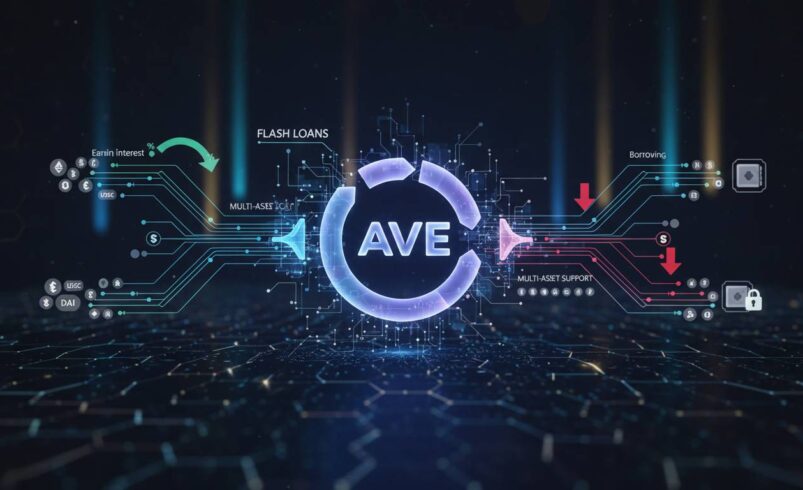
Aave leads the lending sector with over $30 billion in total value locked across its protocol. The platform supports a comprehensive array of collateralized assets, including volatile cryptocurrencies, stablecoins, and real-world assets. Aave’s innovative flash loan feature allows uncollateralized borrowing within a single blockchain transaction—a powerful tool for arbitrage strategies available to sophisticated traders. For Indian investors, Aave’s multi-chain presence across Ethereum, Polygon, and Avalanche provides flexible entry points depending on transaction cost preferences.
Compound pioneered the algorithmic interest rate model that many DeFi lending platforms now employ. The protocol’s governance token, COMP, distributes protocol revenue to suppliers and borrowers, creating additional value accrual for active participants. Compound’s conservative risk parameters and transparent liquidation mechanisms make it particularly suitable for newer DeFi participants prioritizing capital preservation.
Yield Aggregators and Optimizers
Yield aggregators automate complex strategies that would be impractical to execute manually, continuously moving funds across protocols to maximize returns. These platforms handle the technical complexity of staking, farming, and rebalancing, making advanced DeFi strategies accessible to average investors.
Yearn Finance represents the original yield aggregator, employing vault strategies that optimize returns from lending protocols, liquidity mining, and strategic position management. The platform’s vault system automatically allocates funds based on risk-adjusted returns, saving users significant time and gas costs compared to manual strategy execution.
Lido Finance has become essential for Ethereum validators seeking liquid staking derivatives. Rather than locking 32 ETH for native staking, users can stake any amount through Lido and receive stETH—a token representing staked Ethereum that maintains liquidity for use in DeFi protocols. This innovation enables yield stacking, where stETH serves as collateral for loans or liquidity provision while earning staking rewards.
India-Specific Considerations for DeFi Investment
Regulatory Landscape
Indian cryptocurrency investors operate within a distinctive regulatory environment that significantly impacts DeFi participation. The 2022 budget introduced a 30% income tax on cryptocurrency gains, along with a 1% tax deducted at source (TDS) on crypto asset transfers exceeding certain thresholds. These provisions have compelled Indian investors to maintain meticulous records of all DeFi transactions, including token swaps, yield claims, and liquidity provision activities.
The Reserve Bank of India (RBI) has oscillated between prohibition and permission regarding cryptocurrency activities. Following the Supreme Court’s 2020 ruling that overturned the RBI’s banking ban, Indian investors can legally purchase cryptocurrencies through registered exchanges using Indian Rupee deposits. However, the regulatory uncertainty prompts caution among institutional DeFi participants, with many limiting exposure until clearer frameworks emerge.
Exchange Infrastructure and Onramps
Indian cryptocurrency exchanges have adapted to facilitate DeFi participation by offering staking services, token swaps, and wallet integrations. Platforms like CoinDCX, WazirX, and ZebPay provide varying degrees of DeFi access, though direct protocol interaction typically requires self-custody wallets and blockchain navigation.
For Indian investors, understanding the distinction between custodial and non-custodial engagement becomes crucial. Holding assets on exchanges provides convenience but limits DeFi protocol access, while self-custody through wallets like MetaMask or Rabby enables full DeFi participation but requires managing private keys and gas fee optimization—a steeper learning curve for newcomers.
Risk Assessment and Due Diligence
Smart Contract Risk
Smart contract vulnerabilities represent the most significant technical risk in DeFi investing. Despite extensive audits and bug bounty programs, protocol exploits have resulted in billions of dollars in losses across the ecosystem. Indian investors should prioritize projects with multiple independent security audits, established track records, and transparent incident response protocols.
Diversification across protocols—rather than concentration in single platforms—provides meaningful protection against catastrophic smart contract failures. The DeFi insurance ecosystem, though nascent, offers coverage options through protocols like Nexus Mutual and Cover Protocol, though premiums and coverage limitations require careful evaluation.
Impermanent Loss
Liquidity provision exposes investors to impermanent loss—a phenomenon where providing liquidity to automated market makers results in lower returns compared to simply holding tokens. This risk intensifies for volatile asset pairs with significant price divergence. Indian investors engaging in liquidity provision should understand that impermanent loss is not a fee but an opportunity cost that can exceed earned trading fees during extreme market movements.
Market and Liquidity Risks
DeFi protocols depend on sufficient liquidity for smooth operations. During market stress, liquidity can evaporate rapidly, triggering cascading liquidations and substantial losses for borrowers. The collapse of Terra’s UST stablecoin in 2022 demonstrated how algorithmic stablecoin failures can propagate through interconnected DeFi protocols, affecting even conservative participants.
Investment Strategy for Indian DeFi Participants
Portfolio Allocation Framework
Successful DeFi investing requires balancing yield追求 with risk management. A conservative approach might allocate 5-10% of a cryptocurrency portfolio to DeFi activities, with emphasis on established lending protocols and stablecoin yields rather than speculative yield farming. This allocation provides exposure to DeFi innovation while limiting potential losses from protocol failures or scams.
For Indian investors with higher risk tolerance, a tiered strategy proves effective: core holdings in blue-chip DeFi protocols (Aave, Uniswap, Compound), satellite positions in emerging projects with strong fundamentals, and experimental allocations limited to capital willing to lose entirely. This framework accommodates the experimental nature of DeFi while maintaining portfolio stability.
Tax Optimization Considerations
The 30% tax on crypto gains creates substantial friction for frequent DeFi participants, as each token swap and yield harvest potentially triggers taxable events. Indian investors benefit from consolidating DeFi activities to reduce transaction counts, maintaining detailed records of cost basis for all acquisitions, and considering long-term holding periods where applicable. Consulting with tax professionals familiar with cryptocurrency regulations helps optimize reporting while maintaining compliance.
Frequently Asked Questions
Is investing in DeFi projects legal in India?
Yes, cryptocurrency investments including DeFi protocols are legal in India following the Supreme Court’s 2020 ruling that overturned the RBI’s banking ban. However, investors must comply with the 30% income tax on crypto gains and 1% TDS provisions introduced in the 2022 budget. DeFi participation itself—using self-custody wallets to interact with protocols—remains legal, though regulatory clarity continues evolving.
Which DeFi project is best for beginners in India?
Compound and Aave represent the most accessible entry points for Indian DeFi beginners due to their intuitive interfaces, established track records, and conservative risk parameters. Both protocols offer straightforward lending functionality where users can supply assets and earn interest without complex strategy management. Starting with small amounts while learning platform navigation minimizes potential losses from user error.
How do I calculate returns from DeFi investments?
DeFi returns vary by protocol and strategy. For lending, returns appear as annual percentage yield (APY) that compounds automatically or manually depending on the platform. Liquidity provision returns combine trading fees earned from swaps plus token incentives from liquidity mining programs. Tools like Apy.vision, DeFiLlama, and protocol dashboards provide real-time yield calculations, though impermanent loss must be separately calculated for liquidity providers.
What are the biggest risks of DeFi investing for Indian investors?
Smart contract exploits pose the most severe technical risk, as bugs can result in complete fund loss. Regulatory risk remains significant given India’s evolving crypto framework—future restrictions could impact DeFi participation. Additionally, the complexity of DeFi protocols increases likelihood of user error, from incorrect token addresses to improper collateral management. Maintaining small position sizes during learning curves helps manage these risks.
Can Indian investors earn passive income through DeFi?
Yes, Indian investors can earn passive income through several DeFi mechanisms: lending assets on protocols like Aave or Compound generates interest, providing liquidity to DEXs earns trading fees, and staking tokens via liquid staking protocols yields staking rewards. However, returns are variable and subject to smart contract risks, market volatility, and potential regulatory changes. Comparing DeFi yields against traditional Indian investment options while accounting for additional complexity and risk is essential.
How do I safely get started with DeFi in India?
Begin by setting up a non-custody wallet like MetaMask or Rabby, ensuring secure storage of seed phrases offline. Fund the wallet through a reputable Indian exchange purchasing ETH or stablecoins. Start with a small test transaction on a Layer 2 network like Polygon where fees are minimal. Begin with simple lending on established protocols before attempting complex strategies. Never share private keys, and verify all contract addresses before interacting with protocols—phishing attacks targeting Indian users have increased significantly.
Conclusion
Decentralized Finance presents compelling opportunities for Indian investors seeking alternative yield sources and greater financial autonomy. The projects examined—Uniswap, Curve, Aave, Compound, Yearn, and Lido—represent foundational protocols with proven utility, substantial total value locked, and ongoing development momentum. For Indian participants, the key lies in approaching DeFi with realistic expectations: substantial returns are possible but accompanied by meaningful technical, regulatory, and market risks.
Success in DeFi investing requires continuous education, disciplined risk management, and acceptance of the experimental nature inherent in rapidly evolving financial infrastructure. Starting with established protocols, maintaining diversified exposures, and avoiding greedy leverage positions provides the most sustainable path forward. As India’s regulatory framework matures and institutional participation grows, DeFi’s role in the Indian financial ecosystem will likely expand—making now an appropriate time for careful, calculated exploration of these revolutionary technologies.