
The SEC’s approval of spot Bitcoin exchange-traded funds (ETFs) on January 10, 2024 changed the game for cryptocurrency investing in the US—and sent ripples through markets worldwide. For Indian investors watching from the sidelines, this decision matters. It affects what options you have, how regulators in India might respond, and whether digital assets are finally becoming mainstream.
Understanding the SEC’s Decision
After years of rejecting Bitcoin ETF applications, the Securities and Exchange Commission (SEC) reversed course and approved products from BlackRock, Fidelity, Grayscale, and others. A court ruling played a key role—the 2023 Grayscale decision found the SEC’s earlier rejections “arbitrary and capricious,” forcing the agency to reconsider.
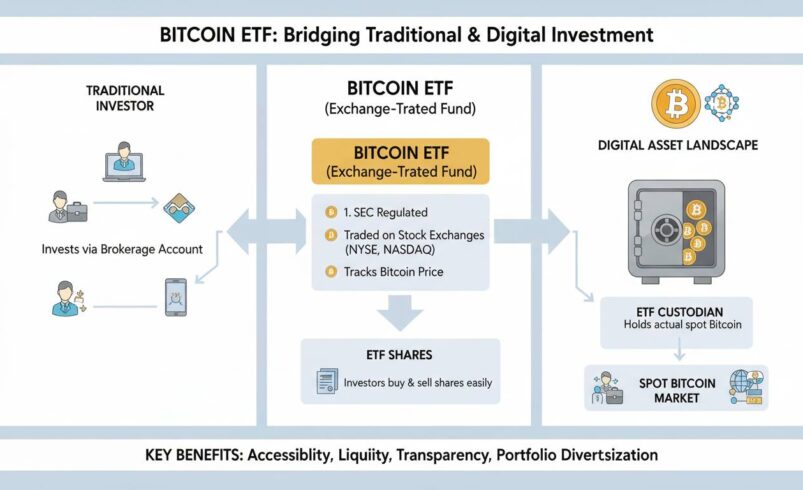
These are spot ETFs, meaning they hold actual Bitcoin rather than futures contracts. That’s a meaningful distinction. You get direct exposure to Bitcoin’s price through your regular brokerage account, without dealing with crypto exchanges or managing private keys. Trading volumes hit billions within the first week.
“Bitcoin is now an institutionalized asset class,” said Michael Sonnenshein, CEO of Grayscale. “We’ve crossed a threshold.”
Impact on Indian Investors
Indian crypto investors have been following this story closely. The SEC’s move signals that major economies are taking digital assets seriously—and that could shape how SEBI eventually regulates the space.
The practical upshot: if you have access to a US brokerage account (through a qualified foreign institutional investor or a platform like Interactive Brokers), you can now buy spot Bitcoin ETFs directly. This gives you a regulated, familiar way to get exposure—different from buying crypto on WazirX or CoinDCX, which still operate in a gray area in India.
Bitcoin’s price jumped after the approval, reaching new highs. Indian exchanges saw trading volumes spike too. The markets are connected, and what happens in the US doesn’t stay in the US.
What This Means for Indian Regulation
SEBI has been cautious about crypto. The 30% tax on gains and 1% TDS have already driven many Indian traders to offshore platforms. The SEC’s decision gives regulators a reference point—if the US can oversee these products effectively, maybe India can too.
“SEBI has been watching how other jurisdictions handle this,” said Madhur Deorah, former advisor to SEBI’s alternative investment policy committee. “The US model provides a template, though India’s tax treatment is likely here to stay.”
Whether India approves its own Bitcoin ETF equivalent remains unclear. But the door is open, and industry players are pushing for clearer rules.
Investment Considerations
If you’re thinking about buying US Bitcoin ETFs, here are the practical pros and cons:
Advantages:
- Regulatory oversight from the SEC
- Custodial security—you don’t hold the keys
- Easy to integrate with existing brokerage accounts
- Can hold in US tax-advantaged accounts
Risks:
- Bitcoin is volatile. Really volatile. 20-30% swings in a week aren’t unusual.
- Currency risk—rupee movement against the dollar affects your returns
- No guarantee Bitcoin will keep going up
Most financial advisors suggest keeping crypto exposure small—1-5% of your portfolio, maybe more if you have high risk tolerance and can afford to lose that money.
“Bitcoin ETFs are convenient, but they’re not a free ride,” said Priya Sharma, a fee-only financial planner in Mumbai. “Treat it as speculative capital, not your retirement fund.”
The Bigger Picture
The ETF approval marks a shift in how traditional finance views crypto. Big institutions are now involved—BlackRock managing billions in a Bitcoin product changes the conversation. Early adopters and crypto-native funds aren’t the only ones in the game anymore.
For India, this comes at a turning point. The government is still figuring out its crypto rules. The industry is worth billions, employs thousands, and isn’t going away. What SEBI does next will shape whether India becomes a crypto hub or keeps driving talent and capital offshore.
Watch for SEBI guidelines on virtual digital assets, potential changes to the tax rules, and whether domestic exchanges push for regulated investment products. The US experience will be a key reference point.
Conclusion
The SEC’s Bitcoin ETF approval matters for Indian investors—it’s opened new pathways and added legitimacy to crypto as an asset class. Whether you see it as an opportunity or a speculative gamble depends on your risk tolerance and how much importance you place on regulatory clarity.
Do your homework. Understand the tax implications. Talk to a financial advisor who actually understands crypto. And don’t invest more than you can afford to lose.
Frequently Asked Questions
What is a Bitcoin ETF?
An ETF that tracks Bitcoin’s price and trades on stock exchanges. You buy shares through your brokerage instead of buying Bitcoin directly on a crypto exchange.
When was it approved?
January 10, 2024. Multiple applications got the green light on the same day.
Can Indian investors buy US Bitcoin ETFs?
Yes, through international brokerage accounts. Factor in tax implications, currency risk, and whether your platform offers US market access.
What’s the tax situation?
India’s 30% crypto gains tax and 1% TDS apply to digital asset transactions. Foreign ETF dividends may also face US withholding. Talk to a tax professional.
Is it safe?
The ETF structure adds security and oversight, but Bitcoin itself is volatile. Only invest what you’re comfortable losing.
How does this affect India’s crypto market?
It strengthens the case for clearer regulations and may speed up SEBI’s framework development. The long-term effect depends on what rules India actually implements.