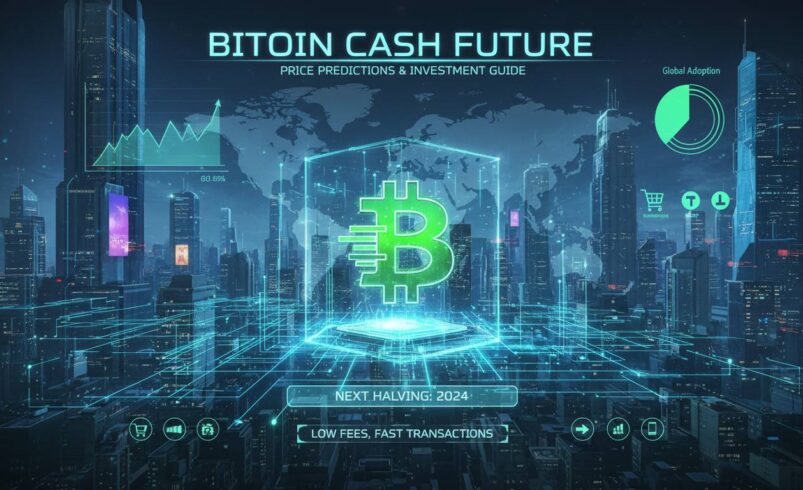

Bitcoin Cash (BCH) represents one of the most significant fork outcomes in cryptocurrency history, emerging from a contentious debate about blockchain scalability in 2017. For Indian investors navigating the complex landscape of digital assets, understanding Bitcoin Cash’s trajectory requires examining its technological foundations, market dynamics, and the regulatory environment specific to India. This comprehensive guide explores what the future may hold for Bitcoin Cash while providing actionable insights for those considering investment.
Key Insights
- Bitcoin Cash maintains the fourth-largest market capitalization among cryptocurrencies, with a focus on low-cost transactions
- India’s regulatory landscape for cryptocurrency has evolved significantly since 2022, creating both opportunities and challenges for BCH investors
- Network upgrades and adoption metrics serve as primary indicators for long-term value assessment
- Investment decisions should account for volatility, regulatory uncertainty, and portfolio diversification principles
Understanding Bitcoin Cash: Technology and Fundamentals
Bitcoin Cash emerged on August 1, 2017, when the Bitcoin blockchain split into two separate networks. The fork occurred primarily over disagreements regarding block size limits—the original Bitcoin maintained a 1-megabyte block size, while Bitcoin Cash increased this to 32 megabytes, enabling potentially faster and cheaper transactions.
The fundamental proposition of Bitcoin Cash centers on serving as “peer-to-peer electronic cash,” a vision its supporters argue aligns more closely with Satoshi Nakamoto’s original whitepaper. Unlike Bitcoin’s store-of-value narrative, Bitcoin Cash positions itself primarily as a payment system capable of handling higher transaction volumes with lower fees.
Technical Specifications
| Feature | Bitcoin Cash | Bitcoin (BTC) |
|---|---|---|
| Block Size | 32 MB | 1-4 MB (Taproot upgrade) |
| Block Time | 10 minutes | 10 minutes |
| Max Supply | 21 million | 21 million |
| Mining Algorithm | SHA-256 | SHA-256 |
| Transaction Speed | Up to 200 TPS | 7 TPS |
The larger block size enables Bitcoin Cash to process more transactions per block, resulting in significantly lower average transaction fees. During periods of high network congestion on Bitcoin, BCH transactions have reportedly cost a fraction of a cent compared to several dollars on the main Bitcoin network. This cost advantage makes Bitcoin Cash particularly attractive for microtransactions and remittance applications—use cases highly relevant to India’s large diaspora population sending money home.
Current Market Position and Historical Performance
As of 2024, Bitcoin Cash ranks among the top 20 cryptocurrencies by market capitalization, typically hovering between 25th and 35th position in daily trading volume rankings. The asset has experienced substantial price volatility throughout its history, reaching an all-time high of approximately $3,785 in December 2017 before subsequently declining significantly.
Historical Price Milestones
- 2017 Launch: Trading began around $200-300 following the August fork
- December 2017 Peak: Reached ~$3,785 during the broader cryptocurrency bull market
- 2018-2020 Bear Market: Plummeted to approximately $75-150 range
- 2021 Recovery: Rose to around $900 during the next bull cycle
- 2022-2023: Traded between $100-300 amid market corrections
- 2024: Exhibited moderate recovery, trading in the $300-500 range
The Indian cryptocurrency market has shown growing interest in Bitcoin Cash, with major exchanges including CoinDCX, WazirX, and ZebPay listing the asset for trading. The Indian rupee (INR) trading pairs have become increasingly accessible, though volume remains lower than BTC/INR or ETH/INR pairs.
Factors Influencing Bitcoin Cash Future Value
Understanding what drives Bitcoin Cash valuation requires examining multiple interconnected factors.
Network Adoption and Utility
Adoption metrics serve as fundamental drivers of cryptocurrency value. Bitcoin Cash has achieved notable merchant adoption globally, with businesses in countries including Australia, Singapore, and parts of Europe accepting BCH payments. In India, merchant adoption remains limited but has potential for growth, particularly in tourism and international trade sectors.
The number of active addresses and transaction volumes provide insights into actual network usage rather than speculative trading. Bitcoin Cash transaction counts have historically exceeded Bitcoin’s during certain periods, though this metric requires careful interpretation as it includes both legitimate payments and potential spam transactions.
Competitive Landscape
Bitcoin Cash faces competition from multiple directions. From one side, Bitcoin’s Lightning Network offers similar low-cost, high-speed transaction capabilities while maintaining Bitcoin’s dominant market position. From another, alternative cryptocurrencies like Litecoin, Dogecoin, and various layer-2 solutions compete for the same use cases.
The “store of value” versus “medium of exchange” debate continues to influence investor sentiment. Bitcoin’s narrative strength as “digital gold” has attracted substantial institutional investment, while Bitcoin Cash’s utility-focused approach targets different investor profiles.
Regulatory Environment in India
India’s approach to cryptocurrency regulation has evolved considerably. The Reserve Bank of India (RBI) initially imposed banking restrictions on cryptocurrency businesses in 2018, which the Supreme Court overturned in 2020. More recently, India implemented a 30% tax on cryptocurrency gains and a 1% TDS (Tax Deducted at Source) requirement, creating significant compliance obligations for Indian investors.
The regulatory framework remains fluid, with discussions about potential future restrictions or licensing requirements. Bitcoin Cash, like other cryptocurrencies, faces uncertainty regarding how India might further regulate digital assets. A clear, supportive regulatory environment could accelerate adoption, while restrictive measures might limit growth potential.
Halving Events and Supply Dynamics
Bitcoin Cash, like Bitcoin, undergoes halving events approximately every four years, reducing the block reward for miners by 50%. These events historically influence price dynamics due to reduced new supply entering the market. The most recent BCH halving occurred in April 2024, reducing the block reward from 6.25 BCH to 3.125 BCH.
The supply dynamics differ slightly from Bitcoin due to the fork history, but the fundamental deflationary mechanics remain similar. For long-term investors, understanding these cycles provides context for potential price movements.
Price Predictions: Analysis and Realistic Expectations
Predicting cryptocurrency prices with accuracy remains essentially impossible due to the highly speculative nature of the market. However, examining various scenarios helps investors understand potential outcomes.
Scenario Analysis
| Scenario | Drivers | Potential Price Range |
|---|---|---|
| Bull Case | Mass adoption, favorable regulation, network growth | $1,000 – $5,000+ |
| Base Case | Moderate adoption, stable regulation | $300 – $800 |
| Bear Case | Regulatory crackdown, competition, loss of utility | Under $200 |
Analysts offering specific price predictions typically base their forecasts on technical analysis, on-chain metrics, or comparative frameworks. However, cryptocurrency markets have consistently defied expert predictions in both directions. The inherent unpredictability underscores the importance of investment caution.
Technical Analysis Perspectives
Chart patterns and technical indicators provide some investors with frameworks for price movement expectations. Support and resistance levels, moving averages, and relative strength indicators offer insights into potential trading ranges. However, technical analysis in cryptocurrency markets requires acknowledgment of lower liquidity and higher volatility compared to traditional financial markets.
Long-term price trajectory depends heavily on whether Bitcoin Cash achieves meaningful utility adoption. If the cryptocurrency successfully captures market share in remittances, micropayments, or merchant transactions, fundamental value could increase substantially. Failure to achieve adoption goals might result in continued decline relative to competitors.
Investment Guide for Indian Investors
Indian investors considering Bitcoin Cash exposure should evaluate multiple factors specific to their circumstances.
Getting Started: Exchange Selection
Indian cryptocurrency exchanges offer varying levels of access to Bitcoin Cash. Major platforms including CoinDCX, WazirX, and ZebPay provide BCH/INR trading pairs. When selecting an exchange, consider factors including:
- Security Features: Two-factor authentication, cold storage practices, and regulatory compliance
- Fee Structure: Trading fees, withdrawal charges, and deposit methods
- Liquidity: Order book depth and spreads on BCH pairs
- Regulatory Standing: Compliance with Indian cryptocurrency guidelines
KYC (Know Your Customer) requirements are mandatory on Indian exchanges, requiring identity verification before trading. This compliance ensures legal protection but introduces privacy considerations.
Portfolio Allocation Principles
Financial experts generally recommend limiting cryptocurrency allocations to 1-5% of a diversified portfolio due to the asset class’s volatility. Within cryptocurrency holdings, Bitcoin Cash’s smaller market capitalization suggests considering it as a smaller portion compared to Bitcoin or Ethereum allocations.
Recommended Allocation Framework
| Risk Profile | Total Crypto | BCH Allocation |
|---|---|---|
| Conservative | 2-3% | 0.2-0.5% |
| Moderate | 5-10% | 0.5-1% |
| Aggressive | 10-15% | 1-2% |
Indian investors should also consider the tax implications of cryptocurrency trading. The 30% capital gains tax and 1% TDS create significant costs, particularly for frequent traders. Long-term holding strategies may prove more tax-efficient than short-term trading.
Storage Solutions
Securing Bitcoin Cash requires appropriate wallet solutions. Hardware wallets like Ledger or Trezor provide the highest security for significant holdings. Software wallets offer convenience for smaller amounts, while exchange wallets provide accessibility but introduce counterparty risk.
Indian investors should particularly consider wallet security given reports of exchange hacks and platform failures affecting Indian users historically. Self-custody solutions, while requiring more technical knowledge, provide greater control and security.
Risks and Considerations
Investing in Bitcoin Cash involves substantial risks that Indian investors must carefully consider.
Market Volatility
Cryptocurrency prices can experience extreme fluctuations within short periods. Bitcoin Cash has demonstrated volatility significantly higher than traditional asset classes. Investors should only invest capital they can afford to lose entirely.
Regulatory Uncertainty
India’s regulatory framework for cryptocurrency remains under development. Future laws could impose additional restrictions, potentially limiting liquidity or usability. Investors should monitor regulatory developments closely.
Competition Risk
Bitcoin Cash competes with numerous other cryptocurrencies offering similar value propositions. Network effects and first-mover advantages heavily favor Bitcoin, creating structural challenges for BCH adoption.
Technical Risks
Like all cryptocurrencies, Bitcoin Cash faces potential technical vulnerabilities including smart contract bugs (for any future enhancements), network attacks, or consensus mechanism failures. The relatively smaller development community compared to Bitcoin presents both opportunities and risks.
Liquidity Risks
Lower trading volumes compared to major cryptocurrencies can result in wider bid-ask spreads and difficulty executing large orders without market impact. This liquidity risk is particularly relevant for Indian investors given the relatively smaller BCH/INR market.
Future Outlook: What to Watch
Monitoring specific indicators helps investors track Bitcoin Cash’s potential trajectory.
Development Activity
GitHub commit activity and developer participation provide insights into the project’s ongoing development. Bitcoin Cash has maintained active development with regular protocol upgrades, though developer numbers remain smaller than Bitcoin’s ecosystem.
Institutional Adoption
While institutional adoption has primarily focused on Bitcoin, any movement toward Bitcoin Cash by major financial institutions could significantly impact value. Monitoring announcements from payment processors, financial services companies, and investment platforms provides relevant signals.
Regulatory Developments
India’s ongoing regulatory discussions will heavily influence cryptocurrency market dynamics. Clear, supportive regulations could accelerate adoption, while restrictive measures might limit growth. Staying informed about RBI statements, government position papers, and parliamentary discussions helps investors anticipate potential changes.
Competitive Positioning
The evolution of competing payment cryptocurrencies and layer-2 solutions affects Bitcoin Cash’s relative value proposition. Monitoring developments in Bitcoin’s Lightning Network, Ethereum’s scaling solutions, and alternative payment coins provides competitive context.
Conclusion
Bitcoin Cash represents a distinct cryptocurrency proposition emphasizing low-cost transactions and payment utility. For Indian investors, the asset offers potential diversification benefits within a carefully constructed cryptocurrency portfolio, though significant risks require acknowledgment.
The future value of Bitcoin Cash depends heavily on adoption growth, competitive developments, and regulatory clarity—factors that remain inherently uncertain. Indian investors considering BCH exposure should approach with appropriate caution, limiting allocations to amounts they can afford to lose, maintaining long-term perspectives, and staying informed about both technological developments and regulatory changes.
Cryptocurrency investment requires thorough personal research and, ideally, consultation with financial advisors familiar with both traditional investment principles and digital asset markets. The volatile nature of this asset class demands disciplined risk management and realistic expectations about potential outcomes.
Frequently Asked Questions
Is Bitcoin Cash a good investment in India in 2024?
Bitcoin Cash can be part of a diversified cryptocurrency portfolio, but it carries significant risks. Unlike Bitcoin’s established store-of-value narrative, BCH’s value depends heavily on achieving payment adoption. Indian investors should limit exposure to 1-2% of total cryptocurrency holdings, prioritize secure storage, and maintain realistic expectations about volatility. The 30% tax on gains and 1% TDS requirements also significantly impact potential returns.
What is the difference between Bitcoin (BTC) and Bitcoin Cash (BCH)?
The primary difference lies in block size and transaction capacity. Bitcoin Cash uses 32MB blocks compared to Bitcoin’s 1-4MB, enabling more transactions per block and lower fees. However, Bitcoin maintains dominant market position, superior network effects, and significantly higher liquidity. Bitcoin positions itself as “digital gold” while Bitcoin Cash emphasizes payment utility.
Can Bitcoin Cash reach $1,000 in the future?
Reaching $1,000 would require either significant adoption growth, favorable regulatory developments, or substantial market speculation. While technically possible, achieving this price point faces challenges from Bitcoin’s dominance and competing payment solutions. Any price prediction should be treated as highly speculative given cryptocurrency market volatility.
How do I buy Bitcoin Cash in India?
Indian investors can purchase Bitcoin Cash through registered cryptocurrency exchanges including CoinDCX, WazirX, and ZebPay. The process involves completing KYC verification, depositing Indian rupees via bank transfer, and executing BCH/INR trades. Security considerations include enabling two-factor authentication, using hardware wallets for significant holdings, and understanding tax implications.
Is Bitcoin Cash legal in India?
Bitcoin Cash is currently legal to buy, sell, and hold in India, though it exists in a regulatory gray area without comprehensive legislation. The government has implemented taxation on cryptocurrency gains but has not prohibited ownership. However, the regulatory environment remains subject to change, and investors should monitor ongoing policy discussions.
What are the risks of investing in Bitcoin Cash?
Major risks include extreme price volatility, regulatory uncertainty in India, competition from Bitcoin’s Lightning Network and other cryptocurrencies, lower liquidity compared to major coins, and potential technological obsolescence. Indian investors also face specific risks including exchange security vulnerabilities and potentially restrictive future regulations.