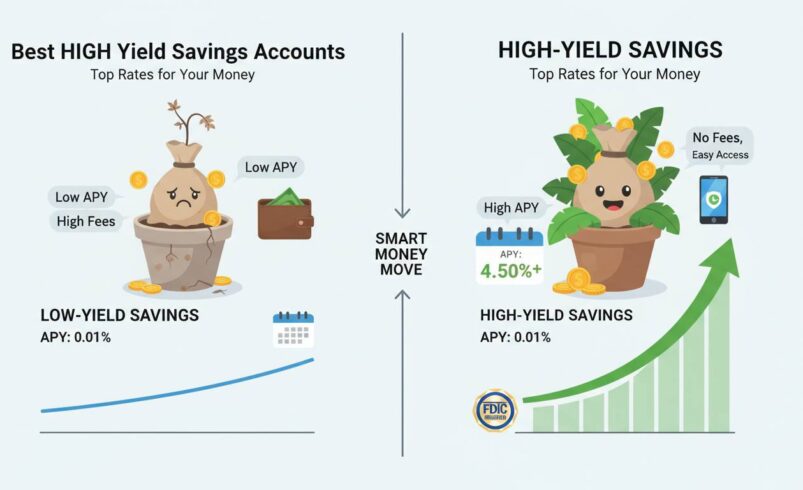

In an era of fluctuating interest rates and economic uncertainty, finding the right savings account has become increasingly important for Indian savers. With traditional savings accounts offering nominal returns, many financial institutions now compete by providing higher interest rates to attract depositors. This comprehensive guide explores the landscape of high yield savings accounts in India, helping you make informed decisions about where to park your hard-earned money.
The Reserve Bank of India has been adjusting its monetary policy in response to inflation concerns, directly impacting the interest rates offered by banks. As of recent quarters, several banks have revised their savings account rates upward, creating opportunities for savers to earn better returns on their deposits without taking on significant risk. Understanding these options has become essential for anyone looking to maximize their savings potential in the current financial environment.
Understanding High Yield Savings Accounts in India
A high yield savings account typically offers an interest rate significantly higher than the standard savings account rate offered by traditional banks. In the Indian context, while the Reserve Bank of India maintains a benchmark policy rate that influences overall interest rates, individual banks have the flexibility to set their own savings account rates based on their business strategies and target customer segments.
The interest rates on savings accounts in India generally range from 2.50% to 7.00% per annum, depending on the type of financial institution and the balance maintained in the account. Traditional public sector banks typically offer lower rates, ranging between 2.50% and 3.50%, while small finance banks and digital-first institutions often provide more competitive rates to attract new customers and expand their deposit base.
Several factors contribute to the variation in interest rates across different banks and account types. The bank’s operational model, target market, branch network density, and liability management strategy all play crucial roles in determining the rates they offer. Additionally, the balance threshold requirements and the frequency of interest crediting vary from one institution to another, making it essential for savers to carefully compare the overall returns rather than focusing solely on the stated interest rate.
Top Banks Offering High Yield Savings Accounts
Public Sector and Private Sector Giants
State Bank of India, the country’s largest lender, offers a standard savings account interest rate of 2.70% per annum for balances up to ₹1 lakh, with slightly higher rates for larger balances. While this rate is competitive among traditional banks, it remains lower than what specialized institutions offer. HDFC Bank and ICICI Bank, two of the largest private sector lenders, similarly offer rates in the 3.00% to 3.50% range, with promotional rates occasionally available for new customers or specific account categories.
These traditional banks compensate for their lower interest rates with extensive branch networks, robust digital banking platforms, and established trust among customers. For many Indian savers, particularly those who prefer face-to-face banking services or need access to physical branches, these factors may outweigh the difference in interest earnings.
Small Finance Banks: The High Yield Leaders
Small finance banks have emerged as the primary destination for savers seeking higher returns on their savings accounts. These institutions, many of which were originally microfinance companies or cooperative banks, have received universal bank licenses and now compete aggressively for retail deposits.
Au Small Finance Bank offers competitive interest rates that frequently appear among the highest in the industry, often exceeding 6.00% per annum for standard savings accounts. Similarly, Equitas Small Finance Bank and Ujjivan Small Finance Bank have been offering attractive rates to build their deposit base, with rates regularly surpassing 5.00% for balances above certain thresholds.
These banks have invested heavily in digital banking infrastructure, allowing them to offer competitive rates while maintaining lower operational costs compared to traditional banks with extensive branch networks. The tradeoff often involves fewer physical branches and potentially different customer service experiences, though most have developed robust phone and video banking services to compensate.
Digital-First and Payments Banks
The emergence of digital-first banks and payments banks has added another dimension to the high yield savings account landscape. These institutions operate primarily through mobile applications and websites, eliminating the overhead costs associated with physical branches and passing the savings on to customers in the form of higher interest rates.
Paytm Payments Bank and Airtel Payments Bank represent prominent examples of this category, offering savings account products with interest rates competitive with or exceeding traditional banks. These platforms have gained significant traction among younger, tech-savvy customers who prefer managing their finances through smartphones and appreciate the convenience of paperless account opening and round-the-clock banking services.
Factors to Consider Beyond Interest Rates
While the interest rate is undoubtedly a crucial factor when selecting a savings account, prudent savers should consider several other elements before making their decision. The overall value proposition extends far beyond the stated annual percentage yield, and understanding these nuances can help you choose an account that truly meets your financial needs.
Minimum Balance Requirements
Many high yield savings accounts come with minimum balance requirements that can significantly impact your effective returns. Some accounts mandate substantial average quarterly balances to qualify for the highest interest rates, while others offer tiered rate structures where only portions of your balance earn the top rate. Carefully reviewing these requirements ensures you can maintain the necessary balance to qualify for advertised rates without incurring penalty charges.
Fee Structure and Charges
Monthly maintenance charges, ATM withdrawal fees, and transaction costs can eat into your earnings, sometimes offsetting the benefit of a higher interest rate. Examine the complete fee schedule before opening an account, paying particular attention to charges for exceeding transaction limits, using out-of-network ATMs, and requesting paper statements or checks.
Digital Banking Features
The quality and reliability of digital banking services varies significantly across institutions. Consider the mobile application’s user interface, availability of features like bill payments and fund transfers, and the bank’s track record with service uptime and security. A high-yield account becomes less valuable if managing your money through digital channels is frustrating or unreliable.
Insurance and Safety
All bank deposits in India are insured by the Deposit Insurance and Credit Guarantee Corporation up to ₹5 lakh per depositor per bank, regardless of the account type or interest rate offered. This coverage provides protection against bank failures, making even high-yield accounts from smaller institutions relatively safe for deposits within this limit. Understanding this safety net can help you feel more comfortable exploring options beyond the largest banks.
Current Market Trends and Future Outlook
The Indian banking sector has been experiencing a rate recalibration phase, with institutions adjusting their deposit rates in response to RBI policy decisions and competitive pressures. The shift toward higher rates reflects both the broader interest rate environment and the competition for retail deposits as credit demand remains robust.
Small finance banks and digital-first institutions continue to lead in offering competitive rates, but traditional banks are also becoming more aggressive in certain segments. Some banks have introduced special category accounts with promotional rates valid for limited periods, creating opportunities for savers who are willing to periodically switch or maintain multiple accounts to maximize returns.
The trend toward digital banking acceleration, catalyzed by the pandemic, has benefited smaller institutions that had invested in technology infrastructure. These banks can now compete effectively with larger rivals on customer experience while offering superior interest rates, a combination that has attracted millions of new customers in recent years.
Strategies for Maximizing Your Savings Returns
Smart savers can employ several strategies to optimize their interest earnings while maintaining flexibility and security. Rather than committing all funds to a single account, consider spreading deposits across multiple institutions to take advantage of different rate offerings while staying within insurance coverage limits.
Regular monitoring of interest rate changes proves essential, as banks frequently adjust their offerings based on market conditions. Setting up rate alerts or periodically reviewing your accounts against current market offerings can help you identify opportunities to switch or renegotiate rates, particularly with institutions seeking to retain valuable customers.
Many banks offer relationship benefits that include preferential rates for customers who maintain multiple products such as savings accounts, fixed deposits, and insurance policies. Exploring these bundled offerings can sometimes yield better overall returns than focusing solely on the highest standalone savings account rate.
Conclusion
The landscape of high yield savings accounts in India offers genuine opportunities for savers willing to explore beyond traditional banking options. Small finance banks and digital-first institutions currently provide the most competitive rates, sometimes exceeding 6% annually, though these come with different service models and balance requirements than conventional banks.
Making an informed decision requires carefully evaluating the complete package: interest rates, minimum balance requirements, fee structures, digital banking capabilities, and the institution’s overall reputation and stability. The highest advertised rate may not always represent the best value once all factors are considered.
As the Indian banking sector continues to evolve, savers should remain attentive to changing rate environments and be prepared to adjust their strategies accordingly. With thoughtful consideration and periodic review, Indian savers can effectively maximize their returns while maintaining the security and accessibility their financial situations require.
Frequently Asked Questions
What is the highest savings account interest rate available in India?
Small finance banks such as Au Small Finance Bank and Equitas Small Finance Bank currently offer savings account interest rates exceeding 6% per annum, which represents the upper range of what’s available in the Indian market. These rates are typically offered on standard savings accounts without requiring a fixed deposit lock-in.
Are high yield savings accounts in India safe?
Yes, all bank deposits in India are insured by the Deposit Insurance and Credit Guarantee Corporation up to ₹5 lakh per depositor per bank. This coverage protects your principal even if the bank fails, making high-yield accounts from regulated institutions safe for deposits within this limit.
Do I need to maintain a minimum balance for high yield savings accounts?
Yes, most high yield savings accounts come with minimum balance requirements that vary by institution. Some banks offer the highest rates only on balances above certain thresholds, while others provide uniform rates across balance tiers. Reviewing these requirements helps ensure you qualify for the advertised rates.
How often are savings account interest rates credited?
In India, savings account interest is typically credited on a quarterly basis, though some banks offer monthly interest credit options. The frequency of compounding can affect your effective annual return, with more frequent compounding providing slightly higher yields.
Can I open a high yield savings account online?
Yes, most small finance banks and digital-first institutions allow complete online account opening through their mobile apps or websites. The process usually takes a few minutes and requires identity verification through Aadhaar and PAN card details, along with a video or selfie verification.
Should I choose a high yield savings account or a fixed deposit for better returns?
Fixed deposits typically offer higher interest rates than savings accounts, especially for longer tenure periods. However, savings accounts provide liquidity and flexibility without penalties for withdrawal. Many savers maintain both, using savings accounts for emergency funds and operational needs while locking funds in fixed deposits for higher returns.