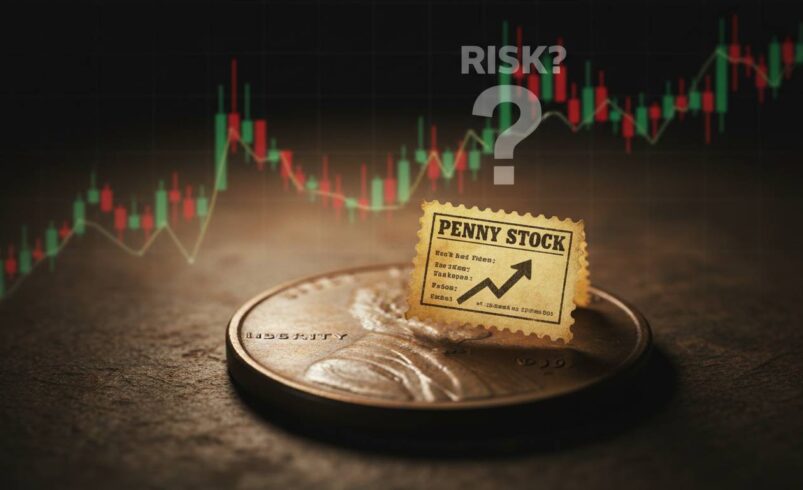

Penny stocks have long captured the imagination of Indian investors looking for quick wealth creation. These low-priced securities, typically trading at less than ₹10 per share on Indian exchanges, offer the allure of massive percentage gains in a short period. But behind the seductive promises of exponential returns lies a landscape fraught with dangers that have wiped out countless portfolios. Before you allocate any capital to these volatile instruments, understanding what penny stocks truly represent—and the regulatory framework governing them in India—is essential for making informed investment decisions.
What Are Penny Stocks and How Do They Work?
Penny stocks are equity securities that trade at relatively low prices, typically below ₹10 per share on Indian stock exchanges like BSE and NSE. Unlike blue-chip stocks of established companies like Reliance or TCS, penny stocks usually belong to small-cap companies with limited operating history, small market capitalisation, and thin trading volumes.
In India, these stocks are often listed on the BSE Smallcap or NSE SME platforms. The term “penny stock” itself originates from the US market, where stocks historically traded for pennies (less than $1). In the Indian context, the equivalent would be stocks trading below ₹10, though some investors broaden this definition to include stocks under ₹50 or even ₹100.
The mechanics of penny stocks differ significantly from mainstream equities. Their low price point makes them accessible to retail investors with limited capital, creating the illusion that anyone can afford to buy thousands of shares. This psychological factor—owning thousands of shares rather than a handful—often drives speculative interest. However, what investors frequently overlook is that percentage gains matter more than absolute share counts. A ₹1 stock rising to ₹2 delivers a 100% return, which is identical mathematically to a ₹10,000 stock doubling to ₹20,000.
The trading dynamics of penny stocks involve what market participants call “low liquidity.” This means there may not be enough buyers or sellers at any given time, making it difficult to execute trades at desired prices. When you own a penny stock and want to sell, you might find no buyers willing to take your position, or you may have to accept a significantly lower price than the last traded price shown on your screen.
The Risks of Investing in Penny Stocks
The risks associated with penny stocks far outweigh those of investing in established companies, and Indian investors must understand these dangers before considering any allocation to this segment.
Extreme Volatility and Price Manipulation
Penny stocks exhibit dramatic price swings that can occur within minutes or hours. A stock trading at ₹2 might surge to ₹8 on rumors of a fake partnership announcement, only to crash back to ₹1.5 the following day when reality sets in. This volatility makes them extremely risky for investors who cannot monitor their positions continuously. More troubling is the prevalence of price manipulation in this segment. Unscrupulous actors, sometimes working in cahoots with company promoters, artificially inflate prices through coordinated trading, then dump their holdings at the peak, leaving retail investors with catastrophic losses.
Lack of Fundamental Information
Blue-chip investors rely on financial statements, analyst reports, and regulatory filings to evaluate companies. Penny stock companies often have limited or questionable financial disclosure. Some small-cap companies listed on SME exchanges may not meet the rigorous reporting standards required of mainboard companies. This information asymmetry puts retail investors at a severe disadvantage—they simply cannot make informed decisions because reliable data is unavailable.
Liquidity Risks and Execution Problems
When you attempt to buy or sell penny stocks, you may encounter significant slippage—the difference between the price you expected and the price at which your order executes. In illiquid penny stocks, placing a market order can result in execution at prices far worse than anticipated. Some investors have experienced situations where they could not sell their holdings at any price during market hours because no buyers existed.
High Probability of Total Loss
Perhaps the most sobering statistic is that the majority of penny stocks eventually become worthless or are delisted from exchanges. A study of penny stocks listed on Indian exchanges over a decade found that nearly 70% of stocks that traded below ₹5 eventually either crashed to near-zero or were delisted. Your capital can vanish entirely with little recourse.
Potential Benefits and Success Stories
Despite the formidable risks, some investors continue pursuing penny stocks, citing potential benefits that warrant examination.
Massive Percentage Gains
It is mathematically possible for a ₹2 stock to become a ₹20 stock—a 900% return that would take decades to achieve in blue-chip stocks. Some legitimate companies do grow from small-cap status to become mid-cap or even large-cap entities, early investors in such companies have indeed generated extraordinary wealth. For example, early investors in companies like Eicher Motors or Page Industries (when they were small-cap) saw their investments multiply many times over.
Portfolio Diversification Potential
Some financial advisors suggest allocating a small portion (1-3%) of a diversified portfolio to high-risk instruments like penny stocks. The theory is that even if this portion becomes worthless, the loss is contained, while any success provides outsized returns. This approach treats penny stock investing more like gambling money that one can afford to lose rather than serious capital allocation.
Learning Ground for Trading Skills
Young investors interested in developing trading skills sometimes begin with penny stocks because the low capital requirements allow them to learn market mechanics—order types, technical analysis, stop-loss strategies—without risking substantial wealth. However, this educational benefit must be weighed against the probability of losing that initial capital.
SEBI Regulations and Penny Stocks in India
The Securities and Exchange Board of India (SEBI) has implemented specific regulations to protect investors from penny stock fraud, though the effectiveness of these measures remains debated.
SME Exchange Framework
SEBI established the SME platform (now BSE SME and NSE Emerge) to help small companies raise capital while providing some investor protection. Companies listing on these platforms must meet minimum requirements: at least ₹5 crore paid-up capital, positive net worth, and compliance with disclosure norms. However, these requirements are significantly less stringent than mainboard listing criteria.
Trading Surveillance
SEBI monitors trading patterns for signs of manipulation and has taken action against several penny stock schemes. In recent years, the regulator has banned certain entities from the market and imposed penalties for price manipulation. However, the sheer number of penny stocks and limited enforcement resources make comprehensive monitoring challenging.
Investor Warning System
SEBI requires brokers to display risk warnings when clients trade in penny stocks and mandates additional documentation acknowledging the risks. This regulatory framework attempts to ensure investors understand what they are buying, though critics argue these warnings are often ignored or inadequately explained.
Recent Regulatory Actions
In 2024, SEBI introduced additional surveillance measures for stocks with consistently low trading volumes and high volatility. The regulator also directed stock exchanges to enhance monitoring of promoter activities and require more frequent disclosures from companies with persistently low stock prices.
How to Research and Evaluate Penny Stocks
If despite the risks you still wish to explore penny stocks, rigorous research methodology is essential.
Financial Statement Analysis
Begin with the company’s financial statements available on the BSE/NSE websites. Examine revenue trends over at least five years, profit margins, debt levels, and cash flow. Companies with consistent revenue growth, manageable debt, and positive cash flow are relatively safer, though still risky. Be wary of companies with revenue growth that seems too good to be true—fake revenue manipulation is common in this segment.
Promoter Background and History
Research the promoters and management team thoroughly. Look for any history of regulatory violations, defaulted loans, or previous companies that failed. In India, where promoter reputation matters significantly, tracking the track record of those controlling the company provides crucial insight.
Trading Volume and Liquidity
Check the average daily trading volume over several months. Stocks with trading volumes below 10,000 shares daily are extremely illiquid and should be avoided. Higher trading volume provides some assurance that you can exit your position if needed.
Independent Research
Seek out independent analyst reports and media coverage. Be extremely skeptical of tips circulating on WhatsApp groups or social media—these are often part of pump-and-dump schemes. If no credible independent analysis exists, that itself is a red flag.
Technical Analysis Limitations
Some traders use technical analysis to time penny stock entries and exits. While chart patterns can identify temporary price movements, they cannot predict fundamental company value or protect against fraud. Relying solely on technical analysis for penny stocks is particularly dangerous.
Alternatives to Penny Stocks for Indian Investors
For most Indian investors seeking growth opportunities, alternatives to penny stocks offer better risk-adjusted returns.
Small-Cap Mutual Funds
Instead of picking individual penny stocks, consider investing in small-cap mutual funds managed by experienced fund managers. These funds provide diversification across many small companies, professional research oversight, and regulatory compliance that individual investors cannot achieve on their own. Schemes like Nippon India Small Cap Fund or SBI Small Cap Fund have delivered strong long-term returns while managing risk through professional portfolio construction.
Index Funds and ETFs
Nifty Smallcap 100 ETF or other small-cap index funds offer exposure to quality small companies without the extreme risks of penny stocks. These instruments trade like regular stocks, provide instant diversification, and charge low expense ratios.
Direct Stock Investment in Quality Small-Caps
Rather than penny stocks, identify well-managed small-cap companies with solid financials that trade on the mainboard. Companies like Ajanta Pharm, Gujarat Gas, or relaxo Footwears started as small-cap stocks and delivered excellent returns to patient investors who conducted proper research.
Systematic Investment Approach
Regardless of where you invest, adopting a systematic investment approach—investing fixed amounts regularly regardless of market conditions—typically outperforms attempts at timing the market, especially in volatile segments like penny stocks.
Frequently Asked Questions
Are penny stocks legal in India?
Yes, penny stocks are legal and trade on recognized stock exchanges like BSE and NSE. However, SEBI has implemented specific regulations and warning requirements for trading in these securities due to their high-risk nature.
Can you really make money with penny stocks?
While it is possible to make money with penny stocks, the probability of significant losses far exceeds the probability of gains. Most academic studies and regulatory data show that the majority of retail investors lose money trading penny stocks.
What is the minimum amount needed to invest in penny stocks?
You can start investing in penny stocks with as little as a few thousand rupees since share prices are low. However, starting with such small amounts increases the impact of trading costs and makes meaningful diversification nearly impossible.
How do I identify pump-and-dump schemes in penny stocks?
Be wary of sudden price spikes without fundamental justification, unsolicited tips on WhatsApp or social media, companies with no clear business model, and promoters with poor track records. If something sounds too good to be true, it probably is.
What happens if a penny stock gets delisted?
When a stock is delisted, you may lose your entire investment because the shares can no longer be traded on recognized exchanges. Some delisted stocks continue trading in the grey market at drastically reduced prices, but these transactions carry additional legal and execution risks.
Should beginners avoid penny stocks entirely?
Yes, most financial experts recommend that beginners avoid penny stocks entirely. The combination of information asymmetry, liquidity risks, and prevalence of fraud makes this segment unsuitable for investors who are still learning market mechanics.
Conclusion
Penny stocks represent a high-risk, low-probability wealth creation strategy that suits only the most sophisticated investors who can afford to lose their entire allocation. For the vast majority of Indian investors, the risks far outweigh any potential benefits. The deck is stacked against retail investors in this segment—from information asymmetry and liquidity problems to outright fraud, the dangers are numerous and well-documented.
If you are genuinely interested in capturing growth opportunities from smaller companies, the Indian market offers far better alternatives. Small-cap mutual funds provide professional management and diversification. Quality small-cap stocks on the mainboard offer growth potential with far better regulatory oversight and liquidity. These approaches may not deliver the overnight multimillion rupee returns promised in penny stock promotions, but they provide realistic paths to wealth accumulation without the catastrophic loss risk.
Before considering any penny stock investment, ask yourself this: if the opportunity is truly so extraordinary, why are experienced institutional investors—with their teams of analysts and research capabilities—not already buying? The honest answer to that question should guide your investment decisions.