
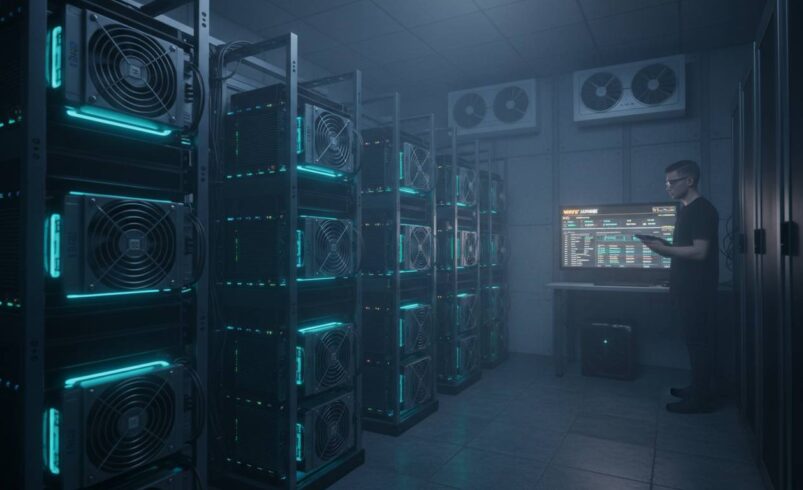

Cryptocurrency mining in India has evolved from a niche hobby into a serious financial endeavor for thousands of tech-savvy Indians. With Bitcoin prices showing renewed strength and alternative cryptocurrencies gaining mainstream acceptance, understanding the actual profitability equation has become essential for anyone considering entering this space. The intersection of hardware costs, electricity prices, and market volatility creates a complex optimization problem that demands careful analysis before investing your capital.
India’s position in the global crypto ecosystem is uniquely positioned—while the Reserve Bank of India initially imposed banking restrictions in 2018, the Supreme Court overturned this ban in 2020, creating a boom in crypto adoption. However, the regulatory landscape continues to evolve, and miners must navigate both technical challenges and policy uncertainties. This comprehensive guide breaks down every factor affecting your mining profitability and provides actionable strategies to maximize returns in the Indian market context.
Understanding Cryptocurrency Mining Profitability in India
Mining profitability refers to the difference between the value of cryptocurrencies you generate through mining operations and the total costs incurred to produce those coins. The fundamental profitability equation involves three core variables: block rewards (the cryptocurrency earned), hashrate (your mining power), and operational costs (primarily electricity and hardware depreciation). Understanding this equation requires examining each component in the context of India’s specific economic conditions.
The Indian crypto market has experienced remarkable growth. According to blockchain analytics firm Chainalysis, India ranked second globally in crypto adoption by volume as of 2024, with significant retail investor participation. This adoption wave has naturally spurred interest in mining as both an investment strategy and a potential income stream. However, the profitability picture varies dramatically based on your location within India, as electricity costs differ substantially between states and between residential and commercial tariffs.
Initial investment costs present another critical variable. Cryptocurrency mining hardware—particularly application-specific integrated circuit (ASIC) miners and high-performance graphics processing units (GPUs)—must be imported, making them subject to customs duties and currency fluctuations. The Indian rupee’s performance against the US dollar directly impacts your effective hardware costs, adding a layer of financial complexity that pure market analysis cannot capture.
Key Factors Affecting Mining Profits
Network Difficulty represents the most volatile factor in mining profitability. As more miners join a network, the protocol automatically adjusts difficulty to maintain consistent block times. Bitcoin’s network difficulty reached all-time highs in 2024, meaning your individual mining hardware produces proportionally fewer coins over time unless you continuously expand your operation. This difficulty adjustment mechanism ensures that profitability tends toward equilibrium—but often favors early adopters and those with access to cheapest electricity.
Block Reward Halving events significantly impact long-term profitability planning. Bitcoin undergoes halving approximately every four years, reducing miner rewards by 50%. The most recent halving occurred in April 2024, immediately impacting profitability for miners who hadn’t prepared for reduced block rewards. This cyclical pressure means mining operations must factor in declining per-unit rewards when calculating return on investment timelines.
Cryptocurrency Price Volatility creates both opportunity and risk. When Bitcoin prices surge, mining becomes more profitable even with constant costs—potentially generating substantial returns during bull markets. Conversely, bear markets can render mining operations unprofitable, forcing some miners to shut down operations entirely. Historical data shows Bitcoin prices can swing 50% or more within months, making price prediction a critical element of profitability forecasting.
Hardware Efficiency degrades over time. Mining ASICs and GPUs experience wear that reduces their hashrate capabilities while simultaneously facing obsolescence as newer, more efficient models enter the market. The typical lifespan of a professional ASIC miner ranges from 3-5 years, with gradual efficiency losses throughout. Factoring in this depreciation is essential for accurate profitability calculations that span multiple years.
Hardware Options for Indian Miners
Selecting appropriate mining hardware requires balancing upfront costs against long-term efficiency. The Indian market presents unique considerations, including import logistics and warranty support availability.
| Hardware Type | Best For | Approximate Cost (INR) | Typical Hashrate | Power Consumption |
|---|---|---|---|---|
| ASIC (e.g., Bitmain Antminer) | Bitcoin, established coins | ₹1,50,000 – ₹5,00,000 | 100-300 TH/s | 3,000-5,000W |
| GPU Rig | Ethereum Classic, other altcoins | ₹2,00,000 – ₹3,50,000 | 100-200 MH/s | 500-800W |
| GPU Rig (AMD RX 7900 XTX) | Multi-coin mining | ₹1,50,000 – ₹2,50,000 | 80-150 MH/s | 400-600W |
| Entry-Level ASIC | Beginners, smaller budgets | ₹50,000 – ₹1,50,000 | 10-50 TH/s | 500-1,500W |
ASIC miners offer the highest efficiency for Bitcoin mining but represent significant capital investment and cannot be repurposed for other cryptocurrencies. GPU mining rigs provide flexibility to switch between different profitable coins based on market conditions, though they generally consume more electricity per unit of hashrate.
For Indian beginners, starting with a single GPU mining rig allows you to learn the mechanics without catastrophic capital risk. As you gain experience and demonstrate consistent profitability, expanding into ASIC hardware becomes a logical progression. Second-hand market options exist in India through online platforms, though purchasing used equipment carries inherent risks regarding remaining lifespan and hidden damage.
Electricity Costs and Energy Efficiency
Electricity costs constitute the largest ongoing operational expense for cryptocurrency miners in India. Understanding your specific tariff structure and exploring cost reduction strategies can mean the difference between profit and loss.
Residential vs. Commercial Tariffs create significant profitability disparities. Most Indian states offer commercial electricity rates that are 20-50% higher than residential rates, though commercial accounts typically provide more reliable supply and fewer billing disputes. Some miners establish commercial operations legally, while others operate under residential accounts—creating potential legal exposure that must be carefully evaluated.
State-by-State Variation dramatically affects viability. States like Gujarat, Tamil Nadu, and Karnataka offer relatively competitive industrial electricity rates, while northeastern states and island territories often have substantially higher costs. The average commercial electricity rate across India ranges from ₹6-12 per kWh depending on consumption levels and state regulations, though industrial consumers with high volume can sometimes negotiate preferential rates.
| Electricity Cost Scenario | Monthly Cost (₹) | Impact on Profitability |
|---|---|---|
| ₹6/kWh (Best industrial rate) | ~₹13,000 | Highly profitable |
| ₹8/kWh (Average commercial) | ~₹17,500 | Moderately profitable |
| ₹10/kWh (Higher commercial) | ~₹22,000 | Break-even to marginal |
| ₹12/kWh (Residential peak) | ~₹26,000 | Often unprofitable |
Energy Efficiency Metrics matter enormously when selecting hardware. The industry measures efficiency using joules per terahash (J/TH) for ASICs and watts per megahash (W/MH) for GPUs. Lower numbers indicate more efficient hardware that converts electricity into mining output more effectively. Modern ASICs like the Bitmain Antminer S21 Pro achieve efficiency ratings under 20 J/TH, while older models may consume 50+ J/TH—directly translating to dramatically different operating costs.
Solar power integration has emerged as an attractive option for Indian miners seeking to reduce electricity costs. With abundant sunlight across most of India and declining solar panel costs, hybrid setups combining grid power with solar generation can reduce effective electricity costs to near zero during daylight hours. Initial investment in solar infrastructure typically recovers within 3-5 years based on current electricity savings.
Mining Pools vs Solo Mining
The choice between joining a mining pool or attempting solo mining fundamentally affects your revenue consistency and variance.
Mining Pools aggregate computational resources from multiple participants, combining hashrates to find blocks more frequently. Rewards are then distributed proportionally based on each miner’s contribution. This approach provides steady, predictable income—essential for covering ongoing operational costs without the stress of extended periods without rewards. Major pools operating in India include ViaBTC, Antpool, and F2Pool, each offering various payment structures.
Solo Mining offers higher per-block rewards when successful but with substantially higher variance. Statistics indicate that even with significant hashrate, individual miners may go months without finding a block purely due to probability. For example, operating 1% of Bitcoin’s total network hashrate would statistically yield approximately one block per 1,000 minutes—but variance can extend this significantly.
Pool Fee Structures vary and impact net profitability:
- PPS (Pay Per Share): Fixed payment per share submitted; pools bear variance risk
- PPLNS (Pay Per Last N Shares): Payments depend on block success; lower fees but variable income
- FPPS (Full Pay Per Share): Includes transaction fee rewards; generally preferred by miners
For most Indian miners, joining a reputable pool provides the most practical approach to sustainable profitability. The consistent revenue stream enables better financial planning and reduces the psychological stress associated with solo mining’s all-or-nothing nature.
Legal Framework and Tax Implications in India
Navigating India’s regulatory environment requires careful attention to evolving policies and tax obligations.
The Goods and Services Tax (GST) framework applies to cryptocurrency mining equipment imports. ASIC miners and GPUs imported into India attract 18% GST on the assessable value, including shipping costs. This significantly impacts hardware costs— ₹2,00,000 in hardware effectively becomes ₹2,36,000 after GST. Some miners attempt to classify mining equipment under different HS codes to reduce duty, though this approach carries compliance risk.
Income Tax Treatment of cryptocurrency mining profits remains somewhat ambiguous. The Income Tax Department has issued guidance treating cryptocurrency transactions as taxable assets, with profits subject to capital gains tax. However, whether mining rewards constitute income at the time of receipt or capital gains upon disposal continues to generate debate among tax professionals. Conservative interpretation suggests treating mining rewards as business income taxed at your applicable slab rate, while holding the cryptocurrency constitutes a capital asset.
Regulatory Uncertainty persists despite the 2020 Supreme Court ruling. The government has expressed concerns about cryptocurrency use for illegal activities and has periodically considered various regulatory frameworks. The Prevention of Money Laundering Act (PMLA) provisions now apply to cryptocurrency transactions, requiring reporting of certain activities. Staying informed about regulatory developments and maintaining proper documentation of all transactions and expenses is essential for long-term operation.
Maintaining accurate records of all hardware purchases, electricity payments, pool payouts, and cryptocurrency sales enables proper tax compliance and provides documentation if authorities ever scrutinize your operations. Consulting with a tax professional familiar with cryptocurrency-specific regulations is advisable as your mining operation scales.
Strategies to Maximize Returns
Optimize for Current Market Conditions requires regular reassessment of which cryptocurrency offers the best profitability. Mining profitability calculators provide estimates based on current network difficulty, cryptocurrency prices, and electricity costs. During certain periods, alternative coins like Ethereum Classic, Ravencoin, or Kaspa may offer superior returns compared to Bitcoin despite lower absolute values—switching between coins based on profitability calculations can substantially improve overall returns.
Reduce Electricity Costs through multiple approaches. Negotiating commercial electricity rates, installing solar panels, or relocating operations to areas with lower power costs all contribute to improved margins. Some miners in India have established operations in industrial zones with preferential tariff structures or in states offering subsidized power for data center operations.
Overclocking and Undervolting GPU hardware can extract additional performance while sometimes reducing power consumption. However, these modifications void warranties and may reduce hardware lifespan if pushed too aggressively. Finding the optimal balance requires monitoring temperatures, hashrates, and power consumption over extended periods.
Heat Recovery represents an often-overlooked optimization opportunity. Mining hardware generates substantial heat as a byproduct, which can be captured and used for space heating in colder climates or regions—particularly relevant during Indian winters in northern states. While not directly increasing cryptocurrency output, heat recovery reduces your net energy costs by offsetting heating expenses.
Scale Gradually rather than overextending initially. Starting with a modest operation allows you to learn operational nuances, identify cost-saving opportunities, and verify profitability projections before committing larger capital. Many successful Indian miners began with single GPU rigs before expanding to professional ASIC operations as confidence and capital accumulated.
Frequently Asked Questions
Is cryptocurrency mining profitable in India in 2024?
Yes, profitability is possible but highly dependent on electricity costs and hardware efficiency. Miners paying under ₹8 per kWh with modern ASIC hardware can achieve positive returns, particularly during favorable cryptocurrency price periods. However, profitability is not guaranteed and requires careful calculation of your specific cost structure.
How much initial capital is needed to start mining in India?
A basic GPU mining rig suitable for beginners costs approximately ₹1,50,000-₹2,50,000 including hardware, power supply, and cooling. Professional ASIC operations require ₹2,00,000-₹5,00,000 or more for meaningful Bitcoin mining hashrate. Starting small and scaling as you gain experience is advisable.
Which cryptocurrency is most profitable to mine in India?
Bitcoin offers the highest absolute value rewards but requires significant investment. Alternative coins like Kaspa, Ethereum Classic, and Ravencoin may offer better returns per unit of electricity depending on market conditions. Profitability calculators should be checked regularly to identify current optimal targets.
How long does it take to recover investment in mining hardware?
Typical payback periods range from 12-24 months depending on electricity costs, cryptocurrency prices, and network difficulty growth. Extended bear markets or significant difficulty increases can extend this period substantially, while bull markets may shorten it considerably.
Is cryptocurrency mining legal in India?
Yes, cryptocurrency mining is legal following the 2020 Supreme Court ruling that overturned the Reserve Bank of India’s banking restrictions. However, regulatory frameworks continue evolving, and miners should stay informed about any new requirements or restrictions that may emerge.
Conclusion
Cryptocurrency mining profitability in India presents a complex optimization challenge that rewards careful analysis and strategic planning. The combination of hardware costs, electricity prices, regulatory considerations, and market volatility creates an environment where success depends not merely on technical knowledge but on comprehensive business acumen.
The most successful Indian miners approach their operations as serious business ventures—maintaining accurate financial records, optimizing for cost efficiency, staying informed about regulatory developments, and adapting strategies based on changing market conditions. While substantial profits are possible during favorable periods, the capital-intensive nature of mining and inherent market volatility require realistic expectations and proper risk management.
Before entering cryptocurrency mining, thoroughly calculate your specific cost structure including hardware depreciation, electricity costs, pool fees, and potential tax implications. Start with manageable investments to validate your projections before scaling operations. The cryptocurrency mining landscape will continue evolving—those who adapt strategically while maintaining operational efficiency will be best positioned for long-term success in India’s dynamic crypto ecosystem.