

The convergence of artificial intelligence and cryptocurrency represents one of the most dynamic sectors in the digital asset ecosystem. For Indian investors seeking exposure to this emerging trend, understanding which AI crypto projects show genuine technological promise versus mere marketing hype becomes crucial for making informed investment decisions.
This comprehensive guide examines the leading AI-powered cryptocurrency projects, analyzes their underlying technologies, evaluates investment potential, and provides actionable insights specifically tailored to the Indian market context.
Understanding the AI-Crypto Convergence
The intersection of artificial intelligence and blockchain technology creates synergies that address fundamental limitations in both fields. Blockchain provides decentralized, transparent infrastructure for AI systems, while AI brings intelligent automation and predictive capabilities to blockchain ecosystems.
Key intersections include:
- Decentralized AI marketplaces enabling developers to monetize AI models without intermediaries
- AI-powered trading algorithms operating on-chain for automated portfolio management
- Data verification and quality control using AI to ensure training data integrity
- Smart contract automation enhanced through machine learning for dynamic, adaptive agreements
- Fraud detection and security leveraging AI to identify suspicious on-chain activities
The global AI crypto market has attracted significant capital inflow, with projects raising billions through token sales and community funding. Indian investors can access these opportunities through registered cryptocurrency exchanges operating legally within India’s regulatory framework.
Top AI Crypto Projects Worth Monitoring
1. Render Network (RNDR)
Render Network represents a leading decentralized graphics rendering platform that leverages GPU computing power for AI model training and 3D rendering tasks. The project connects creators with distributed computing resources, democratizing access to expensive processing capabilities.
Technology focus: GPU rendering, distributed computing, AI training infrastructure
Token utility: RNDR tokens incentivize node operators and compensate GPU providers for computational resources.
Market positioning: Positioned as infrastructure for the creator economy and AI companies requiring scalable computing resources.
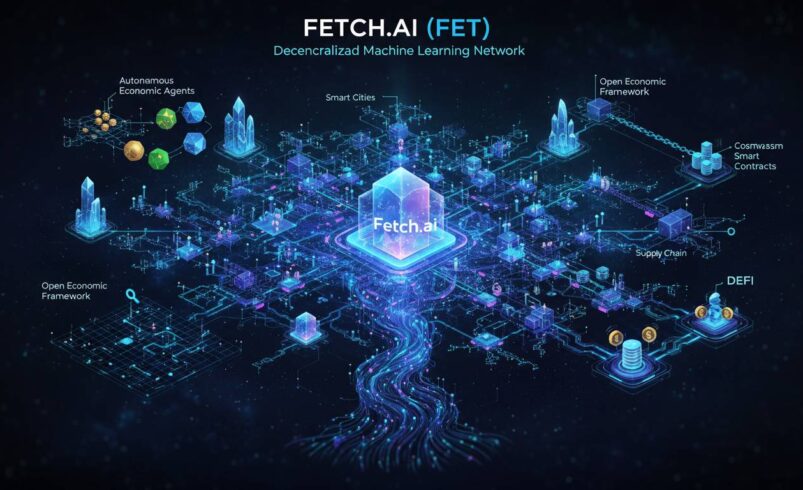
2. Fetch.ai (FET)
Fetch.ai builds autonomous economic agents powered by machine learning that can perform complex tasks across blockchain networks. The platform enables the creation of AI agents capable of negotiating, trading, and executing transactions without human intervention.
Technology focus: Autonomous agents, multi-agent systems, machine learning integration
Token utility: FET powers agent transactions, staking for network security, and governance participation.
Market positioning: Enterprise-focused solutions for supply chain optimization, energy trading, and digital advertising.
3. Ocean Protocol (OCEAN)
Ocean Protocol facilitates secure data sharing and monetization for AI development. The platform enables data providers to monetize their datasets while maintaining privacy controls, creating a marketplace for training AI models.
Technology focus: Data marketplaces, privacy-preserving computation, data tokenization
Token utility: OCEAN facilitates data transactions, stakes for data quality verification, and governs the ecosystem.
Market positioning: Critical infrastructure for Web3 AI development, addressing the data scarcity challenge in machine learning.
4. SingularityNET (AGIX)
SingularityNET operates as a decentralized AI marketplace allowing developers to publish, monetize, and combine AI services. The platform aims to create a global network of AI algorithms that can interoperate and evolve collectively.
Technology focus: AI service marketplace, protocol interoperability, neural networks
Token utility: AGIX payments for AI services, staking for node operation, and network governance.
Market positioning: Long-term vision of creating artificial general intelligence through decentralized collaboration.
5. Numerai (NMR)
Numerai transforms quantitative finance through crowdsourced machine learning models. Data scientists compete to build predictive algorithms for trading strategies, with the best models earning NMR token rewards.
Technology focus: Quantitative finance, crowdsourced predictions, tournament-based model development
Token utility: NMR stakes model predictions, rewards successful contributors, and aligns incentives.
Market positioning: Unique hedge fund model leveraging distributed intelligence for investment decisions.
Investment Analysis: Comparing AI Crypto Opportunities
| Project | Focus Area | Token Utility | Technology Maturity | Indian Market Availability |
|---|---|---|---|---|
| Render (RNDR) | GPU Computing | High | Production-ready | ✅ Major exchanges |
| Fetch.ai (FET) | Autonomous Agents | High | Growing ecosystem | ✅ Major exchanges |
| Ocean Protocol (OCEAN) | Data Marketplace | Medium-High | Production-ready | ✅ Major exchanges |
| SingularityNET (AGIX) | AI Marketplace | Medium | Development stage | ✅ Major exchanges |
| Numerai (NMR) | Quant Finance | High | Proven model | Limited |
Investment considerations:
- Technology readiness: Projects like Render and Ocean have demonstrated real-world utility, while newer projects may offer higher growth potential with increased risk
- Token economics: Evaluate supply dynamics, inflation rates, and utility burn mechanisms
- Team and development: Assess track record, open-source contributions, and community engagement
- Partnerships and adoption: Corporate adoption and institutional interest signal project viability
The Indian Market Context
India has emerged as a significant player in the global cryptocurrency landscape, with the Supreme Court’s 2020 ruling lifting banking restrictions and establishing a relatively clear regulatory environment compared to some other jurisdictions.
Key factors for Indian AI crypto investors:
Regulatory clarity: The government has implemented a 30% tax on cryptocurrency gains and 1% TDS on transactions, creating a compliant framework for digital asset investments.
Exchange accessibility: Major Indian cryptocurrency platforms including CoinDCX, WazirX, and ZebPay list prominent AI crypto tokens, enabling easy entry for retail investors.
Demographic advantages: India’s large tech-savvy population and growing interest in both AI technology and cryptocurrency creates fertile ground for AI crypto adoption.
Investment considerations for Indian users:
- Tax implications significantly impact net returns
- Rupee-to-stablecoin conversion costs affect entry/exit efficiency
- Portfolio diversification across global projects recommended
- Staking rewards may have additional tax implications
Risk Assessment and Mitigation
Investing in AI cryptocurrency projects carries substantial risks that Indian investors must carefully evaluate.
Market volatility: AI crypto tokens have experienced dramatic price swings, with many projects losing 70-90% from all-time highs during market corrections.
Technology risk: Some projects remain in development with unproven business models. The AI sector evolves rapidly, potentially rendering certain approaches obsolete.
Regulatory uncertainty: India’s regulatory stance toward cryptocurrency could change, affecting project viability and investor protections.
Mitigation strategies:
- Position AI crypto as a small percentage (5-15%) of total portfolio
- Dollar-cost averaging reduces timing risk
- Prioritize projects with demonstrated utility and active development
- Maintain long-term investment horizons (2-5 years minimum)
- Diversify across multiple AI crypto projects rather than concentrating in single tokens
How to Evaluate AI Crypto Projects Before Investing
Indian investors should conduct thorough due diligence before committing capital to any AI cryptocurrency project.
Fundamental analysis criteria:
- Whitepaper quality: Examine technical architecture, tokenomics model, and realistic use case descriptions
- Team credibility: Research founders, advisors, and development team backgrounds
- Community health: Active Discord/Telegram communities and GitHub development activity indicate sustained interest
- Token distribution: Examine initial allocation, vesting schedules, and community ownership percentage
- Competitive differentiation: Assess what uniquely distinguishes the project from alternatives
Red flags to avoid:
- Vague whitepapers without technical depth
- Anonymous teams without verifiable backgrounds
- Promises of guaranteed returns or unrealistic APY
- Tokenomics dependent purely on future speculation
- Limited exchange availability or liquidity
Building Your AI Crypto Portfolio
Indian investors interested in AI cryptocurrency should consider a structured approach to portfolio construction.
Recommended allocation framework:
Core holdings (60%): Established projects with proven technology like Render (RNDR) and Fetch.ai (FET), offering relatively lower risk with solid utility.
Growth holdings (30%): Projects with emerging technology and strong teams, such as SingularityNET, offering higher upside potential with elevated risk.
Speculative holdings (10%): Early-stage projects with innovative concepts, limited track record, and potential for significant returns or total loss.
Implementation steps:
- Research and select 4-6 AI crypto projects matching risk tolerance
- Set up accounts on reputable Indian cryptocurrency exchanges
- Complete KYC verification and enable two-factor authentication
- Establish investment amounts and timing strategy (lump sum vs. dollar-cost averaging)
- Store tokens in secure wallets—hardware wallets recommended for significant holdings
- Monitor project developments and adjust allocations periodically
Frequently Asked Questions
1. Are AI crypto projects legal to invest in from India?
Yes, AI cryptocurrency projects are legal to invest in from India. The Supreme Court struck down the banking ban in 2020, and cryptocurrency trading operates within a regulated framework with 30% capital gains tax and 1% TDS requirements. Indian investors can purchase AI crypto tokens through registered exchanges like CoinDCX, WazirX, and ZebPay.
2. Which AI crypto token has the best investment potential in 2024-2025?
No cryptocurrency investment carries guaranteed returns, and past performance does not indicate future results. Projects with established utility like Render (RNDR) and Fetch.ai (FET) currently show the most robust fundamentals with real-world adoption. However, smaller-cap projects may offer higher growth potential with increased risk. Research individual projects thoroughly and invest only what you can afford to lose.
3. How much should I invest in AI crypto projects?
Financial experts recommend allocating no more than 5-15% of your total investment portfolio to high-risk cryptocurrency assets, including AI crypto projects. Within this allocation, further diversify across multiple projects rather than concentrating in single tokens. Indian investors should also account for tax implications when calculating net returns.
4. What is the best way to buy AI crypto tokens in India?
Create an account on a reputable Indian cryptocurrency exchange (CoinDCX, WazirX, or ZebPay), complete KYC verification, and complete identity authentication. Add Indian Rupees through approved payment methods, purchase stablecoins like USDT if desired, then trade for AI crypto tokens. Consider using hardware wallets for long-term storage rather than keeping holdings on exchanges.
5. Do AI crypto projects generate passive income?
Some AI crypto projects offer staking rewards, where holders lock tokens to support network operations and earn additional tokens as incentives. Additionally, certain projects like Render and Ocean Protocol offer opportunities to earn tokens through providing computational resources or data. Returns vary significantly and depend on specific project tokenomics, staking conditions, and overall market conditions.
6. What are the biggest risks of investing in AI cryptocurrency?
Primary risks include extreme price volatility (70-90% drawdowns common), technology obsolescence as the AI sector evolves rapidly, regulatory changes affecting cryptocurrency in India, smart contract vulnerabilities, and project failure if teams cannot deliver on technical promises. Many AI crypto projects remain speculative with unproven business models, making thorough research essential before investing.
Conclusion
The AI cryptocurrency sector represents a compelling intersection of two transformative technologies, offering Indian investors exposure to the growth potential of both artificial intelligence and blockchain innovation. Projects like Render Network, Fetch.ai, Ocean Protocol, and SingularityNET demonstrate genuine technological advancement beyond marketing hype, though each carries distinct risk profiles and investment characteristics.
Successful participation in this sector requires careful due diligence, realistic expectations about volatility, and disciplined portfolio management. Indian investors should leverage the country’s favorable regulatory environment while maintaining awareness of tax implications and risk mitigation strategies.
As the AI and cryptocurrency industries continue converging, the projects demonstrating genuine utility and sustainable tokenomics will likely outperform those relying primarily on speculation. Approach AI crypto investments as long-term holdings (2-5 years minimum), diversify across multiple projects, and never invest more than you can afford to lose in this highly volatile sector.