
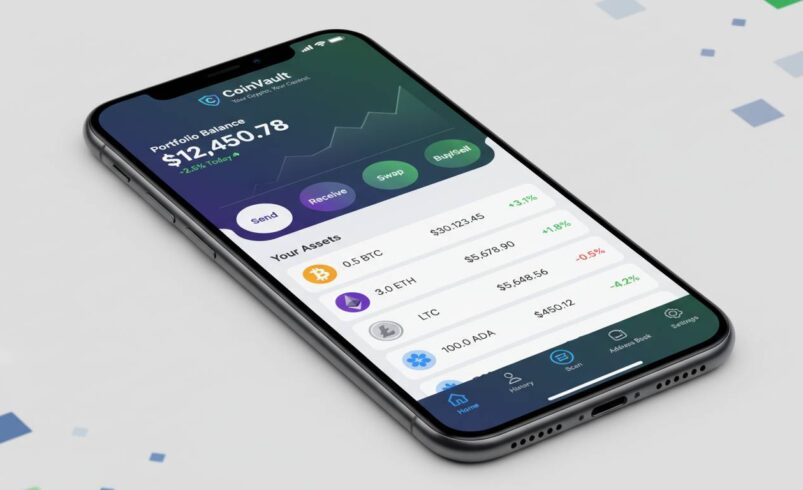

Cryptocurrency ownership in India has surged past 15 million users according to various industry estimates, making it one of the largest crypto markets globally. Whether you’re a first-time buyer or an experienced trader, understanding how crypto wallet apps work is essential for protecting your digital assets. A crypto wallet app serves as your gateway to the blockchain, allowing you to send, receive, and manage cryptocurrencies like Bitcoin, Ethereum, and hundreds of other tokens directly from your smartphone.
This comprehensive guide covers everything you need to know about crypto wallet apps in the Indian context—from understanding the underlying technology to selecting the right wallet for your needs and securing your holdings against threats.
What Is a Crypto Wallet App and How Does It Work?
A crypto wallet app is software that interacts with blockchain networks to manage your cryptocurrency holdings. Unlike a traditional wallet that stores cash, a crypto wallet doesn’t actually store your coins—it stores your private keys, which are essentially the passwords that prove ownership of your cryptocurrency and allow you to authorize transactions.
When you install a crypto wallet app on your phone, it generates a pair of cryptographic keys: a public key (like your bank account number) that others can use to send you crypto, and a private key (like your PIN) that you must keep secret. The wallet app also provides a recovery phrase—typically 12 or 24 words—that allows you to restore access to your funds if you lose your device.
Key Components of a Crypto Wallet:
| Component | Function | Security Level |
|---|---|---|
| Private Key | Authorizes transactions | Highest (never share) |
| Public Address | Receives cryptocurrency | Share freely |
| Recovery Phrase | Restores wallet access | Store offline |
| Blockchain Interface | Connects to networks | Varies by wallet |
When you want to send cryptocurrency, your wallet uses your private key to create a digital signature that validates the transaction. This signature is broadcast to the blockchain network, where miners or validators confirm the transaction and update the public ledger. The entire process happens within seconds or minutes, depending on network congestion.
Types of Cryptocurrency Wallets Explained
Understanding the different types of crypto wallets is crucial for making an informed decision about which app to use. Each type offers different trade-offs between convenience and security.
Hot Wallets vs. Cold Wallets
Hot wallets are connected to the internet, making them convenient for frequent trading but more vulnerable to hacking. Most crypto wallet apps fall into this category. Examples include mobile apps like CoinWallet, MetaMask, and exchange-provided wallets.
Cold wallets store your private keys offline, providing superior security for long-term storage. Hardware wallets like Ledger and Trezor fall into this category. While more secure, they’re less practical for daily transactions.
Custodial vs. Non-Custodial Wallets
Custodial wallets hold your private keys on your behalf, similar to how a bank holds your money. Exchange wallets like those on CoinDCX, WazirX, and ZebPay are custodial. The advantage is easier recovery (the exchange can help if you lose access), but you don’t have full control of your funds.
Non-custodial wallets give you complete control over your private keys. Apps like MetaMask, Trust Wallet, and Coinomi are non-custodial. You are your own bank—if you lose your recovery phrase, no one can help you recover your funds.
Multi-Currency vs. Single-Currency Wallets
Multi-currency wallets support hundreds of different cryptocurrencies in a single app. Trust Wallet and Coinomi are popular examples, ideal if you hold diverse portfolios.
Single-currency wallets focus on one cryptocurrency. These are often developed by the currency’s core team and may offer enhanced features for that specific coin.
Essential Features to Look for in a Crypto Wallet App
Selecting the right crypto wallet app requires evaluating several critical features that impact both convenience and security.
Security Features
The most important consideration when choosing any crypto wallet app is its security architecture. Look for these essential security features:
- Two-Factor Authentication (2FA): An extra layer of protection beyond your password, typically using SMS, email, or authenticator apps like Google Authenticator.
- Biometric Login: Fingerprint or face recognition for quick yet secure access.
- Encryption: Your private keys should be encrypted and stored locally on your device.
- Transaction Confirmation: Require additional verification for outgoing transactions.
- Phishing Protection: Built-in safeguards against malicious websites and fake apps.
User Experience
A well-designed crypto wallet app should make complex operations simple:
- Intuitive Interface: Easy navigation for buying, selling, and transferring crypto.
- In-App Trading: Integrated exchange features for quick trades without leaving the app.
- Portfolio Tracking: Clear visualization of your holdings and their value in INR.
- Customer Support: Responsive help channels when issues arise.
Integration with Indian Payment Systems
For Indian users, seamless integration with local payment systems is crucial:
- UPI Support: Unified Payments Interface enables instant INR deposits and withdrawals.
- Bank Transfers: Direct NEFT/RTGS support for larger transactions.
- INR Trading Pairs: Easy conversion between rupees and popular cryptocurrencies.
- Local Exchange Connectivity: Compatibility with Indian exchanges like CoinDCX, WazirX, and Giottus.
Best Crypto Wallet Apps Available in India
The Indian crypto market offers numerous wallet options, each with distinct strengths. Here’s a comprehensive comparison of the most popular choices:
| Wallet | Type | Security | Fees | Best For |
|---|---|---|---|---|
| CoinDCX Wallet | Custodial | High (2FA, encryption) | Free for deposits | Beginners |
| WazirX | Custodial | High | Free deposits, 0.2% trading | Active traders |
| ZebPay | Custodial | High | Free INR deposits | All-rounder |
| Trust Wallet | Non-custodial | High (you control keys) | Network fees only | DeFi users |
| MetaMask | Non-custodial | High | Network fees only | Ethereum/DeFi |
| CoinStats | Non-custodial | High | Network fees | Portfolio tracking |
CoinDCX Wallet
As one of India’s largest cryptocurrency exchanges, CoinDCX offers an integrated wallet with robust security features. The app supports over 300 cryptocurrencies and provides zero-deposit fees for INR transfers via UPI and bank transfer. Their “Earn” feature allows users to earn interest on held assets, making it attractive for passive income seekers.
WazirX
Owned by Binance, WazirX provides excellent liquidity and competitive trading fees. The wallet integrates seamlessly with the Binance ecosystem, giving Indian users access to global trading pairs. Their P2P (peer-to-peer) platform is particularly popular for buying crypto with INR.
Trust Wallet
For users seeking non-custodial control, Trust Wallet is an excellent choice. It supports over 4.5 million tokens across multiple blockchains, including Ethereum, Binance Smart Chain, and Polygon. While you retain full control of your keys, the responsibility for security rests entirely on you.
MetaMask
Primarily an Ethereum wallet, MetaMask has become the standard for interacting with decentralized applications (DApps), DeFi protocols, and NFT marketplaces. It’s ideal for users who want to explore the Ethereum ecosystem beyond simple holding and trading.
How to Set Up and Secure Your Crypto Wallet
Setting up a crypto wallet properly from the start is critical for long-term security. Follow these steps to create a secure foundation for your cryptocurrency holdings.
Step 1: Download from Official Sources
Only download wallet apps from official app stores (Google Play Store, Apple App Store) or the official website. Fake apps mimicking legitimate wallets are a common attack vector—check the developer name, ratings, and reviews before downloading.
Step 2: Create a Strong Password
Use a unique, complex password that you don’t use for any other service. Consider using a password manager to generate and store this password securely. Your password should be at least 12 characters with a mix of uppercase, lowercase, numbers, and symbols.
Step 3: Enable All Security Features
Once your wallet is created, immediately enable:
- Two-factor authentication (2FA)
- Biometric login (fingerprint/face)
- Transaction notifications
- Withdrawal whitelisting (if available)
Step 4: Secure Your Recovery Phrase
Your recovery phrase is the master key to your funds. Follow these critical rules:
- Never store it digitally: Don’t take screenshots, don’t save it in notes apps, don’t email it to yourself.
- Write it down: Write each word in order on paper.
- Store in multiple locations: Keep copies in separate secure locations (safe deposit box, home safe).
- Never share it: No legitimate service will ever ask for your recovery phrase.
Step 5: Start with Small Amounts
When first learning to use a wallet, transfer only a small amount of crypto. This allows you to understand the send/receive process without risking significant funds.
Common Mistakes to Avoid When Using Crypto Wallets
Even experienced crypto users make costly mistakes. Here are the most common pitfalls and how to avoid them:
Mistake 1: Not Verifying Transaction Addresses
Cryptocurrency transactions are irreversible. Always double-check the recipient address before confirming any transfer. A single wrong character means your funds are lost forever. Most wallets allow you to save frequently used addresses with nicknames—use this feature.
Mistake 2: Ignoring Network Fees
Each blockchain transaction incurs fees that vary based on network congestion. During peak times, fees can spike significantly. Use the wallet’s fee estimation feature and consider transacting during off-peak hours to save money.
Mistake 3: Falling for Phishing Scams
Never click links in unsolicited emails or messages claiming to be from your wallet provider. Always navigate to websites by typing the URL directly. Official support will never ask for your private keys or recovery phrase.
Mistake 4: Keeping All Crypto in One Wallet
Diversify your holdings across multiple wallets. Keep only what you need for trading in hot wallets and move long-term holdings to cold storage or hardware wallets.
Mistake 5: Neglecting Software Updates
Wallet developers regularly release updates that patch security vulnerabilities. Keep your app updated and enable automatic updates if available.
Regulatory Landscape for Crypto in India
Understanding India’s regulatory environment is essential for Indian crypto users. The Indian government has taken a cautious but increasingly clear approach to cryptocurrency regulation.
In March 2023, the Indian government introduced a 30% tax on cryptocurrency gains and a 1% tax deducted at source (TDS) on crypto transactions. While these taxes have dampened some trading activity, they have also provided regulatory clarity that the industry craved.
The Reserve Bank of India (RBI) has maintained its cautious stance, with periodic statements warning about cryptocurrency risks. However, unlike earlier restrictions, the current framework allows crypto trading and holding with tax compliance.
Key Regulatory Considerations for Indian Users:
- Tax Compliance: Report crypto gains in your annual income tax return. The 1% TDS can be claimed as credit when filing taxes.
- KYC Requirements: All reputable Indian exchanges and wallet providers require Know Your Customer (KYC) verification.
- Compliance First: Use only compliant platforms that follow Indian regulations and cooperate with tax authorities.
Conclusion
Crypto wallet apps have transformed how Indians interact with cryptocurrency, making it accessible to anyone with a smartphone. Whether you choose a custodial wallet for convenience or a non-custodial wallet for maximum control, understanding the fundamentals of how these apps work is essential for protecting your digital assets.
Start by assessing your needs—frequent traders may prefer the integrated features of CoinDCX or WazirX, while DeFi enthusiasts might gravitate toward Trust Wallet or MetaMask. Regardless of your choice, prioritize security: enable all available protection features, guard your recovery phrase jealously, and stay vigilant against scams.
The Indian crypto market continues to evolve with regulatory clarity improving monthly. By following the best practices outlined in this guide, you can confidently navigate this exciting space while minimizing risks.
Frequently Asked Questions
Which crypto wallet is best for beginners in India?
CoinDCX and ZebPay are excellent choices for beginners due to their intuitive interfaces, UPI integration for easy INR deposits, and comprehensive customer support. They handle the technical complexities while you learn the basics of crypto ownership.
Are crypto wallet apps legal in India?
Yes, crypto wallet apps are legal in India as of the current regulatory framework. The government allows cryptocurrency trading and holding, though transactions are subject to a 30% capital gains tax and 1% TDS. Always use compliant platforms that follow KYC and tax regulations.
How do I transfer crypto from one wallet to another?
Open your wallet app, select “Send” or “Transfer,” enter the recipient’s public address, specify the amount, and confirm the transaction. Always double-check the address—crypto transactions cannot be reversed. The funds will arrive after the blockchain confirms the transaction (usually within minutes to hours).
What happens if I lose my phone with a crypto wallet?
If you lose your phone, you can recover your funds using your recovery phrase. Download the same wallet app on a new device, select “Restore Wallet,” and enter your recovery phrase in the correct order. This is why securely storing your recovery phrase is absolutely critical.
Is it safer to use a hardware wallet instead of a mobile app?
Hardware wallets are generally safer for storing large amounts of cryptocurrency because they keep your private keys offline, protecting them from online threats. However, they’re less convenient for frequent trading. Many users combine both: keep small amounts for trading in mobile wallets and store long-term holdings in hardware wallets.
Can I hold multiple cryptocurrencies in one wallet?
Yes, most modern crypto wallet apps are multi-currency and support hundreds of different cryptocurrencies. Trust Wallet, CoinDCX, and CoinStats support extensive token lists. However, some wallets are specialized—for example, MetaMask focuses primarily on Ethereum-based tokens. Choose a wallet based on the cryptocurrencies you plan to hold.