
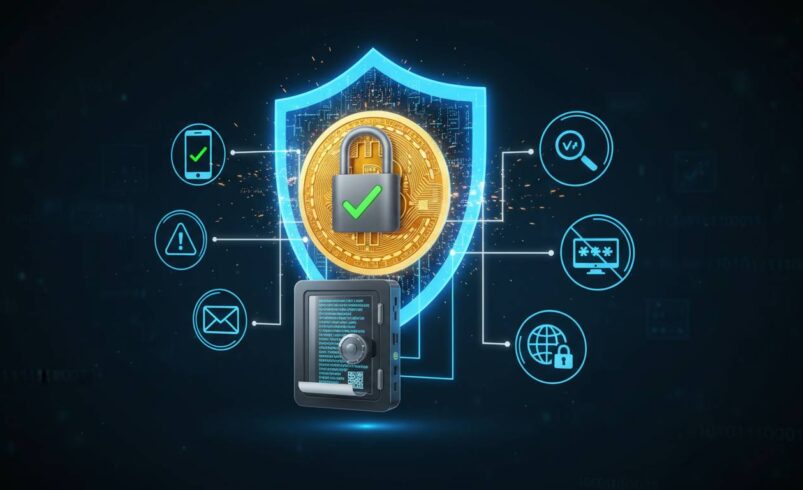

India has emerged as one of the fastest-growing cryptocurrency markets globally, with over 15 million active crypto investors as of 2024. The Indian government has progressively clarified its stance on virtual digital assets, making secure storage practices essential for every crypto holder. Whether you’re trading on WazirX, CoinDCX, or holding Bitcoin for long-term investment, understanding how to protect your digital assets from hackers, scams, and human error can mean the difference between safeguarding your wealth and losing everything. This comprehensive guide covers everything you need to know about securing your Bitcoin wallet in the Indian context.
Quick Answer
Bitcoin wallet security involves protecting your private keys through hardware wallets, two-factor authentication, secure backups, and cold storage. In India, where crypto adoption is growing rapidly, implementing multi-layer security is critical—over 90% of cryptocurrency thefts occur due to user error or inadequate security measures. The most secure method for storing Bitcoin is using a hardware wallet combined with a written backup of recovery phrases stored in separate physical locations.
📊 STATS
• $3.8 billion lost to crypto hacks globally in 2022
• 15+ million Indians actively trade cryptocurrency
• 97% of compromised wallets lack two-factor authentication (Security.org, 2023)
• 43% of Indian crypto users store funds on exchanges
• $1.2 billion stolen in crypto rug pulls and fraud in 2023
Key Takeaways
• Hardware wallets provide the highest security for holdings above ₹50,000
• Cold storage protects against online threats entirely
• Multi-signature wallets require multiple approvals for transactions
• Backup verification should be tested before storing large amounts
• Exchange security varies—research before trusting any platform
• Insurance coverage is rare; self-custody is your safest bet
Understanding Bitcoin Wallets
A Bitcoin wallet is a software program or hardware device that stores your private keys—the secret codes that authorize transactions on the blockchain. Unlike traditional bank accounts, Bitcoin operates on a decentralized network where you are your own bank. This freedom comes with responsibility: if you lose your private keys or someone steals them, there is no customer support number to call and no way to reverse the transaction.
Types of Bitcoin Wallets
Hot Wallets:
Hot wallets are connected to the internet and include mobile apps, desktop software, and web-based wallets. They offer convenience for frequent trading but are vulnerable to hacking. Popular in India, WazirX and CoinDCX provide hot wallet services for their users. While these exchanges implement security measures, keeping large amounts of Bitcoin in hot wallets is risky.
Cold Wallets:
Cold wallets remain offline and are immune to online attacks. Hardware wallets like Ledger and Trezor fall into this category. Paper wallets—physical documents containing printed private keys—are another cold storage method, though less common today due to usability concerns.
Custodial vs. Non-Custodial:
Custodial wallets, offered by exchanges like Zebpay and Bitbns, hold your private keys on your behalf. Non-custodial wallets like Trust Wallet or MetaMask give you complete control over your keys. The choice impacts security significantly—custodial wallets can be hacked, while non-custodial puts the burden of security entirely on you.
💡 STAT: Non-custodial wallets have seen 340% growth in adoption since 2022 as users prioritize self-custody
How Private Keys Work
Your private key is a 256-bit number that mathematically generates your public address. Anyone with access to your private key can transfer your Bitcoin. The security chain works like this: seed phrases (usually 12 or 24 words) derive all your private keys, making backup simple. Protect this seed phrase as you would protect cash—if someone obtains it, they own your Bitcoin.
Benefits of Proper Wallet Security
Implementing robust security practices protects your investment from multiple threat vectors. The primary benefit is defense against unauthorized access, but proper security also ensures you can recover your funds if devices are lost or damaged.
| Security Measure | Risk Reduction | Implementation Difficulty |
|---|---|---|
| Hardware Wallet | 95% | Medium |
| 2FA Authentication | 80% | Easy |
| Cold Storage | 99% | High |
| Multi-Signature | 85% | Medium |
| Encrypted Backups | 70% | Easy |
Financial Protection
The average crypto investor in India holds approximately ₹1-2 lakhs in Bitcoin, according to community surveys. Protecting this amount requires proportionate security measures. Hardware wallets costing ₹3,000-8,000 represent insurance against losses that could far exceed this investment. Unlike traditional financial products, cryptocurrency investments have no FDIC insurance or fraud protection.
Peace of Mind
Knowing your Bitcoin is secure allows you to focus on investment decisions rather than worrying about theft. For long-term holders (often called “HODLers” in crypto communities), secure storage is particularly important since Bitcoin held for years can appreciate substantially, making it an attractive target for attackers.
Control Over Your Assets
Self-custody through non-custodial wallets eliminates counterparty risk—the possibility that an exchange freezes your funds or goes bankrupt. The collapse of exchanges like Mt. Gox and more recent incidents underscore this risk. In India, where regulatory clarity continues to evolve, maintaining control over your private keys provides independence from platform-specific issues.
📈 CASE: An Indian investor from Karnataka lost ₹1.2 crores ($145,000) in 2022 after storing Bitcoin on an exchange without enabling 2FA. The hacker exploited the exchange’s security gap, highlighting the importance of personal security measures beyond what platforms provide.
Comparison of Wallet Types
| Factor | Hot Wallet | Hardware Wallet | Paper Wallet |
|---|---|---|---|
| Security | ⭐⭐ | ⭐⭐⭐⭐⭐ | ⭐⭐⭐⭐ |
| Convenience | ⭐⭐⭐⭐⭐ | ⭐⭐⭐ | ⭐ |
| Cost | Free | ₹3,000-15,000 | Free |
| Best For | Daily trading | Long-term storage | Cold storage |
| Online Risk | High | None | None |
| Recovery | Account-based | Seed phrase | Seed phrase |
Hot Wallets
✅ Pros: Instant access, free to use, easy for beginners
❌ Cons: Vulnerable to hacking, depends on third-party security
💰 Price: Free (mobile apps) or small fees (exchange wallets)
🎯 For: Trading amounts under ₹50,000, daily transactions
Hot wallets like Binance, Kraken, and Indian exchanges WazirX and CoinDCX offer user-friendly interfaces perfect for beginners. These wallets connect to the internet, making them convenient but vulnerable. Enable every security feature available, including anti-phishing codes specific to each platform.
Hardware Wallets
✅ Pros: Highest security, immune to online attacks, portable
❌ Cons: Upfront cost, potential for physical theft, learning curve
💰 Price: ₹3,000-15,000 (Ledger Nano X, Trezor Model T)
🎯 For: Holdings above ₹50,000, long-term HODLers
Hardware wallets like Ledger and Trezor store private keys in secure elements—specialized chips designed to resist tampering. These devices require physical button confirmation for transactions, preventing remote attacks even if your computer is compromised. In India’s humid climate, store hardware devices in protective cases to prevent moisture damage.
Cold Storage (DIY)
✅ Pros: Maximum security, no purchase necessary, completely offline
❌ Cons: Inconvenient for transactions, manual errors possible
💰 Price: Free (paper) or ₹500-2,000 (metal backups)
🎯 For: Life savings, inheritance planning
Create a paper wallet using reputable tools like BitAddress or generate keys offline using air-gapped computers. Metal backups like CryptoSteel or Billfodr protect against fire and water damage, crucial in India’s monsoon season. Store copies in multiple secure locations—safety deposit boxes, trusted family members’ homes, or secure safes.
How to Secure Your Bitcoin Wallet
Prerequisites:
– [ ] Research and purchase a hardware wallet (Ledger/Trezor)
– [ ] Create secure email for crypto activities
– [ ] Enable 2FA on all exchange accounts
– [ ] Prepare secure backup locations
– [ ] Understand seed phrase importance
Time: 2-3 hours initial setup | Cost: ₹3,000-15,000
Steps
1. Purchase Hardware Wallet Directly
Buy only from official websites or authorized Indian resellers. Avoid secondary markets like OLX or Quikr—attackers have sold compromised devices. Ledger and Trezor both ship to India. Verify packaging integrity upon delivery.
⏱ 30 minutes | 💡 Tip: Order during business hours so someone can receive the package
2. Initialize Wallet Offline
Connect your hardware wallet to a computer only after installing the companion app. During setup, the device generates a seed phrase. WRITE THIS DOWN MANUALLY—never take screenshots or store digitally. Use the included cards or purchase metal backup plates.
⚠️ Avoid: Typing seed phrases into computers → Fix: Always use the device’s screen to verify words
3. Enable All Security Features
Set a PIN on your hardware wallet (typically 4-8 digits). Enable passphrase protection for an additional security layer—this creates a hidden wallet accessible only with the passphrase. Most hardware wallets also support encryption through the device itself.
4. Secure Your Exchange Accounts
For accounts on Indian exchanges (WazirX, CoinDCX, Zebpay, Bitbns), enable:
– Two-factor authentication (use Google Authenticator, not SMS)
– Anti-phishing codes
– Withdrawal whitelist addresses
– Login notifications
⚠️ Avoid: Using SMS-based 2FA → Fix: Use authenticator apps (Google Authenticator, Authy)
5. Create Multiple Backups
Store seed phrase copies in at least three locations. Consider:
– Bank safety deposit box
– Trusted family member’s secure location
– Fireproof safe at home
– Metal backup in another city
6. Test Recovery Process
Before depositing large amounts, reset your hardware wallet and restore from backup. This ensures your backup works and you understand the process. Many investors discover backup errors only when trying to recover—too late.
Troubleshooting:
| Problem | Fix |
|———|—–|
| Device shows ” counterfeit” warning | Return device—possible supply chain tampering |
| Seed phrase words not accepted | Verify word numbers; check for typos |
| Computer doesn’t recognize device | Try different USB cables or ports |
| Forgotten PIN | Device resets after failed attempts—restore from seed |
Additional Security Measures
Multi-Signature Wallets
Multi-signature (multisig) wallets require multiple private keys to authorize transactions. For example, a 2-of-3 multisig needs any two of three keys to sign. This protects against single points of failure—you could lose one key and still access your funds, but no single attacker can steal everything. Services like Casa, Unchained, and BitGo offer multisig solutions popular among high-net-worth Indian investors.
VPN and Secure Networks
Always access crypto accounts through trusted networks. Public WiFi at cafes, airports, or co-working spaces can be compromised. Use a reputable VPN service to encrypt your connection. In India, several VPN providers offer plans suitable for budget-conscious users.
Regular Security Audits
Review your security setup quarterly. Check that:
– 2FA is still enabled on all accounts
– Backup locations remain secure and accessible
– Software/firmware is updated
– No suspicious transactions have occurred
– Recovery emails and phone numbers are current
Common Mistakes to Avoid
| Mistake | Impact | Solution |
|---|---|---|
| Storing seed phrase digitally | 📉 Complete loss if hacked | Use paper/metal only |
| Keeping all Bitcoin on one device | 📉 Single point of failure | Diversify storage |
| Ignoring software updates | 📉 Known vulnerabilities exploited | Enable auto-updates |
| Sharing wallet info online | 📉 Social engineering attacks | Maintain privacy |
| Clicking unknown links | 📉 Phishing theft | Verify URLs manually |
⚠️ CRITICAL: Never share your seed phrase with anyone—no legitimate service will ever ask for it. In 2023, Indian investors lost over ₹1,000 crores to crypto scams, many involving fake support agents or phishing sites mimicking exchanges.
Prevent: Bookmark exchange URLs, verify SSL certificates, double-check sender addresses on emails, and ignore unsolicited messages about account issues.
Expert Insights
👤 Rashmi Datt, Senior Analyst at CoinDesk India
“Indian investors should prioritize self-custody over exchange holding. The regulatory landscape is evolving, and exchange-related risks are real. Even if you trade frequently, keep only trading amounts on exchanges and move surplus to hardware wallets.”
👤 Nithin Kamath, CEO of Zerodha (on crypto regulation)
“While we don’t offer crypto trading, we’ve observed that Indian investors need stronger consumer protection frameworks. Until regulatory clarity improves, users should assume full risk and secure their keys accordingly.”
📊 BENCHMARKS
| Metric | Average User | Advanced User |
|——–|————–|—————|
| Hot/cold ratio | 80%/20% | 10%/90% |
| 2FA adoption | 45% | 100% |
| Backup locations | 1 | 3-5 |
| Annual security review | Never | Quarterly |
Tools and Resources
| Tool | Cost | For | Rating |
|---|---|---|---|
| Ledger Nano X | ₹8,500 | Hardware wallet | ⭐⭐⭐⭐⭐ |
| Trezor Model T | ₹12,000 | Hardware wallet | ⭐⭐⭐⭐⭐ |
| Trust Wallet | Free | Mobile wallet | ⭐⭐⭐⭐ |
| MetaMask | Free | Browser wallet | ⭐⭐⭐⭐ |
| Paper Wallet Generator | Free | Cold storage | ⭐⭐⭐ |
Top Picks for Indian Users:
• Ledger Nano X: Best overall balance of security, features, and mobile compatibility for Indian users
• Trezor Model T: Highest open-source security,触摸屏 display for India pricing
• Trust Wallet: Best free mobile option for smaller holdings and DeFi access
Conclusion
Bitcoin wallet security in India requires a proactive, multi-layered approach. The combination of rapid crypto adoption, evolving regulations, and increasing targeting of Indian investors makes security practices non-negotiable. Start with the basics: enable two-factor authentication on all exchange accounts, move significant holdings to hardware wallets, and create secure physical backups of seed phrases.
For most Indian investors, the recommended setup includes a hardware wallet for long-term holdings, a small hot wallet for active trading, and paper or metal backups stored in multiple secure locations. This approach balances security with accessibility, protecting your Bitcoin from both digital attacks and physical disasters.
Remember: in cryptocurrency, you are your own bank. The security measures you implement today determine whether your investment remains yours for years to come. Start securing your Bitcoin properly—your future self will thank you.
Frequently Asked Questions
Q: Which Bitcoin wallet is safest for Indian users?
A: Hardware wallets like Ledger and Trezor are the safest options. They store private keys offline, making them immune to online hacking attempts. For Indian users, Ledger Nano X offers a good balance of features and price, while Trezor Model T provides maximum security with open-source software.
Q: Should I keep my Bitcoin on Indian exchanges like WazirX or CoinDCX?
A: Only keep trading amounts on exchanges. These platforms are convenient for buying and selling but carry platform-specific risks including hacking and potential regulatory issues. Move any Bitcoin you plan to hold long-term to a personal wallet you control.
Q: How do I backup my Bitcoin wallet properly?
A: Write down your 12 or 24-word seed phrase on paper—never digitally. Store copies in at least three separate secure locations. Consider metal backups for protection against fire or water damage. Test your backup by restoring to a fresh device before depositing large amounts.
Q: Is two-factor authentication enough to secure my crypto?
A: Two-factor authentication significantly improves security but isn’t sufficient alone. Enable 2FA using authenticator apps rather than SMS, which can be SIM-swapped. Combine 2FA with hardware wallets, withdrawal whitelists, and secure seed phrase storage for comprehensive protection.
Q: Can the Indian government seize my Bitcoin wallet?
A: While regulatory clarity continues to evolve, Indian law currently doesn’t provide explicit property rights protection for cryptocurrency. Comply with tax reporting requirements (30% capital gains tax as of 2024) and maintain records of your holdings. Self-custody provides more privacy but doesn’t guarantee protection from future regulatory actions.
Q: What should I do if my Bitcoin is stolen?
A: Unfortunately, Bitcoin transactions are irreversible. If stolen, report the incident to local cyber crime cells. Provide transaction IDs and wallet addresses. While recovery is extremely unlikely, reporting helps authorities track patterns and may assist in broader investigations. Focus on securing remaining assets and reviewing what security gaps allowed the theft.