
Solana has become one of the busiest blockchain networks in crypto. With its ability to handle thousands of transactions per second at a fraction of a cent, it’s drawn developers, traders, and everyday users—including a growing number from India. This guide walks through the Solana ecosystem: what it includes, which projects matter, the numbers behind it, and why it’s worth a look for Indian users exploring alternatives to traditional finance.
What is the Solana Ecosystem?
The Solana ecosystem is the collection of decentralized applications (DApps), protocols, tools, and services built on the Solana blockchain. Launched in 2020, Solana was built to handle more transactions than earlier blockchains could manage—without sacrificing security or decentralization. It uses a system called Proof of History combined with Proof of Stake to process around 65,000 transactions per second, compared to Ethereum’s roughly 15-30.
The ecosystem covers decentralized finance (DeFi), NFTs, gaming, payments, and developer tools. Developers favor Solana because it lets them build apps that feel fast enough for regular use, not just crypto enthusiasts.
For Indian users, Solana’s main selling point is the cost. Average transaction fees sit around $0.0015. On Ethereum, you might pay $10-50 when the network is busy. That difference matters if you’re trading small amounts frequently or just trying things out.
Major Categories in the Solana Ecosystem
Several categories make up the ecosystem. Knowing what each offers helps you find what matches your interests.
Decentralized Finance (DeFi)
DeFi is the biggest and most established category on Solana. These platforms let you lend, borrow, trade, and earn yields directly—without banks or brokers. Smart contracts handle everything automatically.
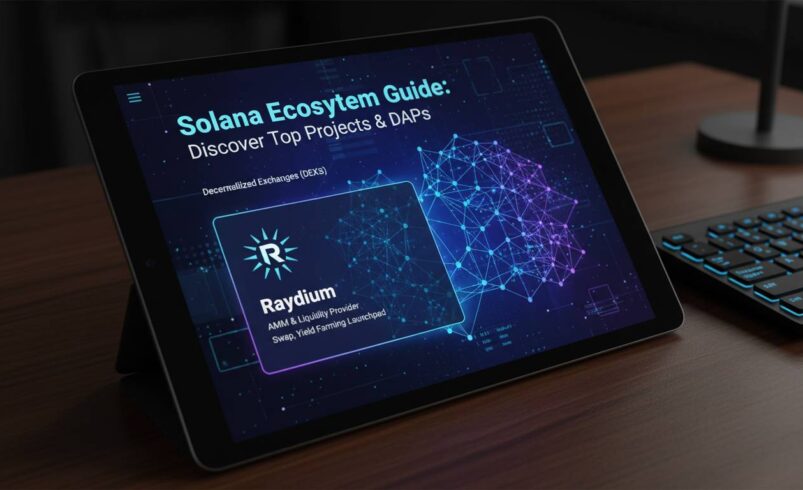
Serum is a decentralized exchange (DEX) that forms the backbone of Solana’s DeFi. It matches orders quickly with low slippage. Raydium adds automated market making with liquidity pools that connect to Serum’s order book, giving users better prices. Jupiter Aggregator checks multiple DEXes and routes your trade to wherever gets you the best rate.
Solend is a lending protocol. You can deposit crypto and earn interest, or borrow against what you hold. Interest rates move with supply and demand, similar to how money markets work. Indian users used to modest savings account returns might find these rates appealing—though the risks are real, too.
Non-Fungible Tokens (NFTs)
Solana’s NFT scene has grown fast, especially among artists, collectors, and gamers. Magic Eden is the main marketplace—you can buy, sell, and mint NFTs there. OpenSea also supports Solana, giving you options.
Collections span digital art, profile pictures, virtual land, and gaming items. Since minting and trading costs are low, smaller collectors and emerging artists can participate without spending much upfront. Some Indian digital artists have used Solana NFTs to reach buyers worldwide.
Gaming overlaps with NFTs on Solana. Projects like Star Atlas build virtual worlds where your in-game items are NFTs—you can potentially earn value through gameplay and trading. Play-to-earn has caught on in India and Southeast Asia, where gamers are eager for ways to earn while playing.
Gaming and Metaverse
Beyond NFTs, Solana hosts full blockchain games and metaverse projects. These aim to feel like regular online games—without the transaction delays that frustrate players on slower blockchains.
The games range from strategy to virtual reality. Many reward players with tokens that sometimes have real value. It’s early days, but Solana’s speed gives it an edge if blockchain gaming goes mainstream.
Infrastructure and developer tools support everything else—data indexing, oracle services, wallets, and frameworks that make building on Solana doable for developers everywhere.
Top Solana Ecosystem Projects
Some projects stand out by user count, trading volume, and market impact.
Jupiter Exchange is Solana’s biggest DEX aggregator. It routes trades across liquidity sources to find the best price and has handled billions in volume. Its JUP token airdrop to early users drew heavy participation from Indian traders.
Marinade Finance solves a common problem: staking locks your SOL up. Marinade lets you stake and get mSOL in return—tokens you can still use in DeFi while earning staking rewards.
Phantom Wallet is what most Solana users reach for. Browser extension and mobile app, easy DApp connections, simple interface. It’s been a big factor in onboarding new users.
Solana Pay targets mainstream payments. Merchants can accept SOL and SPL tokens. It works with stablecoins too, so you avoid the crypto price rollercoaster for everyday purchases.
Solana Ecosystem Statistics and Network Health
The numbers tell part of the story. Solana processes millions of transactions daily—peaks hit hundreds of millions per week. Total value locked in DeFi protocols varies with the market but usually sits in the billions.
Hundreds of projects exist across categories. Not all stay active, but development continues with regular upgrades. The Solana Foundation funds developer education, grants, and growth programs.
Indian participation has increased. Indian-founded projects build on Solana, and Indian exchanges list SOL. The low fees and fast settlement appeal in a country where banking costs can eat up small transactions.
Significance for Indian Users
Solana matters in India for a few reasons. The low costs make small transactions viable—they weren’t before on chains with $10+ fees. This could support financial inclusion where traditional banking is expensive or hard to access.
Indian crypto educators have made content in Hindi and other local languages, explaining Solana to audiences that might otherwise find blockchain confusing. That’s helped awareness grow.
The gaming angle connects with India’s huge mobile gaming market. Play-to-earn games attract young Indians looking for side income in a tough job market.
Conclusion
The Solana ecosystem covers DeFi, NFTs, gaming, payments, and developer tools. Its technical edge—speed and cheap fees—makes it different from other Layer 1 blockchains. For Indian users, there’s potential for financial participation, art sales through NFTs, gaming, and yield. But go in with eyes open: crypto is volatile, smart contracts can fail, and regulations shift.
The ecosystem keeps evolving. New projects launch, upgrades roll out, institutions show interest. Whether you want to diversify a portfolio, try DeFi, or build something, Solana is worth a look.
Frequently Asked Questions
What is the Solana ecosystem?
Everything built on Solana—DeFi apps, NFT marketplaces, games, payment tools, and infrastructure. It uses Proof of History and Proof of Stake to run fast with low fees.
How many projects are in the Solana ecosystem?
Hundreds of projects exist across categories. Not all stay active, but the ecosystem has grown a lot since 2020. Major platforms like Jupiter, Magic Eden, and Phantom serve millions.
What are the top projects in the Solana ecosystem?
Key ones include Jupiter Exchange (trading), Magic Eden (NFTs), Phantom (wallets), Solend (lending), Raydium (liquidity), and Marinade Finance (liquid staking). All have millions of users and billions in value locked.
Is Solana better than Ethereum for Indian users?
Solana wins on cost and speed, which matters for frequent trades or small amounts. Ethereum has more mature projects and liquidity. Many users hold both and pick the network based on what they’re doing.
How do I get started with the Solana ecosystem?
Get a Phantom or Solflare wallet, buy SOL on an Indian exchange like CoinDCX or WazirX, send it to your wallet, and start exploring. Pick one category—DeFi, NFTs, or gaming—to learn first.
What are the risks?
Crypto prices swing hard. Smart contracts can have bugs. Protocols can fail. Regulations could change. Only invest what you can afford to lose, research before committing funds, use a hardware wallet for larger amounts, and consider spreading across multiple chains rather than putting everything on Solana.