

The telehealth industry has changed how healthcare gets delivered. Investors who can tell the difference between companies with real competitive advantages and those riding temporary trends will be the ones who make money here. I won’t pretend I can tell you which telehealth stocks to buy tomorrow — that would be irresponsible, and anyone claiming certainty about short-term stock movements is selling you something. What I’ll do is walk you through my evaluation framework: the metrics that matter, the red flags, and the structural factors that determine whether a telehealth company has a defensible business model or just impressive marketing.
This matters because the sector attracted enormous capital during the pandemic, and many of those companies now face the reality of proving their models work without emergency usage spikes. The easy money has already been made. What’s left is the harder work of identifying companies building sustainable remote healthcare infrastructure.
Understanding the Telehealth Investment Landscape
Before diving into specific criteria, you need to understand what constitutes a telehealth company in 2024, since the lines have blurred. Pure-play telehealth providers like Teladoc Health and Amwell operate dedicated virtual care platforms where patients connect with physicians for acute conditions, chronic disease management, and mental health. These companies earn revenue through per-visit fees paid by insurers, employers, or patients directly.
But the telehealth ecosystem extends far beyond these pure plays. Retail health giants like Amazon (through Amazon Clinic) have entered the space, leveraging existing customer relationships and logistics. CVS Health acquired Oak Street Health to integrate virtual care with their retail pharmacy footprint. Apple has incrementally added virtual healthcare features. Even Walmart has made significant telehealth investments through Walmart Health clinics.
This convergence means you need to evaluate telehealth companies on two dimensions: their specific telehealth capabilities AND their ability to compete within the broader digital health landscape. A company might have excellent virtual care technology but no sustainable path to monetization. Conversely, a company with strong distribution might be layering telehealth onto a weakening core business.
The reality is that “telehealth” as a distinct category is becoming less useful for investment analysis. What matters more is understanding how specific companies position themselves within the broader digital health value chain.
Revenue Model Analysis
The most important factor in evaluating any telehealth company is understanding exactly how they generate revenue — specifically, what portion is recurring versus transactional. This separates companies with genuine platform businesses from those that are essentially high-volume service providers.
Recurring revenue includes subscription-based virtual care services sold to employers (where the employer pays per member per month for unlimited or capped access to virtual visits), chronic disease management programs with ongoing patient engagement, and retainer-based concierge medicine arrangements. These streams provide predictability, reduce customer acquisition cost sensitivity, and typically come with higher lifetime values.
Teladoc’s acquisition of Livongo in 2020 was about this dynamic. Livongo had built a successful chronic disease management business with recurring revenue from employer-sponsored subscriptions, and Teladoc was trying to transform its transactional per-visit model into something more predictable. The market has been skeptical about whether this integration delivered — Teladoc’s stock has traded at a fraction of its pandemic highs — which shows how hard this transformation actually is.
Transactional revenue comes from fee-for-service virtual visits where revenue is recognized only when a patient uses the service. Companies with primarily transactional models face inherent challenges: they must continuously invest in patient acquisition, they have limited visibility into future revenue, and they compete on convenience and brand awareness rather than deep patient relationships.
When evaluating a telehealth company, map out the revenue breakdown. If more than 60% comes from recurring sources, that’s meaningful. If the company can’t clearly articulate its recurring revenue percentage, that’s itself a red flag.
User Growth Metrics
Every telehealth company leads with user growth statistics. Teladoc talks about millions of covered lives. Amwell highlights health system partnerships. Hims & Hers emphasizes its direct-to-consumer subscriber base. But raw user numbers tell you very little without context about the quality and economics of those users.
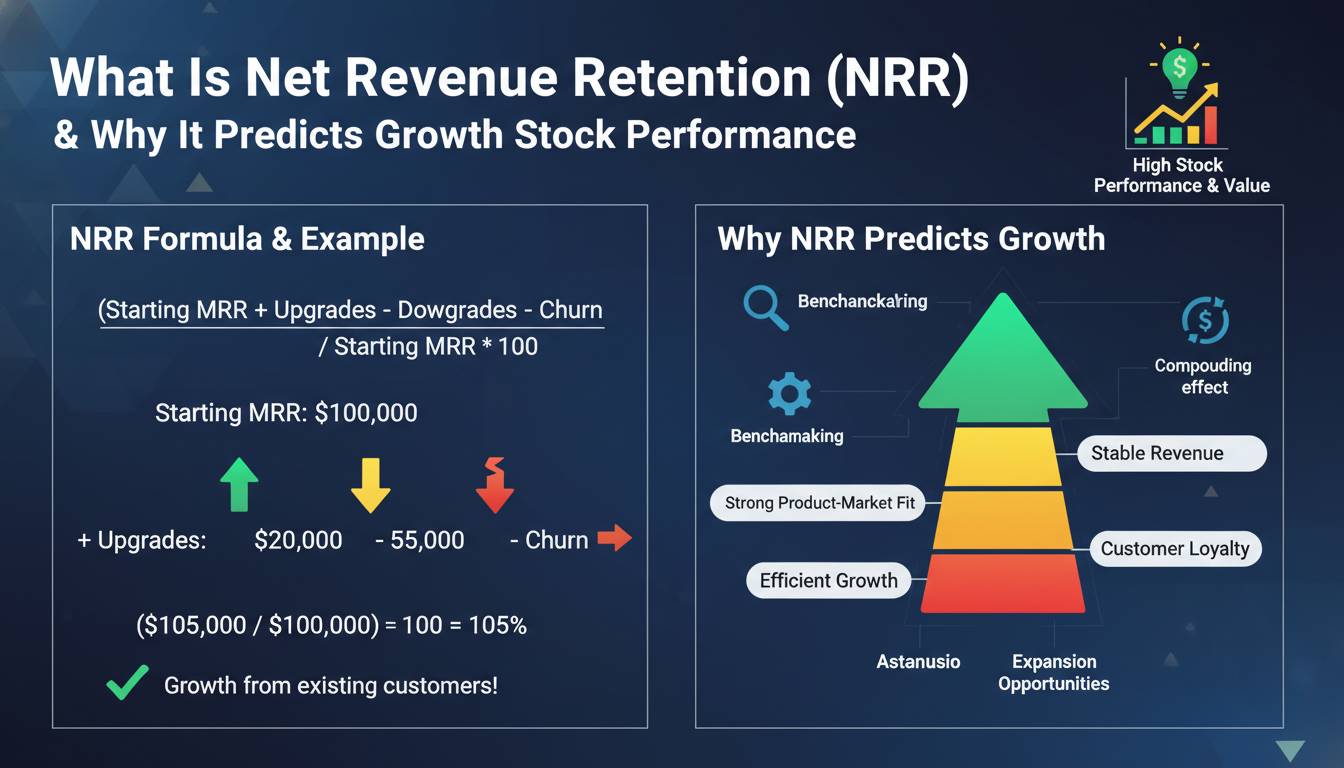
The metric that actually matters is net revenue retention — this measures whether existing customers are increasing their spending over time. For subscription-based telehealth businesses, healthy net revenue retention exceeds 110%, meaning existing customers are not only staying but spending more through expanded services, higher utilization, or price increases. A company growing total users at 50% annually but showing 95% net revenue retention is experiencing declining engagement among its existing base — a more concerning signal than the headline growth number.
Patient acquisition cost is equally critical, and this is where many direct-to-consumer telehealth companies have struggled. The cost of acquiring a patient through digital advertising has increased as competition for keywords like “online doctor” and “telehealth” has intensified. Compare a company’s customer acquisition costs to customer lifetime value — the ratio should ideally exceed 1:3, meaning lifetime value should be at least three times the acquisition cost. Many telehealth companies are acquiring customers at prices that don’t support sustainable unit economics, relying on investor capital to subsidize growth.
Amazon Clinic’s entry has dramatically intensified acquisition cost competition. Because Amazon can cross-sell telehealth services to its 300+ million active customer accounts at essentially zero incremental acquisition cost, traditional telehealth companies face an opponent with fundamentally different economics. When evaluating smaller telehealth players, explicitly assess whether their customer acquisition costs are sustainable in a world where Amazon, Walmart, and other large platforms are competing for the same patients.
Regulatory and Reimbursement Environment
Many investment analyses treat telehealth as purely commercial without adequately accounting for the regulatory environment that shapes what’s possible. This is important because the regulatory framework governing telehealth reimbursement has been in flux since the COVID-19 public health emergency expired in May 2023.
During the pandemic, federal and state governments temporarily expanded telehealth reimbursement, allowing virtual care to be reimbursed at parity with in-person visits under Medicare and many commercial insurance plans. These flexibilities have been winding down. While some permanent expansions have been codified — notably the CONNECT for Health Act provisions that became law — the exact scope of permanent reimbursement remains uncertain.
This matters enormously for business model evaluation. Companies that built revenue projections assuming continued pandemic-era reimbursement expansion now face a reality where they must demonstrate value within narrower frameworks. The companies best positioned are those with business models that don’t depend on insurance reimbursement — either through direct-to-consumer models where patients pay out-of-pocket, or through employer-sponsored arrangements where the employer bears the cost regardless of reimbursement policy.
State-by-state licensing requirements create another layer of complexity. Telehealth providers must be licensed in each state where their patients reside, and state medical boards have varying approaches to interstate licensure compacts and telehealth-specific regulations. Companies with national scale have invested heavily in compliance infrastructure, creating a meaningful barrier to entry for smaller players. When evaluating a telehealth company, understand which states they operate in, how they manage multi-state compliance, and what percentage of the US population they can legally serve.
Technology Infrastructure and Platform Differentiation
The technology underlying telehealth services varies dramatically in sophistication, and this differentiation matters more than most investors realize. At the most basic level, some companies simply offer video conferencing software connecting patients with physicians — this is commoditized technology that doesn’t provide sustainable competitive advantage. More sophisticated platforms incorporate asynchronous communication, AI-powered symptom assessment, integrated remote monitoring device data, electronic health record interoperability, and predictive analytics for population health management.
Teladoc’s acquisition of InTouch Health in 2020 was specifically about building enterprise-grade virtual care infrastructure for health systems — not just consumer-facing virtual visits, but the complex integrated systems that health systems need for specialty care, telestroke, and connected device management. This enterprise focus represents a different competitive landscape than direct-to-consumer telehealth, with longer sales cycles but more defensible relationships once established.
For platform differentiation, evaluate whether a company has proprietary technology that would be difficult for a well-funded competitor to replicate. Look for evidence of:
- EHR integration capabilities — can the telehealth platform seamlessly connect with existing electronic health record systems? Health systems are unlikely to adopt platforms that create data silos or require manual workarounds.
- Remote monitoring infrastructure — the future of telehealth increasingly involves connected devices (blood pressure monitors, glucose meters, weight scales) that transmit data to care teams. Companies with robust remote monitoring capabilities can address chronic conditions more effectively than those limited to synchronous video visits.
- AI and automation — machine learning tools for triage, documentation, and clinical decision support can improve provider efficiency and patient outcomes. Companies investing in these capabilities are positioning for the next evolution of virtual care.
The fundamental question is whether a company’s technology creates switching costs for customers or provider networks. If a health system or employer can easily replace one telehealth vendor with another, the company is competing on price alone — a difficult position to sustain.
Competitive Positioning Against Big Tech and Retail Health
Most articles treat pure-play telehealth companies and Big Tech entries as separate categories competing in the same space. The reality is more nuanced, and I think many analysts get this wrong.
Amazon, Apple, and Walmart aren’t competing for the same patient relationships that Teladoc or Amwell pursue — at least not directly. Amazon Clinic positions itself for episodic, low-acuity needs: UTIs, allergies, skin conditions — quick consultations that patients might otherwise handle through urgent care or retail clinics. This is fundamentally different from the chronic disease management and ongoing primary care relationships that primary care-focused telehealth companies build.
However, competitive dynamics are shifting. Amazon’s 2023 acquisition of One Medical (for approximately $3.9 billion) signaled a much more serious commitment to integrated care delivery. One Medical’s membership-based primary care model, combined with Amazon’s technological capabilities and distribution, creates a potential competitor that could eventually offer comprehensive virtual-first primary care at scale.
For investors, this means evaluating telehealth companies based on their defensibility against platform competitors:
- Direct-to-consumer subscription models (like Hims & Hers for certain conditions) have some protection because they focus on specific use cases where patients may prefer a specialized offering over a generalist platform.
- Chronic disease management platforms face intensifying competition from health system-owned telehealth capabilities and disease-specific digital health companies.
- Enterprise-focused telehealth (selling to health systems and employers) faces competition from large technology companies with enterprise sales capabilities and existing customer relationships.
The honest assessment is that most telehealth companies don’t have structural competitive advantages strong enough to justify premium valuations. The ones that do typically have proprietary clinical capabilities, deep integrations into delivery workflows, or specialized patient populations that generalist platforms struggle to serve effectively.
Financial Health and Path to Profitability
The era of growth-at-all-costs investing has ended, and this is particularly relevant for telehealth companies that have historically prioritized user growth over unit economics. In the current market environment, investors demand clearer paths to profitability, and companies that can’t demonstrate improving unit economics face significant valuation pressure.
Examine the company’s gross margin profile carefully. Software-enabled healthcare services can achieve gross margins in the 60-75% range, while companies with heavier service delivery components (employing physicians directly, for example) typically see gross margins in the 40-55% range. Teladoc’s gross margins have historically been in the mid-50s, reflecting its blend of software and services. Understanding whether a company’s technology is truly leverageable (generating revenue at low incremental cost) or whether service delivery costs scale proportionally with revenue is essential for projecting profitability potential.
Look at operating expense trends relative to revenue growth. Companies in growth mode often show operating expenses growing faster than revenue — a red flag indicating they are subsidizing growth through excessive spending. The most promising telehealth companies demonstrate operating leverage: revenue growing faster than operating expenses, even if both are expanding.
Cash position and burn rate matter enormously for companies not yet profitable. Many telehealth companies raised capital during the 2020-2021 market boom and have been conservatively managing cash since the market downturn. Evaluate whether the company has sufficient runway (typically 18+ months) to achieve profitability or reach the next financing milestone without equity dilution that could significantly impact existing shareholders.
Specific Company Evaluation Framework
Rather than providing stock recommendations, let me outline the specific questions you should answer about any telehealth company before making an investment decision:
First, what is the revenue mix? Get precise numbers on recurring versus transactional revenue, and understand what percentage comes from insurance reimbursement versus direct payment.
Second, what are the customer economics? Calculate customer acquisition cost, customer lifetime value, and the LTV:CAC ratio. Understand how these metrics have changed over time and what they imply about scalability.
Third, what is the regulatory exposure? Determine what percentage of revenue depends on favorable reimbursement policy, and assess how the company’s business model would perform in a more restrictive reimbursement environment.
Fourth, what is the competitive moat? Identify whether the company has proprietary technology, exclusive partnerships, or specialized capabilities that would be difficult for a well-funded competitor to replicate.
Fifth, what is the path to profitability? Understand the timeline and assumptions underlying any profitability projections, and stress-test those assumptions against realistic scenarios.
Sixth, who is the management team? Evaluate whether leadership has relevant healthcare experience (not just technology experience), and whether their incentives are aligned with long-term shareholder value creation.
Conclusion: The Investment Opportunity Remains
The telehealth industry isn’t going away. The structural shifts that accelerated adoption — consumer comfort with virtual care, regulatory flexibility (even if reduced from pandemic peaks), employer demand for cost-effective care options, and the ongoing shortage of primary care physicians — all remain in place. Healthcare delivery will include a substantial virtual component permanently.
But the easy thesis has played out. The companies that will generate real investment returns from here are those that have figured out sustainable business models in a post-pandemic environment — not those that simply captured pandemic-driven usage spikes. The evaluation framework outlined here is designed to help you separate companies with genuine competitive advantages from those that are temporary beneficiaries of a structural shift in how healthcare gets delivered.
The most promising opportunities likely exist in companies addressing specific high-value use cases — chronic disease management, mental health, specialty care — where telehealth can demonstrably improve outcomes while generating sustainable unit economics. The broad “telehealth is the future” thesis has been proven; the harder work of identifying which specific companies will capture that future is where your analytical edge needs to be.
What remains genuinely unresolved is how the competitive landscape will evolve as Amazon, Walmart, and other large platforms expand their healthcare ambitions. The history of technology disruption suggests that pure-play specialists often get caught between integrated platforms above them and commoditized alternatives below them. But healthcare has unique characteristics — regulatory complexity, clinical trust requirements, reimbursement structures — that may preserve space for focused telehealth specialists. Watching how this competitive dynamic develops over the next 18 to 24 months will be essential for making informed investment decisions in this sector.